

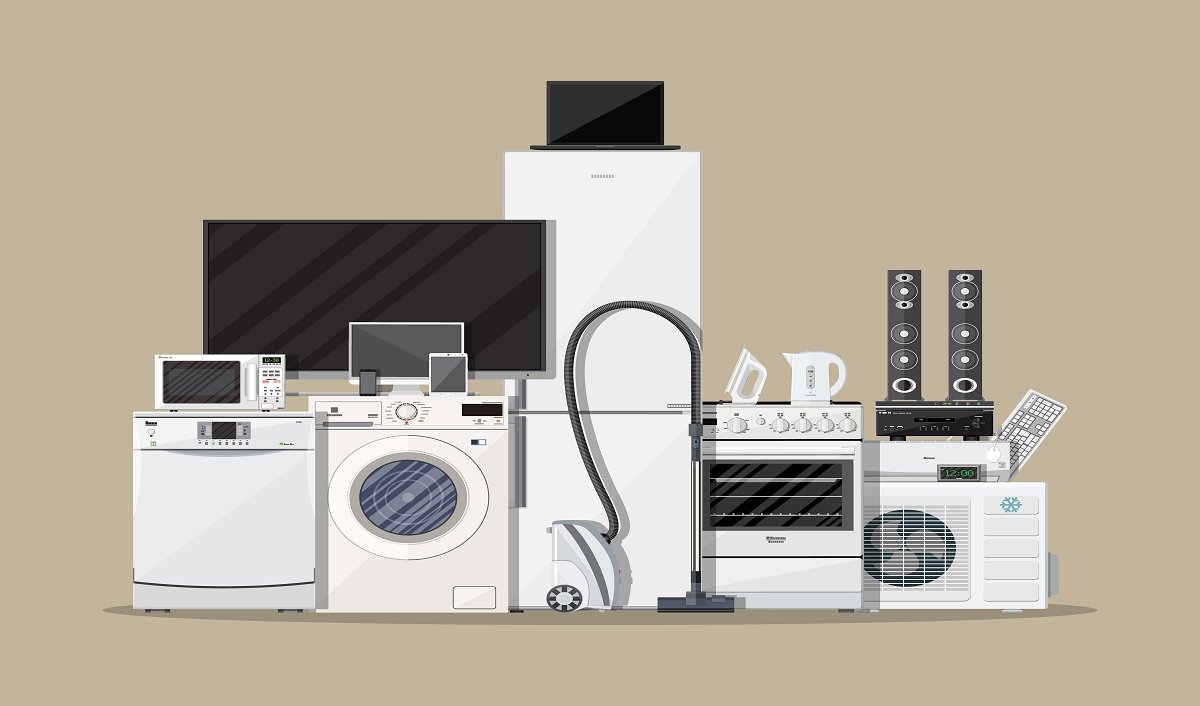
India’s home-appliance market is in the middle of a fierce expansion race. With Tier-2 and Tier-3 cities driving demand for affordable, smart, and energy-efficient products, brands like LG, Samsung, Whirlpool, and local challengers are competing for dominance in a market set to cross $25 billion by 2028.
Intent and Context: A Time-Sensitive Business Shift
This is a time-sensitive market analysis with ongoing developments in consumer trends, retail strategy, and brand competition. The surge in home-appliance demand from smaller towns is redefining India’s consumption map. Rising disposable income, aspirational lifestyles, and deeper retail penetration are pushing growth beyond metros. For India Inc., the battle for the living room, kitchen, and laundry corner has officially moved to Bharat’s heartland.
The Numbers Behind the Boom
According to a 2025 CRISIL report, India’s home-appliance sector is growing at 10–12 percent annually, outpacing the global average. The market for refrigerators, washing machines, air conditioners, and kitchen appliances is being reshaped by Tier-2 and Tier-3 cities, which now account for nearly 55 percent of total sales. Smaller-town consumers, aided by easy EMIs and expanding retail networks, are upgrading from basic appliances to mid-premium and smart categories. The “affordable aspiration” segment—priced between ₹15,000 and ₹40,000—has become the sweet spot for manufacturers.
Tier-2 Cities Are Leading the Growth Wave
Cities like Jaipur, Lucknow, Coimbatore, Indore, and Bhubaneswar have emerged as growth anchors for appliance makers. These markets are driven by first-time buyers and young families seeking lifestyle upgrades. The proliferation of organized retail stores, rising housing construction, and local influencer marketing have further accelerated this shift. E-commerce has also played a pivotal role: platforms such as Amazon, Flipkart, and Croma report that nearly 60 percent of their home-appliance orders now come from non-metro regions. For many consumers, appliances symbolize progress and comfort, not luxury—a mindset shift fueling consistent year-round demand.
Why Tier-2 Consumers Matter More Than Ever
Tier-2 consumers are driving this market for one simple reason: they are the fastest-growing segment with rising purchasing power and aspiration. Unlike metro consumers who upgrade every few years, Tier-2 buyers often make their first big appliance purchases, leading to higher volume growth. They are also increasingly value-conscious and brand-aware, influenced by digital advertising and peer recommendations. Companies have responded by launching products customized for regional preferences—larger-capacity washing machines for joint families, low-voltage air conditioners for power-fluctuating regions, and multi-utility kitchen appliances for compact homes.
How Brands Are Competing in This Expanding Market
The competition is intensifying across pricing tiers. Premium brands like LG and Samsung are localizing models and running bilingual marketing campaigns to target smaller cities. Whirlpool and Voltas are focusing on mid-range segments with affordability-driven innovation. Meanwhile, Indian brands such as Godrej Appliances, Blue Star, and Havells are leveraging their strong distribution in Tier-2 and Tier-3 towns. Startups are also entering the space, particularly in the kitchen-appliance and air-purifier categories, focusing on online-first models with smart IoT-enabled features. The result is a market where every price point is contested, and every new product launch is optimized for regional reach.
Technology, Smart Features, and Sustainability Trends
The new generation of home appliances is being shaped by two big factors: digital adoption and sustainability awareness. Smart connectivity, app-based controls, and AI-powered optimization are no longer niche features—they’re fast becoming mainstream expectations. Rural and semi-urban buyers are surprisingly quick to adopt these technologies, particularly through bundled EMI offers from banks and fintech players. Energy-efficient ratings and eco-friendly refrigerants have also become key differentiators as consumers become more environmentally aware. Government programs like the “Energy Efficiency Labeling” scheme are reinforcing this transition toward green appliances.
The Financing and Retail Push Behind Growth
Financial inclusion is another catalyst behind Tier-2 and Tier-3 appliance sales. Consumer financing companies like Bajaj Finserv, HDFC Bank, and Tata Capital have expanded low-cost EMI plans across rural and semi-urban branches. This has made big-ticket items like refrigerators and washing machines accessible to middle-income families. Simultaneously, modern retail chains such as Reliance Digital and Vijay Sales are expanding aggressively into smaller cities, providing touch-and-feel buying experiences that build trust. Offline sales still account for nearly 70 percent of total appliance purchases, but the hybrid model—researching online, buying offline—is rapidly growing.
What Lies Ahead: Localisation and Product Innovation
The next phase of India’s appliance growth will be defined by localisation and innovation. Manufacturers are setting up new plants in states like Tamil Nadu, Uttar Pradesh, and Gujarat to meet regional demand efficiently. Product designs are evolving to cater to India’s climatic and cultural diversity—dust-resistant cooling systems, inverter compressors for erratic power supply, and compact designs for small-town homes. With competition pushing companies to innovate faster, the next five years will see India’s home-appliance ecosystem emerge as one of the most diversified in the world.
Takeaways:
- Tier-2 and Tier-3 cities now account for over half of India’s appliance sales, driving industry growth.
- Affordable, smart, and energy-efficient appliances are the fastest-growing segments.
- Financing access, retail expansion, and localisation strategies are fueling consumer adoption.
- The next growth phase will focus on product innovation, sustainability, and regional customization.
FAQs
Q: Why are Tier-2 and Tier-3 cities driving the home-appliance boom?
A: Rising incomes, access to easy financing, and growing aspirations are making smaller cities the biggest growth engines for appliance demand.
Q: How are brands adapting to Tier-2 consumer behavior?
A: By launching localized product lines, expanding regional retail networks, and using vernacular marketing to build familiarity and trust.
Q: What role does technology play in this growth?
A: Smart features and energy-efficient designs are now central to purchasing decisions, even in semi-urban regions.
Q: What are the biggest challenges for manufacturers?
A: Managing logistics across diverse geographies, keeping prices competitive, and ensuring consistent service infrastructure in smaller cities.











Leave a comment