

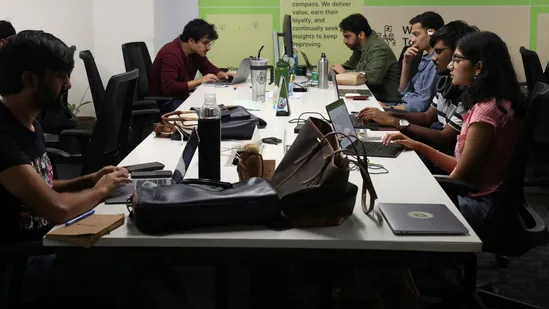
Karnataka’s 518 crore Startup Policy 2025 30 signals a major policy surge aimed at strengthening innovation across the state, with cities like Mysore and Hubballi positioned to gain significantly as businesses and talent spread beyond Bengaluru.
The summary
The new state policy focuses on deeper innovation networks, stronger incubation systems, fiscal incentives and sector specific support. Its impact will be especially visible in Tier 2 cities, where startup ecosystems are expanding but still need infrastructure, funding access and skilled talent.
Why the policy matters for Karnataka’s innovation landscape
Karnataka has long been India’s leading technology hub, but most activity has been concentrated in Bengaluru. The 518 crore policy aims to decentralise growth by developing new innovation districts across the state. This includes financial assistance for early stage ventures, incentives for research linked startups, support for women and rural entrepreneurs, and infrastructure for deep tech. For cities like Mysore and Hubballi, this represents a shift from isolated innovation pockets to a structured state backed ecosystem. The policy sets targets for creating more startups, expanding incubation capacity and integrating local industries with research institutions for commercial applications.
What changes for cities like Mysore under the new framework
Mysore already hosts several educational institutions, technical colleges and research facilities that contribute to a budding innovation culture. With the new policy, these institutions gain access to expanded incubation grants, research commercialisation support and partnerships with state level startup missions. Early stage founders in Mysore can leverage subsidies on prototyping, patent filing and market expansion. The city’s strong presence in tourism, heritage products, wellness and education creates opportunities for sector specific startups. Digital infrastructure improvements under the broader state plan also make Mysore more attractive for remote first companies and tech enabled service firms.
How Hubballi can accelerate growth with structured support
Hubballi has emerged as one of Karnataka’s most promising Tier 2 startup centres, supported by entrepreneurship programmes, a strong engineering talent base and access to industrial corridors. The new policy provides an additional layer of momentum through access to seed funding, industry partnerships and incentives for deep tech experimentation. Hubballi based founders can participate in state driven innovation challenges, collaborate with manufacturing clusters and scale through structured market access programmes. With improved connectivity to Bengaluru and Pune, the city becomes well positioned for logistics tech, agri tech, mobility solutions and industrial automation ventures.
Strengthening innovation infrastructure across Tier 2 clusters
A central pillar of the policy is infrastructure creation. This includes new incubation centres, sector specific labs, coworking spaces and testing facilities tailored for deep tech, biotechnology, semiconductors, AI and robotics. For Tier 2 clusters, such infrastructure reduces the cost and time required to build prototypes and test products. Local founders gain access to facilities that previously required travel to Bengaluru or other major cities. Better infrastructure also attracts startups from outside the region, drawing talent into Mysore, Hubballi and other emerging hubs like Mangaluru, Belagavi and Kalaburagi. When infrastructure and policy incentives align, these cities become competitive alternatives to larger metros.
Encouraging entrepreneurship among rural and women led startups
The policy’s emphasis on inclusive entrepreneurship is particularly relevant for non metro areas. Special funds and mentoring programmes are designed to support women founders, rural innovators and entrepreneurs from smaller towns. This helps widen the talent pipeline and ensures that innovation is not limited to urban elites. Mysore and Hubballi, both connected to large rural belts, can become launchpads for agritech, food processing, healthcare access and skilltech ventures. When rural innovators receive early support, they can solve hyperlocal problems and create region specific business models that scale sustainably.
Long term implications for Karnataka’s economic distribution
If implemented effectively, the policy can reduce dependency on Bengaluru by balancing growth across multiple urban centres. Diversification of innovation activity strengthens job creation, attracts investment and spreads economic resilience across the state. Investors benefit from lower operating costs outside Bengaluru, while startups leverage local markets and talent pools. Over time, this shift can help Karnataka build a multi city innovation map where different regions specialise in different sectors, enhancing the state’s competitiveness nationally and globally.
Takeaways
- Karnataka’s startup policy decentralises innovation, creating strong opportunities for Tier 2 cities.
- Mysore and Hubballi gain access to funding, incubation and sector specific support, helping them scale faster.
- Infrastructure development is a key driver, enabling rapid prototyping and reducing dependency on Bengaluru.
- Inclusive entrepreneurship initiatives strengthen rural and women led ventures, broadening the innovation base.
FAQs
Q: How will startups in Mysore benefit from the new policy?
They gain access to incubation schemes, financial incentives, prototyping support and opportunities to collaborate with state backed innovation programmes.
Q: What sectors in Hubballi are likely to grow fastest?
Agri tech, logistics tech, mobility solutions, manufacturing automation and digital services are well positioned due to the region’s industrial links.
Q: Does the policy reduce Bengaluru’s role?
Not reduce, but rebalance. Bengaluru remains the anchor, while other cities gain structured support to develop their own innovation identities.
Q: What do startups need to leverage the policy effectively?
Strong business planning, early engagement with incubation centres, and collaboration with industry partners will help founders maximise available benefits.











Leave a comment