

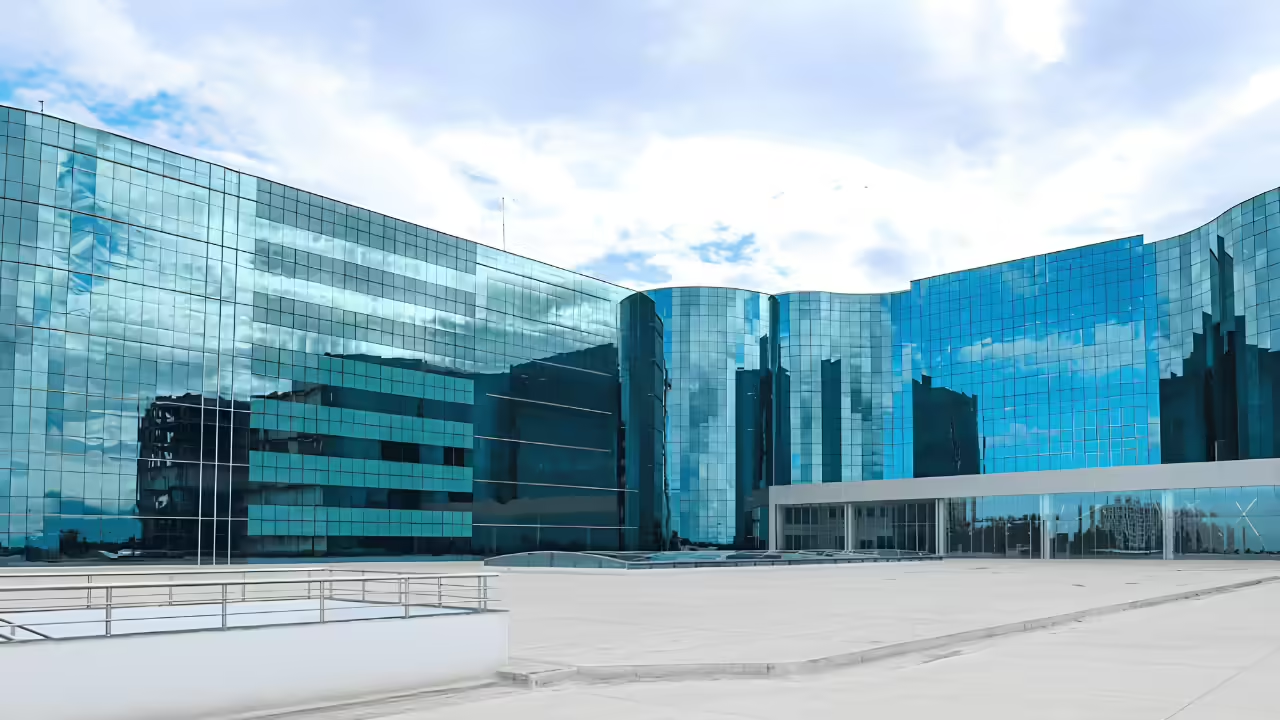
Land deals and AI centres are accelerating Coimbatore’s rise as a major tech town, shifting the city from a manufacturing stronghold to a diversified innovation hub. This transition is drawing investors, startups and enterprises that are searching for stable, cost effective alternatives outside traditional metros.
The summary
Coimbatore’s growing technology footprint is powered by industrial land activity, new AI development centres, a strong talent base and a supportive ecosystem that blends traditional manufacturing strengths with emerging tech capabilities.
Why land activity signals Coimbatore’s next growth phase
Recent land deals in and around Coimbatore mark a strategic shift in how companies are planning expansion. Tech companies, IT service providers, data driven enterprises and industrial automation firms are securing land for new offices, R&D units and hybrid campuses. These deals indicate long term commitment rather than short term capacity additions. Coimbatore’s affordability, lower congestion and strong connectivity to Chennai and Bengaluru make it a compelling choice. Local industrial belts, especially those around Saravanampatti, Kaniyur and nearby corridors, are witnessing heightened interest. When land is acquired at scale for technology and allied industries, it shapes urban development, creates new job clusters and anchors long term infrastructure growth.
AI centres and the city’s evolving tech identity
AI centres established by IT majors, engineering service providers and emerging startups have strengthened Coimbatore’s identity as a technology driven city. These centres focus on machine learning, automation, data engineering, analytics and industrial AI. The presence of such centres builds a talent magnet effect. Local engineering graduates get access to high value work without relocating, and experienced professionals are returning from metros due to quality of life benefits. AI labs within colleges and research institutions further accelerate collaboration. As more companies invest in AI capability, the city becomes a natural test market for automation in textile processing, precision engineering, logistics and agriculture tech, aligning with its industrial heritage.
Talent availability and the city’s education driven ecosystem
Coimbatore’s tech potential is deeply tied to its educational strength. The region hosts numerous engineering colleges, management institutes and polytechnic institutions that supply steady talent for IT, analytics and design roles. Unlike many Tier 2 cities, Coimbatore’s graduates often have industry exposure due to internships with nearby manufacturing units. This creates a blend of practical and technical skill sets suited for AI and automation. Companies view this as a competitive advantage because it lowers training costs and accelerates deployment in high skill projects. Talent retention is also higher as the city offers lower living costs and stable lifestyle choices that employees value.
Why Coimbatore appeals to technology companies moving beyond metros
Companies exploring alternatives to Bengaluru or Chennai are drawn to Coimbatore for operational stability, predictable infrastructure and cost efficiency. Office rentals are significantly lower, logistics networks are strong and business services are widely available. The city’s airport connectivity makes it convenient for national and international operations. Technology companies expanding into Tier 2 cities look for places where they can scale without heavy administrative effort, and Coimbatore’s business friendly environment supports quick setup. The presence of mature industries also creates opportunities for technology providers to work with real world use cases, especially in automation, supply chain optimisation and industrial AI.
Impact on real estate, job creation and regional development
As tech demand grows, commercial real estate in Coimbatore is expanding. Developers are building tech parks, flexible office spaces and specialised R&D units. These developments create local employment, attract service providers and increase demand for housing. The rise of AI centres brings high skill jobs to the region, improving income levels and stimulating local consumption. Surrounding towns benefit as well, as industrial corridors extend and support services multiply. Over time, Coimbatore’s growth strengthens regional economies across the western belt of Tamil Nadu, integrating smaller towns into broader tech led value chains.
Challenges the city must solve to sustain momentum
To maintain its rise, Coimbatore must address specific gaps: traffic management, water security, power reliability and urban planning. Rapid commercial expansion can strain municipal systems if not aligned with long term planning. Talent depth must also continue growing to meet higher demand for niche skills such as AI engineering, data science and cybersecurity. Strengthening public transport and improving last mile connectivity will be vital as new tech corridors take shape. Ensuring consistent policy support and simplifying business approvals will further enhance investor confidence.
Takeaways
- Large land deals and expanding AI centres are transforming Coimbatore into a strong emerging tech hub.
- A steady talent pipeline supported by educational institutions gives companies confidence to scale locally.
- Lower operating costs and strong infrastructure make the city attractive for firms moving beyond metros.
- Regional development accelerates as tech activity spreads job creation and supply chain opportunities across nearby districts.
FAQs
Q: Why are companies choosing Coimbatore over bigger tech cities?
Because it offers strong talent, lower costs, reliable infrastructure and a stable environment for scaling operations.
Q: What industries benefit most from Coimbatore’s AI centres?
Manufacturing, textiles, automation, logistics, healthcare tech and precision engineering gain the most from applied AI capability.
Q: Does Coimbatore have enough skilled talent for large tech operations?
Yes. Its strong education network and industry linked training ensure a steady supply of skilled engineers and analysts.
Q: What challenges could slow down Coimbatore’s rise as a tech town?
Urban infrastructure pressure, power needs, talent upskilling and planning gaps could affect long term momentum if not addressed proactively.












Leave a comment