

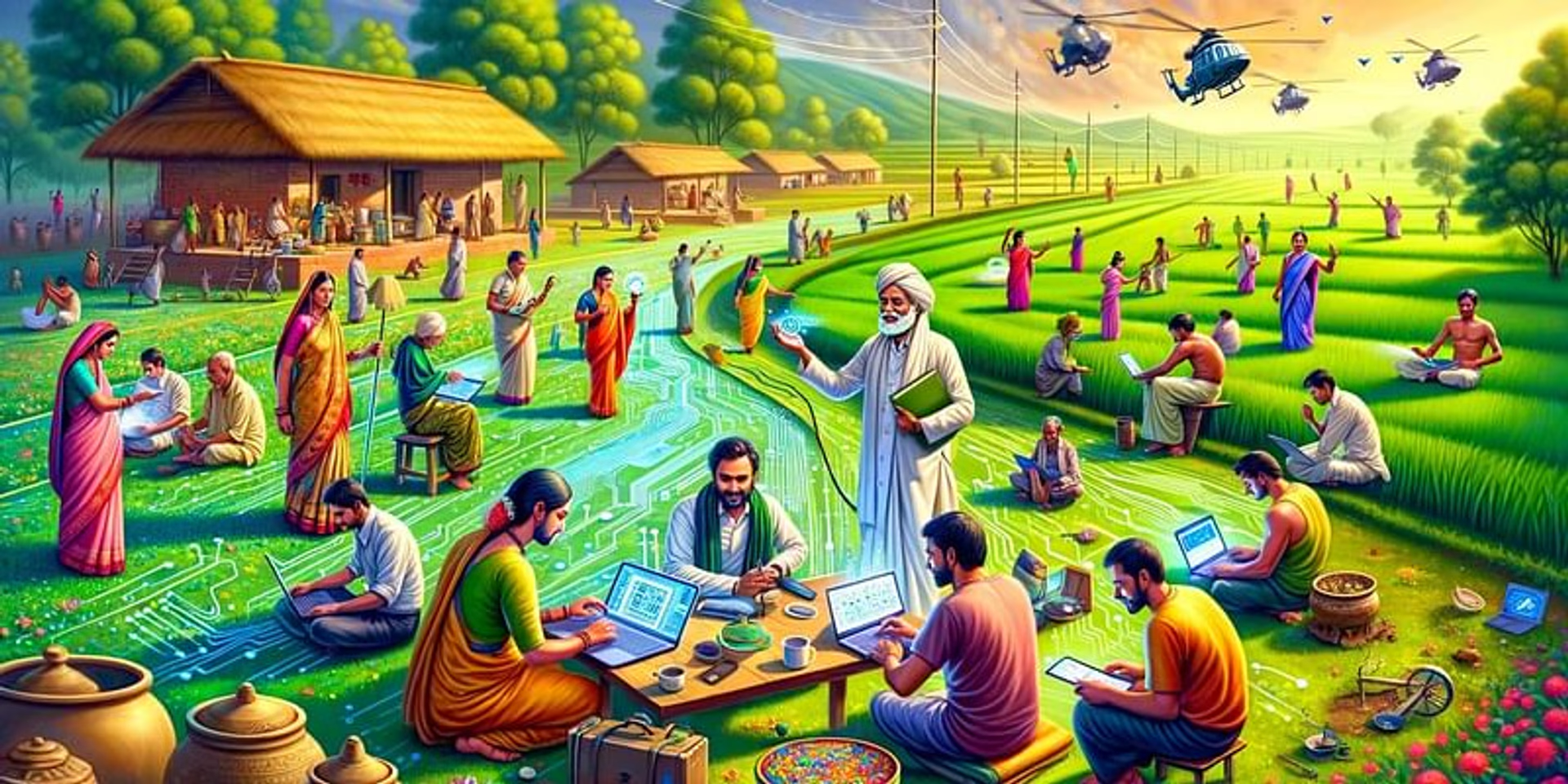
AI-powered digital governance is helping public services reach more villages across India by improving citizen access, reducing paperwork, enhancing service delivery, and supporting government departments with faster decision-making. While challenges remain, technology is making governance more efficient and accessible in rural areas.
The rise of AI-powered digital governance in India is changing how public services are delivered, especially in rural and remote areas. Artificial intelligence, combined with expanding digital infrastructure, is helping governments provide faster, more transparent, and citizen-friendly services. From agriculture and healthcare to welfare schemes and grievance redressal, AI-enabled systems are improving access for millions living in villages. Although human oversight remains essential, these technologies are making government services more responsive while reducing administrative delays.
India’s Digital Governance Push Is Expanding Beyond Cities
India’s digital transformation has accelerated over the past decade through initiatives that encourage online public services, digital identity, direct benefit transfers, and electronic governance. As internet connectivity and smartphone usage expand into rural regions, government departments are increasingly adopting AI to improve service delivery.
Many public services that once required multiple office visits can now be accessed online or through Common Service Centres located in villages. AI supports these systems by helping automate repetitive tasks, verify documents, organize records, answer citizen queries, and prioritize requests based on urgency.
This shift allows government officials to spend more time handling complex cases while routine services are processed more efficiently.
AI Is Making Government Services Faster and More Accessible
Artificial intelligence is being used across several government functions to improve speed and accuracy. AI-powered chatbots assist citizens by answering common questions related to government schemes, certificates, pensions, land records, taxation, and welfare benefits in multiple Indian languages.
Document verification systems can process applications more quickly, reducing waiting periods for services such as income certificates, caste certificates, birth registrations, and various public welfare applications.
Some departments are also using AI to analyze large volumes of data, identify missing information, detect duplicate records, and improve administrative planning. These capabilities help reduce manual errors while improving overall efficiency.
Rural Healthcare and Agriculture Are Benefiting From AI
Healthcare and agriculture are among the sectors where AI-powered public services are creating visible benefits in villages.
In healthcare, AI supports disease surveillance, assists healthcare workers with early risk identification, helps organize patient records, and improves telemedicine services. While AI does not replace medical professionals, it can help prioritize patients who require immediate attention and support healthcare planning.
Agriculture departments are also using AI alongside satellite imagery, weather data, and crop information to provide farmers with better advisory services. Digital platforms can recommend suitable sowing periods, irrigation practices, pest management techniques, and weather alerts based on local conditions.
These services help farmers make informed decisions while reducing uncertainty during changing weather patterns.
Digital Infrastructure Is Strengthening Rural Governance
AI-powered governance depends on reliable digital infrastructure. The expansion of broadband connectivity, mobile internet, public Wi-Fi initiatives, and digital service centres has significantly improved access to online government services across rural India.
Village-level entrepreneurs operating Common Service Centres continue to play an important role by assisting citizens who may not be comfortable using digital platforms independently.
Cloud-based platforms allow government departments to securely store records while enabling quicker access to information across different offices. This reduces paperwork, minimizes duplication, and improves coordination between departments.
As digital literacy improves, more rural households are becoming comfortable using online services for banking, education, healthcare, and government applications.
AI Supports Better Decision-Making for Government Departments
Artificial intelligence is also helping government agencies make more informed decisions through data analysis.
Departments can identify trends in welfare scheme implementation, monitor infrastructure projects, analyze service demand, and allocate resources more efficiently. AI tools can highlight areas where services are delayed or where additional support may be required.
For example, officials can use data to identify villages requiring additional healthcare resources, drinking water infrastructure, or educational support. This evidence-based planning helps improve public spending and service delivery.
However, experts continue to emphasize that AI should assist decision-making rather than replace human judgment, particularly in matters involving citizen rights and welfare.
Challenges Still Need Careful Attention
Despite significant progress, several challenges remain before AI-powered governance can fully benefit every village.
Internet connectivity remains inconsistent in some remote regions, and digital literacy varies widely across different communities. Many citizens still require assistance while using online platforms.
Data privacy, cybersecurity, transparency, and algorithmic fairness are also important considerations. Government departments must ensure that AI systems remain accountable, protect sensitive personal information, and provide accessible grievance mechanisms when errors occur.
Continuous staff training, public awareness campaigns, and investments in rural digital infrastructure will remain essential for long-term success.
The Future of AI in Rural Public Services
India’s digital governance journey is expected to expand further as AI technologies become more sophisticated and accessible. Future applications may include multilingual virtual assistants, predictive public health systems, smarter disaster management, intelligent transportation planning, and more personalized citizen services.
The objective is not to replace government officials but to make governance more efficient, transparent, and citizen-centric. As connectivity improves and digital adoption continues to grow, AI-powered public services are likely to become an increasingly important part of everyday life in India’s villages.
For millions of rural citizens, faster access to government services can improve education, healthcare, financial inclusion, agricultural productivity, and overall quality of life.
Takeaways
- AI-powered digital governance is improving access to public services in rural India.
- Healthcare, agriculture, welfare delivery, and document processing are benefiting from AI-enabled systems.
- Strong digital infrastructure and Common Service Centres remain critical for rural service delivery.
- Human oversight, cybersecurity, and digital literacy will continue to play an important role in responsible AI adoption.
Frequently Asked Questions
1. What is AI-powered digital governance?
It refers to the use of artificial intelligence to improve the delivery, efficiency, and accessibility of government services while supporting administrative decision-making.
2. How does AI help people living in villages?
AI helps citizens access government services faster through chatbots, automated document processing, improved welfare delivery, healthcare support, and agricultural advisory systems.
3. Does AI replace government employees?
No. AI is designed to assist government officials by automating routine tasks and providing data-driven insights, while important decisions continue to require human oversight.
4. What challenges does AI-powered governance face?
Key challenges include internet connectivity, digital literacy, cybersecurity, data privacy, algorithmic transparency, and ensuring equal access for all citizens.
(Internal keyword suggestions: AI-powered digital governance, digital governance India, AI in public services, rural digital transformation, AI for villages, Common Service Centres India, digital governance rural India, artificial intelligence government services, e-governance India, AI in rural development)












Leave a comment