

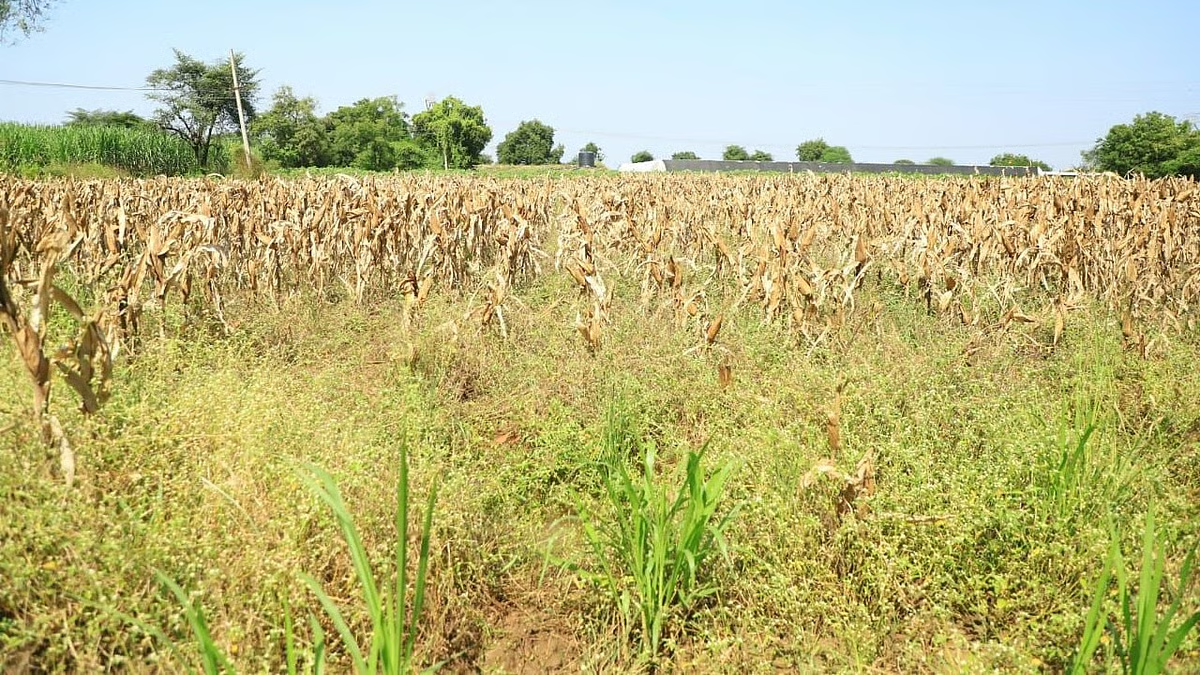
Maharashtra’s crop loss assessment has reached a crucial stage after deficient monsoon rainfall affected farmers across several parts of the state. The government has completed its field-level assessment and is preparing to approach the Centre for financial assistance, as cultivators face mounting losses following a difficult 2026 kharif season.
Maharashtra Government Completes Crop Loss Assessment
The Maharashtra government is preparing to submit a memorandum to the Central government seeking financial assistance for farmers affected by crop losses during the 2026 kharif season. According to reports published on November 2, the state plans to submit the memorandum within the next one or two days.
The assessment has been carried out by the state Agriculture Department with support from other administrative departments. The exercise involved nearly three crore farm-site visits, reflecting the scale of the assessment undertaken across the state.
The memorandum is expected to present details of agricultural damage and the financial support required to help affected cultivators recover. The state government is seeking assistance from the Centre after prolonged rainfall shortages disrupted agricultural activity in several districts.
The completion of the assessment is an important administrative step. However, the submission of the memorandum does not automatically mean that compensation has been approved or that payments will immediately reach farmers. The extent of assistance will depend on the government’s subsequent decisions and the applicable relief procedures.
Rainfall Deficit Affected Maharashtra’s 2026 Kharif Season
The 2026 monsoon season brought uneven rainfall across Maharashtra. While some areas received substantial rain, several districts experienced prolonged dry spells during important stages of crop growth.
According to rainfall figures reported by the India Meteorological Department, Maharashtra received 804.4 mm of rainfall between June 1 and September 30, against a seasonal average of 994.5 mm. This represented a shortfall of approximately 19 per cent.
The distribution of rainfall was also uneven. Heavy rainfall in some periods could not compensate for dry conditions experienced in other parts of the season. The southwest monsoon withdrew from Maharashtra on October 3, marking its earliest withdrawal from the state in four years.
The impact was particularly concerning in districts that experienced extended breaks in rainfall. Crops require adequate moisture during sowing, flowering and grain development. A shortage of water during these stages can reduce plant growth, affect yields and increase the risk of crop failure.
The situation highlighted how the timing and distribution of rainfall can be as important as the overall seasonal rainfall figure for agricultural production.
Drought Declaration Covered 265 Maharashtra Talukas
The state government’s response began with the identification of drought-affected areas. On September 26, Maharashtra declared drought conditions in 265 of its 358 talukas under the Trigger-1 category of the Drought Management Code, 2016.
The declaration covered nearly three-fourths of the state’s talukas and enabled district administrations to begin crop damage assessments and implement specified relief measures.
District collectors were directed to conduct panchnamas, the official process used to record agricultural damage. These assessments help authorities document the affected land, crops and extent of losses before deciding the support available to eligible farmers.
The drought declaration also brought several relief measures into focus. These included concessions in land revenue, restructuring of crop loans, a temporary suspension of recovery of agriculture-related loans and concessions on electricity bills for agricultural pumps.
The government also outlined measures relating to drinking water availability and rural employment in affected areas.
It is important to distinguish these immediate drought-related concessions from direct crop-loss compensation. Financial assistance for damaged crops requires a separate assessment and approval process.
Soybean, Cotton and Other Kharif Crops Under Pressure
The rainfall deficit created difficulties for farmers cultivating several major kharif crops, particularly in regions that experienced prolonged dry spells.
Soybean and cotton are among the important crops grown across Maharashtra. Other crops affected by rainfall shortages include tur, moong and urad. The extent of damage has varied according to local rainfall conditions, soil moisture, irrigation access and the stage of crop development when the dry spell occurred.
Marathwada has faced particularly difficult conditions. Farmers in parts of the region reported drying soybean crops and declining water availability following extended periods without adequate rainfall.
Vidarbha has also experienced rainfall shortages in several districts. This is significant for the region’s agricultural economy, where a large number of rural households depend on seasonal cultivation.
The impact of a poor harvest extends beyond the quantity of crops produced. Lower yields can reduce farm income, make it difficult to repay agricultural loans and increase the cost of managing the next cultivation cycle.
Farmers who depend heavily on rainfall are particularly vulnerable because they have fewer alternatives when irrigation sources become insufficient.
Nashik Assessment Highlights the Scale of Agricultural Losses
District-level assessments provide a clearer picture of the difficulties faced by cultivators.
In Nashik district, crop damage assessments across 10 drought-hit talukas identified losses affecting more than 5.07 lakh hectares of agricultural land and over 5.16 lakh farmers, according to an October 22 report.
The district administration was expected to seek approximately Rs 485.32 crore in compensation from the state government for the reported agricultural losses.
These figures demonstrate why local assessments are important. Rainfall conditions and agricultural damage are not uniform across Maharashtra. A district may experience severe crop losses even when another part of the state receives relatively adequate rainfall.
A statewide memorandum therefore needs to account for differences in the nature and extent of damage across districts, crops and farming conditions.
What Happens After Maharashtra Submits the Memorandum?
The next stage will involve the submission and examination of the state’s memorandum by the Central government.
The document is expected to communicate the extent of agricultural losses and the financial assistance sought by Maharashtra. Central authorities will then consider the request through the applicable assessment and relief mechanisms.
The state government will also need to take decisions regarding the distribution of approved assistance to eligible farmers.
Maharashtra follows an established procedure for natural calamity-related crop-loss relief. Local officials first conduct panchnamas and submit the records to the Tahsil office. District-level information is consolidated at the Collectorate, after which Divisional Commissioners prepare proposals for the state government.
Once relief is approved through a government order, eligible records are processed through the state’s Direct Benefit Transfer system. Farmers may need to complete the prescribed verification and e-KYC requirements before payments are released.
The state’s official Relief and Rehabilitation Department says the e-KYC process for this relief is free of cost. Farmers are advised to follow official instructions and avoid paying intermediaries who promise faster compensation.
Farmers Await Clarity on Financial Assistance
For affected cultivators, the immediate concern is when financial assistance will become available and how much support they will receive.
A completed crop-loss assessment provides the administration with a documented basis for considering relief. However, the final compensation amount, eligibility conditions and payment schedule depend on subsequent government decisions.
Farmers also face expenses associated with the next agricultural season. Purchasing seeds, fertilisers and other inputs requires working capital, while existing loans and household expenses continue regardless of crop performance.
The situation makes timely assistance important, particularly for small and marginal farmers who may have limited savings or access to alternative sources of income.
Alongside compensation, access to irrigation, drinking water and livestock fodder remains important in areas affected by drought conditions. These requirements can continue beyond the end of the monsoon season.
The state’s memorandum to the Centre will therefore be an important step in determining the next phase of relief for Maharashtra’s agricultural sector. The focus will now shift from documenting losses to deciding the assistance that can reach affected farming households.
Key Takeaways
- Maharashtra has completed its statewide crop-loss assessment and plans to submit a memorandum to the Centre within one or two days.
- The assessment involved nearly three crore farm-site visits, according to reports published on November 2.
- Drought conditions were declared in 265 of the state’s 358 talukas on September 26.
- The final amount of central assistance, compensation eligibility and payment schedule have yet to be established through the subsequent approval process.
Frequently Asked Questions
1. Why is Maharashtra preparing a crop-loss report in November 2026?
The state is preparing the report to document agricultural damage caused by deficient rainfall and prolonged dry spells during the 2026 kharif season. It will be submitted to the Central government to seek financial assistance for affected farmers.
2. How many talukas in Maharashtra were declared drought-affected?
The Maharashtra government declared drought conditions in 265 of the state’s 358 talukas on September 26, 2026, under the Trigger-1 category of the Drought Management Code, 2016.
3. Which crops have been affected by the rainfall deficit?
Soybean, cotton, tur, moong and urad are among the crops affected in different parts of Maharashtra. The extent of damage varies by district and local rainfall conditions.
4. When will farmers receive crop-loss compensation?
A specific payment date has not been confirmed. The memorandum must first be considered by the Centre, and financial assistance will depend on government approval, eligibility verification and the applicable Direct Benefit Transfer process.









Leave a comment