

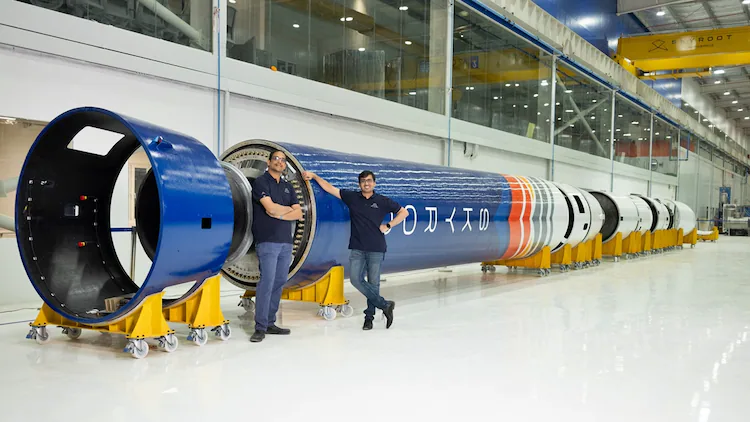
The private space push led by Skyroot Aerospace and the launch of its Vikram I rocket is creating a surge in tech awareness and ambition across Tier 2 cities. For young students, engineers and early career professionals outside metros, the success of an Indian private company in space signals new possibilities and career pathways that once felt distant.
Short summary paragraph
Skyroot Aerospace’s Vikram I launch is boosting technology awareness and inspiring youth in Tier 2 cities. The milestone demonstrates that high end aerospace innovation can emerge from India’s private sector and opens new aspirations for students and engineers in smaller towns.
Why Skyroot’s private space milestone matters beyond metros
For decades, space technology was synonymous with government institutions, making it a distant dream for many students in smaller cities. The arrival of private space startups changes this perception. Skyroot’s Vikram I launch shows that Indian entrepreneurs, engineers and young scientists can achieve complex milestones even outside traditional government ecosystems.
This shift matters to Tier 2 India because it signals accessibility. Students in cities such as Indore, Jaipur, Nagpur, Coimbatore, Lucknow, Vizag and Bhopal now see space tech as an industry they can join, not just admire from afar. The private sector’s pace, visibility and storytelling make space innovation more relatable to aspiring youth who were previously unaware of career opportunities beyond IT, medicine or civil services.
The milestone also reflects India’s evolving role in the global commercial launch market. Seeing an Indian private company build and prepare rockets for orbital missions sparks pride and curiosity across small towns, driving interest in engineering, physics and emerging technologies.
Boost to STEM interest and academic ambition in smaller cities
Skyroot’s work has already influenced school and college discussions around aerospace engineering, propulsion, satellite technology and robotics. Teachers use the Vikram I launch as a real world example to explain modern physics and engineering concepts. Students who once aimed primarily for software jobs are now exploring aerospace, mechanical design, materials science and embedded systems.
Tier 2 and Tier 3 cities host a large pool of engineering colleges where students often lack exposure to cutting edge industries. Skyroot’s visibility encourages them to take practical projects seriously and pursue internships, hackathons or research tracks that build STEM capability. It also motivates student robotics clubs, satellite teams and space interest groups that are emerging across campuses.
Such influence helps break the notion that only metro based students can access high tech industries. With online courses, remote mentorship and accessible labs, students can now build early prototypes and gain relevant skills from their hometowns.
New job aspirations and career paths for youth outside metros
Skyroot’s success highlights a broader shift in India’s startup and tech ecosystem, where deep tech companies are creating jobs that go beyond coding. Disciplines like avionics, propulsion design, systems engineering, composite manufacturing, cryogenic research and satellite deployment are gaining visibility among placement driven youth.
For Tier 2 candidates, this opens alternative career ambitions. Young engineers see the possibility of working in high tech manufacturing, aerospace R&D, testing facilities or materials labs. These opportunities align with India’s expanding private space sector, which is expected to create thousands of direct and indirect jobs in the coming years.
The rise of such roles also encourages students to pursue specialised skill development through certification programmes, online learning platforms and college industry partnerships.
Rise of local innovation and maker culture in smaller towns
The private space movement has energised maker culture across smaller towns. Engineering labs, local innovation hubs and college incubators now prioritise projects related to drones, satellite tracking, micro propulsion and model rocketry.
Youth are increasingly participating in national space hackathons, CubeSat projects and internship programmes offered by new space startups. Schools and coaching centres use Skyroot’s example to inspire curiosity through science fairs, rocket building workshops and astronomy sessions.
This hands on exposure helps students develop problem solving skills and confidence in working with hardware. It also strengthens local innovation ecosystems by encouraging young engineers to pursue more ambitious, technically complex projects.
How the private space ecosystem benefits smaller cities
As India’s private space industry expands, manufacturing and testing units may shift to lower cost locations outside metros. Tier 2 cities offer affordable land, skilled labour, engineering colleges and supportive state policies, making them ideal for satellite assembly units, component manufacturing and R&D centres.
This decentralisation can create local jobs and attract investment to cities that previously depended on service sector or manufacturing employment. Startup founders from these cities may also explore opportunities in aerospace supply chains, such as sensors, electronics, precision machining and software systems.
Government support through space parks, incubation programmes and policy reforms further increases the likelihood of private space companies engaging with smaller cities for talent, partnerships and operations.
Impact on national pride and youth motivation
Space achievements often spark broader emotional responses in society. Skyroot’s launch builds national pride and motivates young Indians to believe that world class engineering can be achieved from within the country. For Tier 2 youth, this builds self belief and reduces the psychological gap between local opportunity and global achievement.
The milestone shows that innovation is not restricted to large labs or capital rich foreign companies. Indian engineers, including those from modest backgrounds, can work on rockets, satellites and space missions. This inspires long term ambition among students who previously underestimated their potential due to geography or resource constraints.
Long term outlook for tech aspirations in smaller cities
As private space missions become more frequent and mainstream, interest in aerospace and advanced engineering will continue to rise in small towns. Colleges will adapt curricula, incubation centres will promote deep tech ventures and youth will pursue higher education in specialised fields.
Over time, this can create a strong talent pipeline from Tier 2 India that supports the country’s growing space economy. Young entrepreneurs may also explore space aligned startups in areas such as analytics, satellite imaging, communication systems and hardware components.
Takeaways
Skyroot’s Vikram I launch boosts tech ambition among Tier 2 youth.
STEM interest is rising as space achievements become more relatable.
Private space growth creates new career paths beyond metro based IT roles.
Smaller cities may emerge as hubs for aerospace manufacturing and innovation.
FAQs
Why is Skyroot’s Vikram I launch important for small town youth
Because it shows that high tech space engineering is achievable within India’s startup ecosystem, inspiring students to pursue advanced technology careers.
Does this launch impact STEM interest in smaller cities
Yes. Schools and colleges use it to spark curiosity in physics, engineering and robotics, making STEM fields more attractive.
Will private space growth create jobs outside metros
Likely. Aerospace manufacturing and component development may expand to lower cost Tier 2 regions.
Can students from small towns enter the space industry
Absolutely. With online learning, internships and growing private sector demand, geography is no longer a barrier.










Leave a comment