

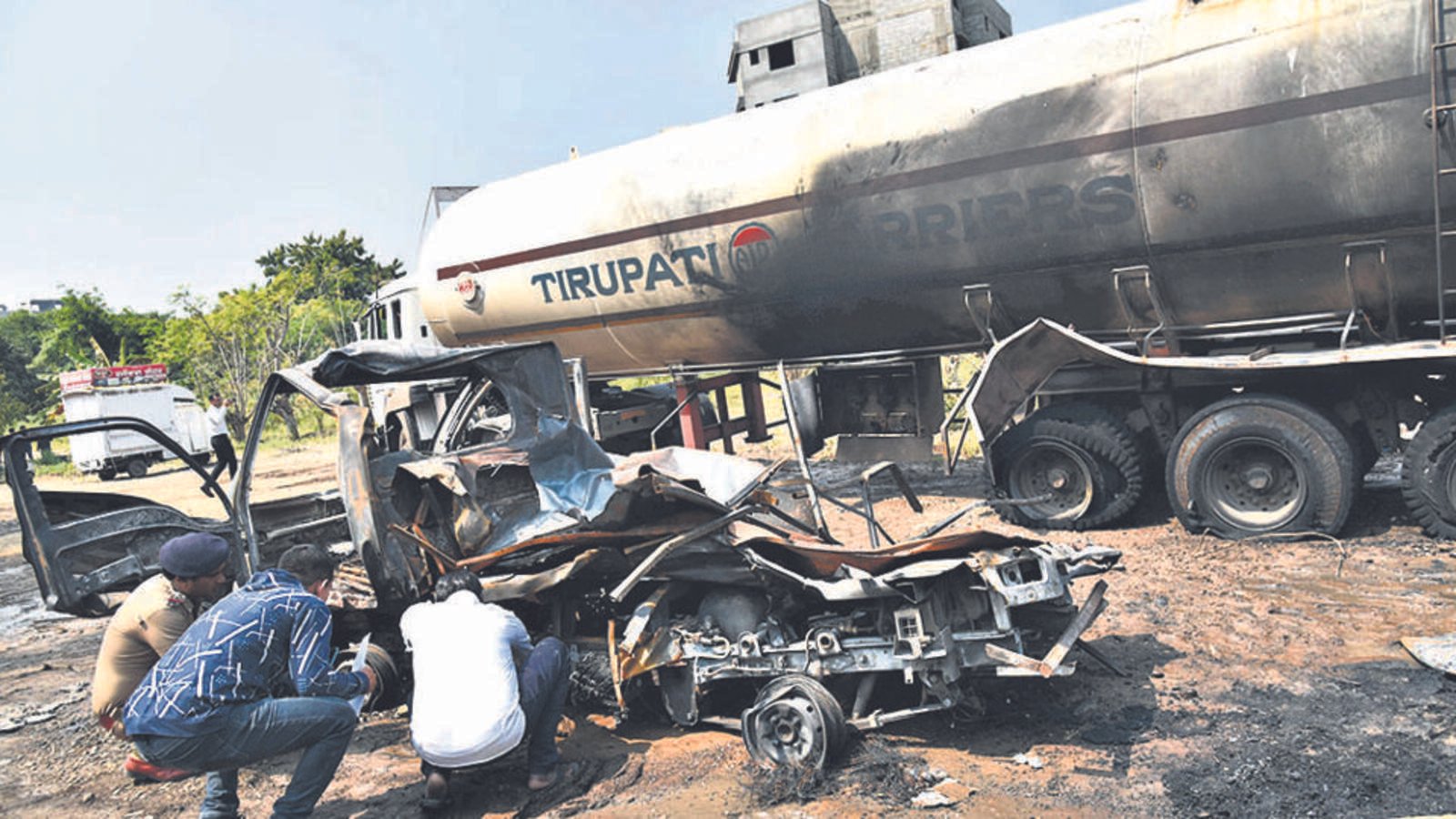
The Maharashtra Bīd diesel tanker blast has disrupted local transport movement and raised urgent questions around fuel transport safety protocols in semi urban districts. The explosion, which occurred on a busy route in Beed district, has triggered administrative reviews and public concern.
The Maharashtra Bīd diesel tanker blast is a time sensitive news event, and the reporting tone reflects ongoing developments and verified administrative responses. The incident occurred when a diesel laden tanker reportedly caught fire and exploded on a key road stretch, causing panic among commuters and nearby residents. The blast damaged surrounding vehicles, temporarily shut down traffic, and exposed gaps in hazardous material handling on district roads. Emergency services rushed to the site to control the fire and prevent further escalation.
What Happened at the Blast Site in Beed District
According to initial assessments, the diesel tanker was passing through a semi congested road section when the fire broke out. Witnesses reported seeing flames engulf the vehicle moments before the explosion. The intensity of the blast was strong enough to scatter debris across the roadway, forcing motorists to abandon vehicles and flee the area.
Local police cordoned off the site immediately, diverting traffic through alternative routes. Fire tenders from nearby towns were deployed to douse the blaze, while officials ensured that no secondary explosions occurred due to fuel leakage. While fatalities were avoided, the incident caused injuries and significant property damage, including damage to nearby shops and parked vehicles.
Immediate Impact on Local Transport Movement
The diesel tanker blast in Beed district brought transport movement to a standstill for several hours. Buses operated by the state transport corporation were halted or rerouted, affecting daily commuters, students, and workers. Private vehicles and goods carriers were stranded, leading to delays in essential supply movement.
Beed district serves as a transit corridor for fuel and agricultural goods moving between Marathwada towns. Any disruption on these roads has a ripple effect on local markets and fuel availability. Transport unions expressed concern over repeated incidents involving fuel carriers and warned that without stronger enforcement, such accidents could recur.
Emergency Response and Administrative Action
District administration officials reached the spot to assess damage and oversee relief operations. Health teams were placed on alert, and nearby hospitals were instructed to be prepared for emergency admissions. Fire department officials confirmed that the blaze was brought under control within a few hours, preventing further spread.
The Maharashtra government ordered a preliminary inquiry to determine whether safety norms were violated. Transport department officials began examining the tanker’s fitness certificate, driver credentials, and compliance with hazardous goods transport regulations. This incident has added pressure on authorities to act swiftly and transparently.
Safety Protocols for Diesel Tanker Transport
The Maharashtra Bīd diesel tanker blast has highlighted the risks associated with transporting hazardous fuel on district and state highways. Diesel tankers are required to follow strict safety protocols, including proper vehicle maintenance, certified drivers, speed restrictions, and clearly marked hazard signage.
Experts point out that many fuel tankers pass through narrow roads and populated areas without adequate monitoring. In districts like Beed, where infrastructure constraints exist, enforcement becomes even more critical. The lack of designated fuel transport corridors increases the likelihood of accidents, especially during peak traffic hours.
Long Term Implications for Road Safety in Marathwada
Beyond immediate disruption, the blast has reopened discussions on road safety planning in Marathwada. Local representatives are demanding better regulation of hazardous material movement, regular inspections, and training programs for tanker drivers. There is also a push for installing surveillance systems and emergency response units along high risk routes.
For residents, the incident has reinforced fears about living and operating businesses near major transport routes. Traders and shop owners affected by the blast have sought compensation and assurance that preventive measures will be enforced to avoid repeat incidents.
Public Reaction and Accountability Demands
Public reaction in Beed district has been one of shock and anger. Social media posts from locals questioned why fuel tankers are allowed to pass through crowded areas without escort or timing restrictions. Civic groups have demanded stricter penalties for violations of fuel transport safety norms.
Opposition leaders have also raised the issue, calling for accountability and policy level changes rather than temporary checks. The diesel tanker blast has become a focal point for broader conversations about infrastructure readiness and governance in non metro districts.
What Comes Next After the Incident
Authorities are expected to submit a detailed report once the investigation concludes. Based on findings, action may be taken against responsible parties, and additional safety directives could be issued statewide. Transport officials are also likely to review existing routes used for fuel movement in Beed and surrounding districts.
The Maharashtra Bīd diesel tanker blast serves as a warning that industrial and fuel transport safety cannot be treated as routine paperwork. Stronger oversight and proactive planning will be necessary to protect lives and maintain uninterrupted transport networks.
Takeaways
- The Beed diesel tanker blast caused major disruption to local transport and traffic movement.
- Emergency response prevented casualties but exposed safety enforcement gaps.
- Fuel tanker transport protocols are under renewed scrutiny in Maharashtra.
- The incident may lead to stricter regulation of hazardous material movement.
FAQs
Where did the diesel tanker blast occur in Maharashtra?
The explosion took place in Beed district on a key road used for local and transit transport.
Was there any loss of life in the incident?
No fatalities were reported, but injuries and property damage occurred.
What safety rules apply to diesel tanker transport?
Tankers must meet vehicle fitness standards, follow route regulations, display hazard markings, and be driven by trained personnel.
What action has the government taken after the blast?
An inquiry has been ordered to assess compliance with safety norms and determine responsibility.












Leave a comment