

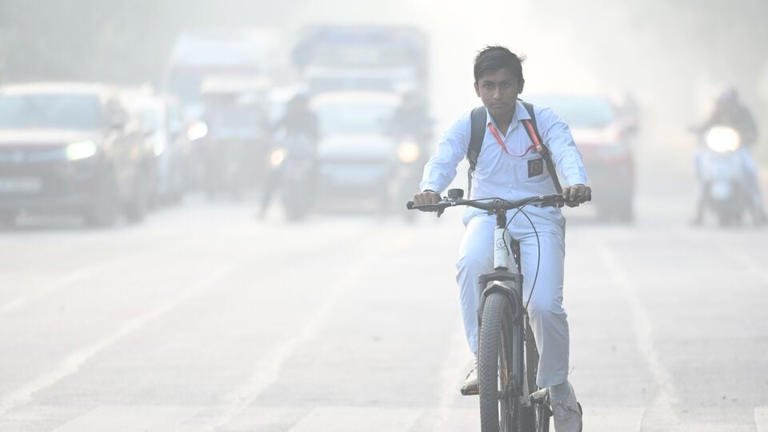
Delhi NCR GRAP IV enforcement has led to widespread flight chaos, school closures and commuter breakdowns as air pollution levels remain severe. The emergency measures reflect escalating health risks and expose how fragile daily mobility and public services become during extreme pollution episodes.
Delhi NCR GRAP IV is a time sensitive news development. The restrictions are active, response driven and linked to current air quality readings. The tone of this article follows a news reporting approach with contextual explanation for readers.
What GRAP IV means and why it was activated
GRAP IV is the highest stage under the Graded Response Action Plan for air pollution control in Delhi NCR. It is triggered when air quality reaches the severe plus category, posing immediate health risks. At this stage, authorities enforce strict controls on construction activity, vehicle movement and industrial operations.
The latest activation followed sustained spikes in particulate matter levels, driven by a combination of winter meteorology, vehicular emissions and regional pollution sources. With wind speeds low and temperature inversion trapping pollutants, dispersion remained minimal.
GRAP IV is designed as an emergency brake. It prioritises health protection over economic activity, even though the immediate disruption is significant.
Flight operations disrupted across Delhi NCR
One of the most visible impacts of GRAP IV has been flight chaos at major airports. Low visibility caused by dense smog has led to delays, diversions and cancellations, especially during early morning and late evening hours.
Airlines have struggled to maintain schedules despite instrument landing systems. Crew duty hours, aircraft positioning and passenger connections have all been affected. Travellers faced long waiting times, missed connections and uncertainty around departures.
The ripple effect extends beyond Delhi. Aircraft rotations across the network are disrupted, affecting flights to and from other cities. For business travellers and essential travel, the unpredictability adds cost and stress.
School closures and the impact on families
School closures are a critical GRAP IV measure aimed at reducing children’s exposure to hazardous air. With young lungs more vulnerable, authorities opted for temporary shutdowns and online classes where possible.
For families, this creates logistical challenges. Working parents must adjust schedules or arrange supervision at short notice. Online learning remains uneven, particularly for younger students who require support.
Educators also face difficulties maintaining continuity. Repeated closures during peak winter months disrupt academic planning and assessment cycles. While health protection is necessary, the long term educational impact is becoming harder to ignore.
Commuter breakdown and urban mobility stress
Daily commuting has become one of the biggest pressure points under GRAP IV. Restrictions on vehicle categories, reduced public transport efficiency due to visibility issues and increased congestion have combined to slow movement across the region.
Bus services face delays, ride hailing availability drops and metro stations experience overcrowding during peak hours. For workers in essential services, reaching workplaces on time becomes uncertain.
Two wheeler users and pedestrians face heightened health risks, while those with respiratory conditions are advised to avoid travel altogether. The result is a city functioning at reduced capacity.
Economic and workplace disruption
Beyond transport and schools, GRAP IV impacts workplaces and local economies. Construction halts affect daily wage workers immediately, cutting income without warning. Small businesses see lower footfall as people avoid outdoor movement.
Offices shift to hybrid or remote work where possible, but many sectors lack that flexibility. Manufacturing units operating within NCR face compliance checks and operational slowdowns.
The cumulative effect is a temporary but sharp economic slowdown, concentrated in informal and service sectors that rely on physical presence.
Public health concerns driving strict enforcement
The rationale behind GRAP IV lies in public health data. Severe air pollution increases hospital admissions for respiratory and cardiac conditions. Emergency measures aim to prevent the healthcare system from being overwhelmed.
Doctors advise vulnerable groups including children, the elderly and those with asthma to stay indoors. Masks and air purifiers see a surge in demand, reflecting public anxiety.
While citizens express frustration at disruptions, there is also growing awareness that delayed action worsens long term health outcomes.
What this episode reveals about Delhi NCR preparedness
Each GRAP IV episode exposes structural gaps. Pollution spikes are seasonal and predictable, yet emergency responses remain reactive. Long term mitigation measures such as cleaner transport, regional coordination and emission reduction move slowly.
The recurring cycle of restrictions and chaos raises questions about urban planning resilience. A city of this scale needs systems that function even under environmental stress.
Until structural fixes take effect, GRAP IV will continue to act as a blunt but necessary tool.
Takeaways
GRAP IV has caused widespread disruption to flights, schools and commuting
Emergency measures prioritise health but expose system fragility
Economic and educational activities face repeated interruptions
Long term pollution solutions remain critical to avoid recurring crises
FAQs
What triggers GRAP IV in Delhi NCR
It is activated when air quality reaches the severe plus category posing immediate health risks.
Why are schools closed during GRAP IV
To reduce children’s exposure to hazardous air and prevent health complications.
How does GRAP IV affect flights
Low visibility and operational constraints lead to delays, diversions and cancellations.
Is GRAP IV a long term solution
No, it is an emergency response. Permanent solutions require sustained emission reduction and regional coordination.









Leave a comment