

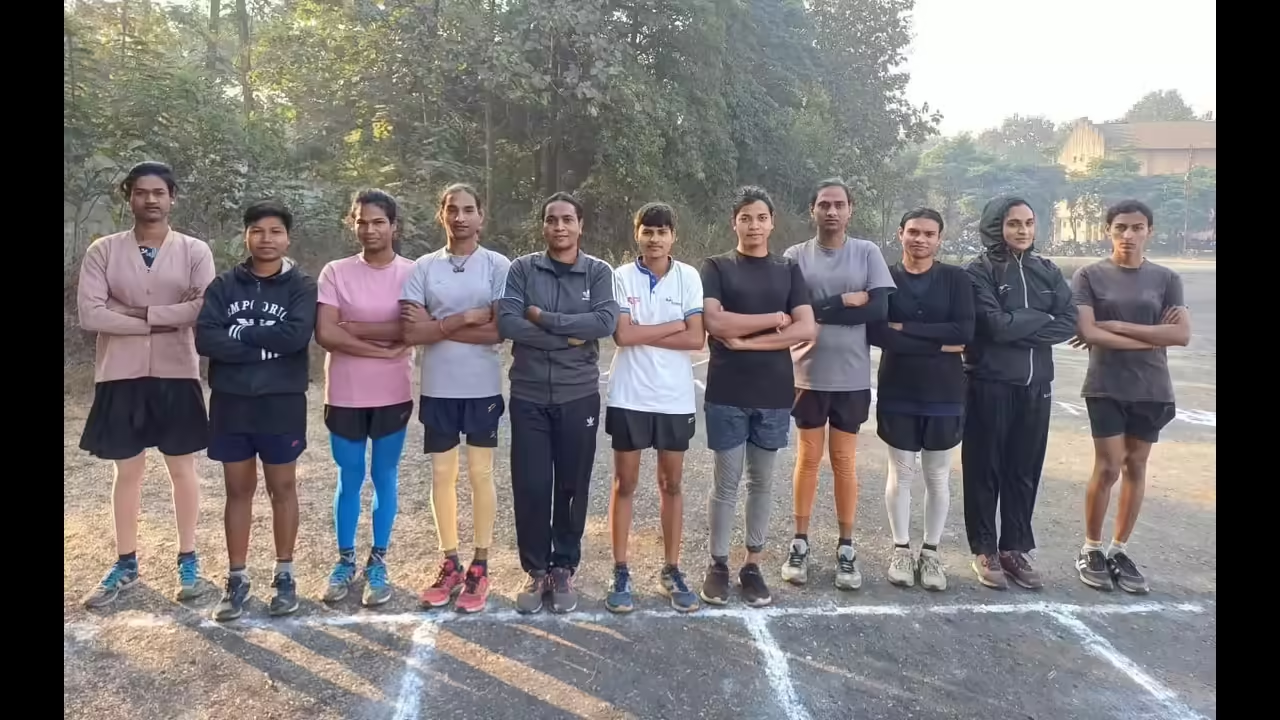
The National Transgender Sports Meet represents more than a competitive sporting event for young participants across India. Viewed through a youth lens, it reflects changing attitudes toward identity, inclusion, and community building, while using sports as a platform for visibility, confidence, and cultural recognition.
The National Transgender Sports Meet has emerged as a landmark initiative in India’s evolving sports and social landscape. For transgender youth, the event is not only about medals or rankings but about reclaiming space in public life. Sports, traditionally shaped by rigid gender norms, are being reimagined as inclusive arenas where identity and ability coexist without judgment.
Sports as a space for identity affirmation
For many transgender youth, participation in organised sports has historically been limited by exclusion, stigma, or lack of institutional support. The National Transgender Sports Meet challenges these barriers by offering a structured, respectful environment where athletes compete without having to justify their identity.
Youth participants often describe the experience as validating. Competing under their affirmed gender identity allows them to engage with sports on equal terms. This affirmation has a direct impact on mental health, self esteem, and long term engagement in physical activity.
Sports also provide a language of confidence that extends beyond the field. Training, discipline, and teamwork help young athletes build resilience, which becomes valuable in education, employment, and social interaction.
Community building beyond competition
One of the strongest outcomes of the National Transgender Sports Meet is community formation. For many young participants, this is the first time they meet peers with shared lived experiences from different regions.
These interactions reduce isolation, especially for youth from smaller towns where transgender communities may remain invisible or fragmented. Shared spaces such as hostels, practice grounds, and team events foster informal mentorship and emotional support.
Community building also extends to organisers, coaches, and volunteers who gain first hand exposure to transgender realities. This interaction helps dismantle stereotypes and builds allyship, creating ripple effects beyond the event itself.
Youth culture and representation in sports
Youth culture today values visibility, authenticity, and representation. The National Transgender Sports Meet aligns with these values by placing transgender athletes at the centre rather than the margins.
For young spectators and students, seeing transgender athletes compete normalises diversity in sports. It shifts the narrative from tokenism to talent and effort. This representation matters in shaping how the next generation perceives gender and inclusion.
Social media engagement around such events further amplifies youth driven narratives. Participants share stories of training, friendships, and personal growth, reframing transgender identities through achievement and discipline rather than vulnerability alone.
Impact on health, discipline, and opportunity
Regular sports participation improves physical health, but for transgender youth, the impact is deeper. Structured training routines encourage consistency, goal setting, and healthy coping mechanisms.
Many participants report improved confidence in public spaces after competing at a national level. This confidence can influence school retention, job interviews, and leadership roles within local communities.
Some athletes also view the meet as a stepping stone toward broader sporting opportunities. While pathways remain limited, visibility at national platforms can encourage sports bodies to reconsider policies around inclusion and talent development.
Cultural significance in a changing India
Culturally, the National Transgender Sports Meet reflects a broader shift in how Indian society engages with gender diversity. Youth play a key role in this transition by challenging outdated norms and embracing inclusive values.
The event also highlights regional diversity within the transgender community. Different languages, traditions, and identities come together, reinforcing that inclusion does not require uniformity.
By framing transgender participation within sports, the meet moves conversations away from charity or sympathy toward equality and capability. This cultural repositioning is essential for long term social change.
The road ahead for inclusive youth sports
While the National Transgender Sports Meet marks progress, sustained impact requires systemic follow through. Access to local training facilities, inclusive school sports programs, and sensitised coaching remain critical gaps.
Youth voices can drive this change by advocating for inclusive policies at educational institutions and sports academies. Continued representation at district and state levels will ensure that inclusion does not remain confined to annual events.
As more young people engage with inclusive sports culture, the meet stands as a blueprint for how identity, community, and competition can coexist in a modern sporting ecosystem.
Takeaways
The National Transgender Sports Meet offers identity affirmation through inclusive competition.
Youth participants build strong communities that reduce isolation and stigma.
Representation in sports reshapes how gender diversity is viewed by younger generations.
Long term impact depends on expanding inclusion beyond national level events.
FAQs
What is the significance of the National Transgender Sports Meet for youth?
It provides a safe and affirming platform where transgender youth can compete, build confidence, and connect with peers.
How does the event support mental and physical wellbeing?
Structured sports participation improves fitness, self esteem, discipline, and emotional resilience.
Does the meet influence broader sports inclusion in India?
Yes, it raises awareness and encourages sports institutions to reconsider inclusion policies and talent pathways.
Why is youth participation important for cultural change?
Young people drive shifts in social attitudes, making inclusion more sustainable over time.












Leave a comment