

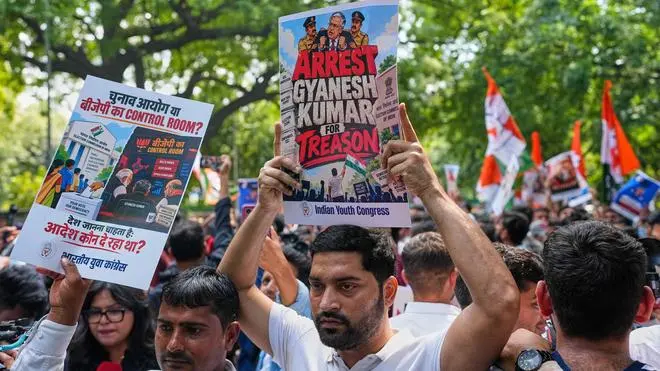
India’s electoral roll revision is intended to ensure that voter lists contain the names of eligible citizens while removing entries that are no longer valid, such as those belonging to deceased persons or people who have permanently shifted residence. However, the current debate centres on how these revisions are conducted and whether every eligible voter has a fair opportunity to remain on the list.
The Election Commission of India (ECI) has been conducting a Special Intensive Revision (SIR) in several states and Union Territories. The exercise has attracted criticism over large-scale deletions, document verification requirements and the possibility of eligible citizens being left out.
On October 5, The Indian Express reported that the Commission had directed 20 states and Union Territories where the SIR exercise had been completed to conduct special enrolment drives for eligible voters who might have been excluded. The move followed concerns about the scale of deletions from draft electoral rolls. The Commission has stressed that eligible citizens should not be excluded from the electoral process. <Cite refs={[“turn264005search3″,”turn264005search7”]}/>
Special Intensive Revision vs Special Summary Revision
Understanding the difference between the two revision processes is important because they involve different procedures.
A Special Intensive Revision involves a more detailed verification exercise, including enumeration and checks of voter records. Depending on the applicable instructions, officials may seek information to establish an elector’s details and connection with earlier electoral rolls.
A Special Summary Revision (SSR), by contrast, is a periodic exercise to update existing electoral rolls, invite claims and objections, and enrol eligible citizens. The ECI announced on October 15 that 17 states and Union Territories would undergo an SSR with January 1, 2027, as the qualifying date. The initiative is intended to facilitate the enrolment of young and first-time voters. <Cite refs={[“turn264005news24″,”turn264005search2”]}/>
The distinction matters because citizens should follow the instructions and deadlines applicable to their state rather than assume that every revision follows the same procedure.
The Commission has also indicated that advance applications can be submitted by prospective electors who will become eligible on April 1, July 1 or October 1, 2027, subject to the applicable process.
Why Voter Deletions Have Become a Major Concern
One of the most sensitive questions surrounding electoral roll revision is whether the process can unintentionally exclude eligible voters.
Draft electoral rolls may change when officials identify duplicate entries, deceased electors, people who have moved permanently or records requiring further verification. These checks can improve the accuracy of voter lists, but errors in names, addresses, family details or digital records can create difficulties for genuine voters.
The debate has intensified because of the number of entries affected during the SIR process. Opposition parties and other critics have questioned the scale of deletions and the transparency of verification procedures. The Election Commission, meanwhile, has emphasised the need to maintain accurate electoral rolls and provide opportunities for eligible citizens to seek inclusion.
In Maharashtra, reporting by The Indian Express highlighted a technical problem involving more than 2.7 lakh voters whose records incorrectly showed ages between 101 and 150 years. The issue was subsequently corrected, but it raised questions about data accuracy and the handling of voter information. <Cite refs={[“turn264005news26″,”turn264005search6”]}/>
Such cases illustrate why verification needs to be thorough, transparent and accessible. A record requiring correction should not automatically be treated as proof that the person is ineligible to vote.
What the Latest Revision Means for Maharashtra Voters
Maharashtra voters should pay particular attention to the status of their names during the ongoing revision process.
The state’s SIR exercise has involved checking voter records and inviting claims and objections. According to reporting published in October, the draft roll contained records requiring verification, including cases involving discrepancies in relatives’ details and voters who could not be mapped to an earlier electoral roll. These categories do not, by themselves, establish that every affected person is ineligible. <Cite refs={[“turn264005search3″,”turn264005news26”]}/>
The Election Commission has announced measures intended to help people facing difficulties during the revision. These include assistance with document collection, provisions for online hearings and special drives to enrol eligible voters who may have been left out.
Deadlines vary by state and by stage of the process, so voters should consult the latest instructions issued by their Chief Electoral Officer or Electoral Registration Officer. Anyone who receives a notice should read it carefully and respond through the prescribed procedure.
For residents of Nagpur and other Maharashtra cities, checking the electoral roll is particularly important after moving house, changing constituencies or discovering an error in personal details. The same applies to students and workers who have relocated within the state.
How to Check Your Name in the Voter List
Citizens can check their electoral registration through the Election Commission’s official services. Having a physical Elector Photo Identity Card (EPIC) does not remove the need to verify that the person’s name appears in the relevant electoral roll.
The official electoral search portal is available at electoralsearch.eci.gov.in. Citizens can also use the ECI’s Voters’ Services Portal at voters.eci.gov.in or the Voter Helpline app. <Cite refs={[“turn264005search0″,”turn264005search10”]}/>
If a name does not appear, voters should first check the spelling, constituency and other search details. If the entry remains missing, they can contact the local Booth Level Officer (BLO) or Electoral Registration Officer (ERO) and ask which application or procedure applies to their case.
The appropriate form depends on the purpose of the request:
- Form 6: Application for inclusion of a new elector in the electoral roll.
- Form 6A: Registration of an eligible overseas elector.
- Form 7: Objection to an entry or an application for deletion, subject to the prescribed rules.
- Form 8: Correction of existing entries, shifting of residence, replacement of an EPIC and other specified updates.
These forms are listed by the Election Commission and the Chief Electoral Officer of Maharashtra. <Cite refs={[“turn264005search1″,”turn264005search4”]}/>
Citizens should submit accurate information and any documents required for their application. They should retain the acknowledgement or reference number so they can follow up on the status.
What Should Voters Do If Their Names Are Missing?
A missing name should be addressed promptly, but citizens should not assume that they have permanently lost their voting rights without checking the official record and the reason for the omission.
First, verify the entry through the official electoral search service. Next, contact the local election office or BLO to establish whether the record has been deleted, moved, marked for verification or affected by a data-entry error.
If a fresh inclusion application is required, eligible citizens can use Form 6. The Election Commission has directed special enrolment drives in areas where the SIR process has been completed to help eligible voters who were left out. The Commission has also said that electoral rolls continue to be updated under the applicable procedures. <Cite refs={[“turn264005search3″,”turn264005search4”]}/>
Voters who receive notices should respond within the relevant timeline and keep copies of the documents they submit. If the application is rejected, they should seek the written decision and information about the available appeal or review procedure.
For first-time voters, the process begins with confirming eligibility and applying through the official portal or local election office. Citizens should avoid relying on unofficial social media messages for deadlines or document requirements.
Transparency and the Right to Vote
The electoral roll debate involves two objectives that are both important: preventing ineligible entries and ensuring that eligible citizens are not excluded.
Accurate voter lists help election officials administer polling and maintain public confidence. At the same time, verification systems need safeguards against mistaken deletions, inconsistent records and barriers that disproportionately affect migrants, older people, economically disadvantaged citizens and people with limited digital access.
Greater transparency can help address these concerns. Clear reasons for proposed deletions, accessible claims procedures, timely decisions and reliable public information allow citizens to understand how their applications are handled.
The Election Commission has announced measures such as special enrolment drives and assistance for voters affected by the revision. The effectiveness of these steps will depend on how consistently they are implemented and whether eligible citizens can resolve their cases in time.
Ultimately, electoral roll revision should be assessed through both the accuracy of the final list and the accessibility of the process used to prepare it. Voters have a practical role in this process: checking their entries, reporting errors and responding to official notices.
Key Takeaways
- The Election Commission is conducting electoral roll revision exercises to verify records and improve voter-list accuracy, but concerns about wrongful exclusion remain central to the debate.
- Special Intensive Revision and Special Summary Revision are different processes, and voters should follow the instructions applicable to their state.
- Citizens can check their names through the official electoral search portal and use the prescribed forms to request inclusion or correction.
- Voters whose names are missing should contact their local election officials promptly, retain application records and follow the official procedure for resolving the issue.
Frequently Asked Questions
1. What is electoral roll revision in India?
Electoral roll revision is the process of checking and updating voter lists to include eligible citizens, correct inaccurate entries and remove entries that are no longer valid under the applicable rules.
2. How can I check whether my name is on the voter list?
Visit electoralsearch.eci.gov.in or use the Election Commission’s Voters’ Services Portal. You can also use the Voter Helpline app to check your registration details.
3. What should I do if my name is missing from the electoral roll?
Contact your local Booth Level Officer or Electoral Registration Officer to understand the reason. If you are eligible and need to apply for inclusion, Form 6 is generally the prescribed application for new registration. Follow the instructions relevant to your case.
4. Can I apply for voter registration if I am turning 18 in 2027?
The Election Commission allows advance applications for eligible prospective voters with qualifying dates of January 1, April 1, July 1 and October 1, subject to the applicable rules. Check the official portal for the current procedure and requirements.








Leave a comment