

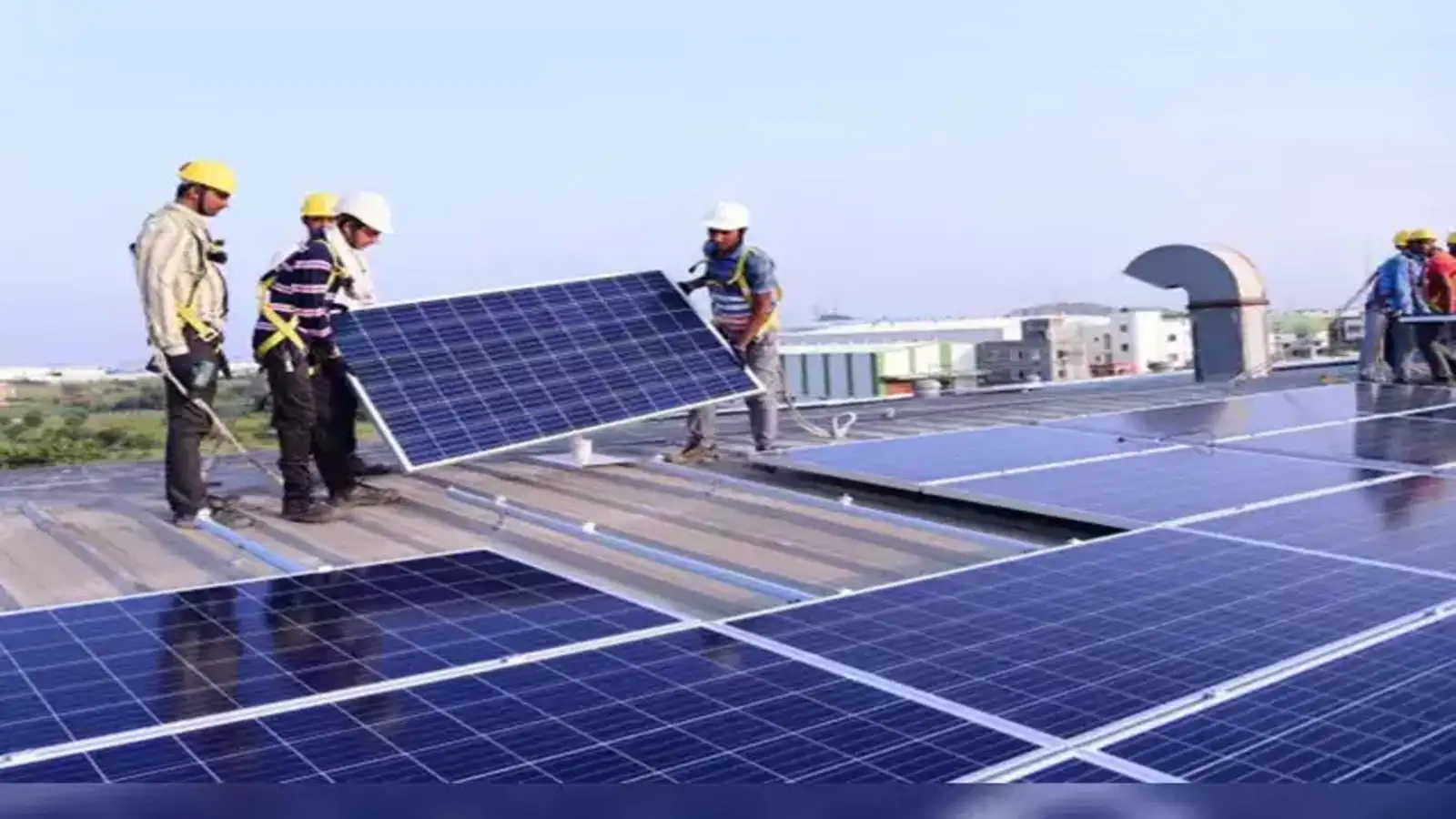
Rooftop solar adoption is expanding across India as households look for ways to manage electricity costs and access cleaner energy. Government subsidies, state-level initiatives and improved installation networks are creating opportunities, but smaller cities need reliable service providers, clear guidance and practical planning to benefit.
India’s Rooftop Solar Growth: What the Latest Data Shows
Rooftop solar is becoming an increasingly important part of India’s renewable energy expansion. According to the Ministry of New and Renewable Energy (MNRE), India’s grid-connected rooftop solar capacity reached approximately 33.41 gigawatts as of September 30, 2026. The country’s total installed solar capacity stood at approximately 171.05 GW, including ground-mounted, rooftop, hybrid and off-grid systems.
The figures highlight the growing role of solar power in India’s electricity system. However, national capacity figures do not tell the whole story. Ground-mounted solar farms and rooftop installations serve different purposes, and progress varies between states, cities and consumer groups.
Recent reporting shows that Gujarat recorded substantial rooftop solar additions, while Uttar Pradesh led residential rooftop installations under the PM Surya Ghar scheme in September 2026. Delhi has also reported strong registration numbers under its rooftop solar initiative launched in September.
These developments offer useful lessons for smaller cities. Rather than copying another state’s model exactly, local administrations need to understand their electricity demand, housing patterns, distribution infrastructure and residents’ ability to invest.
PM Surya Ghar Scheme: How Households Can Benefit
One of the central drivers of residential rooftop solar adoption is the PM Surya Ghar: Muft Bijli Yojana, launched by the Union government in February 2024. The scheme aims to support rooftop solar installations in one crore households by the financial year 2026-27, with an approved outlay of ₹75,021 crore.
Under the central subsidy structure for residential households in general states, eligible consumers can receive ₹30,000 per kilowatt for the first two kilowatts and ₹18,000 per kilowatt for the next kilowatt, subject to the scheme’s conditions. The central subsidy is capped at ₹78,000 for systems of 3 kW and above. Special-category states and Union Territories have different subsidy rates.
The scheme can reduce the upfront cost of installing a rooftop system, making solar power more accessible to households that might otherwise postpone the investment. However, subsidy support does not necessarily cover the entire installation cost. Consumers must consider the remaining amount, equipment quality, maintenance and the suitability of their roofs.
Households should apply through the official PM Surya Ghar portal, follow the prescribed process, select an eligible vendor and complete the required installation and verification steps. The subsidy is not an automatic payment simply for purchasing solar panels.
What Gujarat, Uttar Pradesh and Delhi Can Teach Smaller Cities
State-level experience suggests that effective implementation matters as much as financial incentives. Gujarat’s rooftop solar additions demonstrate the scale that can be achieved when demand, installation networks and programme delivery work together. Uttar Pradesh’s residential installations under PM Surya Ghar show that adoption can extend well beyond India’s largest metropolitan markets.
Delhi offers another lesson. In October 2026, reporting indicated that more than 77,000 households had registered under its rooftop solar scheme within just over three weeks of its launch on September 21. The initiative combines state-level support with the central programme, although registrations should not be confused with completed installations.
For smaller cities, these examples point to several practical priorities. Residents need clear information about subsidies, trusted installers, transparent quotations and a straightforward process for connecting systems to the electricity grid. Local electricity distribution companies must also be prepared to process applications, arrange inspections and address technical issues.
Cities should monitor completed installations, subsidy processing times and consumer complaints rather than relying only on registration figures. This would help identify where the adoption process is slowing down and where administrative improvements could make the biggest difference.
Why Rooftop Solar Makes Sense for Tier-2 and Tier-3 Cities
Smaller cities have a varied mix of independent houses, apartment buildings, commercial establishments, schools, hospitals and small industries. This creates opportunities for rooftop solar, but the suitability of each building depends on its roof, electricity consumption, ownership arrangements and grid connection.
For a household with sufficient unshaded roof space and regular daytime electricity use, a rooftop solar system can reduce the amount of electricity purchased from the distribution company. Businesses with daytime demand, such as shops, offices, clinics and workshops, may also find solar useful.
The actual savings depend on system size, local sunlight conditions, electricity tariffs, the timing of consumption and the rules governing surplus power. Solar panels do not guarantee a zero electricity bill. Fixed charges, electricity imported from the grid and other applicable charges may remain payable.
Smaller cities can also benefit from developing local solar service networks. Trained technicians, electricians, maintenance providers and qualified installers can support the growing market while creating skilled employment. Local colleges and vocational institutions could explore training programmes that teach electrical safety, installation practices and system maintenance.
For cities such as Nagpur, Nashik, Indore and Raipur, the opportunity is to connect consumer demand with reliable technical support, rather than treat solar adoption as a one-time equipment purchase.
The Main Challenges Facing Rooftop Solar Adoption
Despite the benefits, rooftop solar adoption can be difficult for households unfamiliar with the technology. The initial investment remains a barrier, even when subsidies are available. Some consumers may also struggle to compare vendor quotations, understand system capacity or estimate the payback period.
Roof suitability is another concern. Buildings with substantial shade, limited usable space or structural issues may require additional assessment. In apartment complexes, installation can involve shared-roof permissions, decisions by housing societies and arrangements for distributing the benefits among residents.
Grid connectivity and administrative delays can also affect the experience. Applications, technical approvals, inspections, meter installation and subsidy processing need coordination between consumers, vendors and distribution companies. Delays at any stage can discourage households from proceeding.
Maintenance deserves equal attention. Solar panels generally require limited routine upkeep, but dust, bird droppings, damaged wiring, inverter faults and other issues can affect performance. Consumers should understand the warranty, cleaning requirements and after-sales support before signing a contract.
Local authorities and electricity distribution companies can address these concerns through consumer awareness campaigns, vendor verification, accessible complaint systems and transparent information about the installation process.
How Smaller Cities Can Build a Stronger Solar Ecosystem
A successful rooftop solar programme needs coordination between government agencies, electricity distribution companies, installers, financial institutions and consumers. Smaller cities can begin with a few practical measures instead of launching large campaigns without adequate implementation support.
First, local authorities can organise information sessions explaining eligibility, subsidy procedures, expected costs and the limitations of rooftop systems. Demonstration installations on suitable public buildings may help residents understand how the technology works.
Second, electricity distribution companies should make application procedures and technical requirements easy to access. Publishing clear guidance on approvals, net metering where applicable, inspections and billing can reduce confusion.
Third, cities can encourage the development of qualified local installation and maintenance networks. Training electricians and technicians would support service availability while helping create employment. Consumer protection measures should include written quotations, equipment specifications, warranty information and clear payment terms.
Fourth, financial planning should be realistic. Households should compare the total installation cost with expected electricity savings over the system’s useful life. Any payback estimate must account for local tariffs, consumption patterns, equipment costs, maintenance and applicable grid rules.
Finally, local governments should track outcomes, including installations completed, system performance, consumer complaints and the time taken to process applications. These indicators would provide a clearer picture of whether the programme is delivering benefits to residents.
What the Future Holds for Rooftop Solar in India
India’s renewable energy expansion creates a substantial opportunity for rooftop solar, but sustained adoption will depend on making the technology practical and financially understandable for ordinary consumers.
The MNRE’s September 2026 figures show that rooftop installations already account for a significant share of the country’s solar capacity. Government support, better service networks and more accessible financing could help extend adoption into additional residential and commercial market
For smaller cities, the priority should be to build confidence in the process. Residents need to know what they will pay, how much electricity a system may generate, what support is available and whom to contact if something goes wrong.
Solar power is not equally suitable for every building, and savings will differ from household to household. But where roof conditions, electricity demand and installation costs align, it can provide a useful way to reduce dependence on grid electricity and manage long-term energy expenses.
The next stage of rooftop solar growth will depend not just on how many panels are installed, but on whether those systems continue working reliably and deliver the expected benefits to consumers.
Key Takeaways
- India’s grid-connected rooftop solar capacity reached approximately 33.41 GW by September 30, 2026, according to MNRE data.
- PM Surya Ghar provides central financial assistance to eligible residential consumers, subject to scheme rules and verification.
- Gujarat, Uttar Pradesh and Delhi offer different examples of how state-level implementation and consumer participation can support adoption.
- Smaller cities need reliable installers, transparent costs, accessible application processes and effective after-sales service to expand rooftop solar sustainably.
Frequently Asked Questions
1. What is rooftop solar?
Rooftop solar uses photovoltaic panels installed on a building to generate electricity from sunlight. A grid-connected system can supply electricity to the building and interact with the electricity grid under applicable rules.
2. How much subsidy is available under PM Surya Ghar?
For eligible households in general states, the central subsidy is ₹30,000 per kW for the first 2 kW and ₹18,000 per kW for the next 1 kW. The maximum central subsidy is ₹78,000 for systems of 3 kW and above. Different rates apply in special-category states and Union Territories.
3. Can rooftop solar eliminate a household’s electricity bill?
Not necessarily. Savings depend on electricity consumption, system generation, tariffs and applicable billing rules. Fixed charges and electricity imported from the grid may still appear on the bill.
4. How can residents apply for rooftop solar subsidies?
Eligible households can register and apply through the official PM Surya Ghar portal at pmsuryaghar.gov.in. They should follow the prescribed process, use an eligible vendor and complete the required installation and verification steps.










Leave a comment