

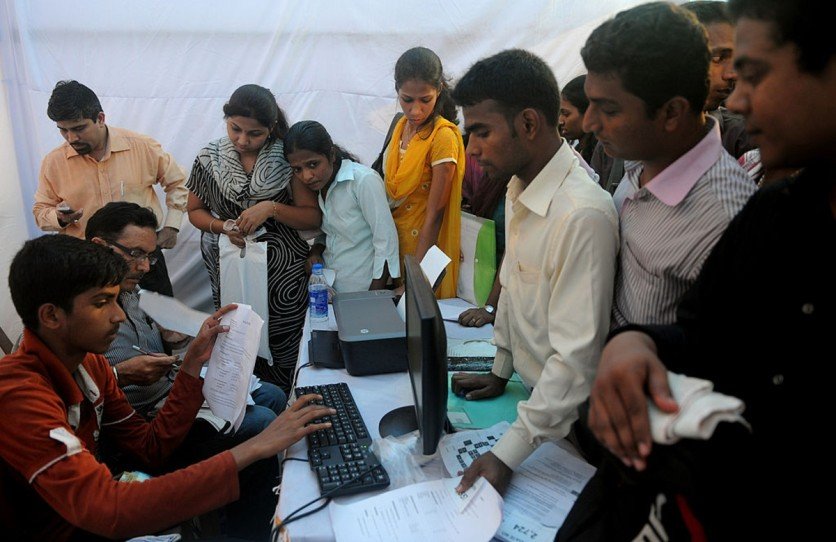
India’s private-sector business activity accelerated to a four-month high in October 2026, supported by stronger orders and services-sector growth. However, companies showed little appetite for expanding their workforce, raising questions about how quickly stronger business demand will translate into employment opportunities.
India Business Activity Rises in October 2026
India’s business activity strengthened in October, according to preliminary survey data released on October 23. The HSBC Flash India Composite Purchasing Managers’ Index (PMI), compiled by S&P Global, rose to 56.7 from September’s final reading of 55.9. The result exceeded the median forecast of 56.1 in a Reuters poll and marked the fastest expansion in four months. <Cite refs={[“turn839766view0”]}/>
A PMI reading above 50 indicates that business activity is expanding, while a reading below 50 signals contraction. The October reading therefore points to continued growth across India’s private sector, supported by stronger new orders and improving demand.
However, the headline number does not tell the complete economic story. The composite index remained below its average for 2026, suggesting that the latest improvement has not fully reversed the softer momentum seen earlier in the year.
The most notable development was the contrast between rising business activity and limited hiring. Companies reported that their existing employees were generally able to manage the increased workload, reducing the immediate need to recruit additional staff.
Services Sector Leads India’s Business Growth
The services sector was the main driver of India’s business activity in October. The HSBC Flash India Services PMI rose to 56.2 from 55.2 in September, indicating a faster pace of expansion. Stronger demand and new orders supported the improvement. <Cite refs={[“turn839766view0”]}/>
India’s services economy includes a wide range of activities, from information technology and financial services to transport, hospitality, retail and professional services. Demand in these areas can influence employment, consumer spending and business investment across the country.
The latest survey, however, showed that higher activity did not lead to an increase in services employment. The number of employees remained unchanged, ending a nine-month hiring streak in the sector.
This is an important distinction for job seekers. Companies can handle more orders by improving productivity, increasing the utilisation of existing staff or managing operations more efficiently. Consequently, stronger sales and output do not always result in immediate recruitment.
For young professionals and fresh graduates, the services sector’s performance remains important, but the employment data suggests that business expansion alone should not be treated as proof of a broad-based hiring recovery.
Manufacturing Activity Expands as Hiring Slows
Manufacturing activity continued to expand in October, although the sector’s headline PMI edged down to 54.9 from 55.1 in September. The decline was linked to slower recruitment, even as manufacturing output increased slightly. <Cite refs={[“turn839766view0”]}/>
Manufacturing plays a significant role in India’s economic development because it supports factory employment, supply chains, logistics, industrial services and demand for raw materials. Its performance also matters for smaller cities where industrial units, processing facilities and supplier networks provide employment.
When manufacturers receive more orders, they can respond in several ways. They may increase production shifts, improve the use of machinery, reduce idle time or hire additional workers. The choice depends on the expected duration of demand, labour costs, production capacity and the company’s confidence in future sales.
The October survey indicates that businesses were not rushing to expand their payrolls. Companies appeared comfortable managing workloads with their existing teams.
That approach may help firms control operating costs in the short term. However, if higher demand continues for an extended period, some businesses could eventually need additional workers, depending on productivity and capacity constraints. The survey alone does not establish whether such a shift will occur.
Why Companies Are Holding Back on Recruitment
One of the clearest findings from the October PMI survey was the near-stagnation in hiring. Businesses reported that their existing staffing levels were sufficient to handle workloads. At the same time, outstanding business backlogs declined at a pace described as jointly the fastest in nearly six and a half years. <Cite refs={[“turn839766view0”]}/>
Outstanding business refers to work that a company has received but has not yet completed. A reduction in backlogs can indicate that firms are processing orders more efficiently or have sufficient capacity to manage demand.
For employers, this may reduce the urgency to recruit. Companies may prefer to improve productivity before committing to the recurring costs associated with additional employees.
Recruitment decisions also depend on whether businesses expect demand to remain strong. A temporary rise in orders may not justify permanent hiring, particularly when companies face uncertainty about future sales, input costs or international markets.
Nevertheless, the survey should not be interpreted as evidence that companies across India have stopped hiring. It captures broad business trends during a specific period, rather than every employer, industry or region. Individual sectors may experience different employment conditions.
Export Orders and International Demand Support Growth
International demand provided another source of support for India’s private sector. The October survey indicated that overall export orders expanded at their fastest pace in six months. However, the improvement was concentrated among goods producers, while growth in foreign demand for services weakened. <Cite refs={[“turn839766view0”]}/>
Stronger export orders can benefit manufacturers by increasing production requirements and supporting activity across logistics, packaging, transport and supplier networks. Export-oriented businesses may also need additional working capital and inventory to meet customer commitments.
However, export performance can vary across industries. Goods producers and service providers do not necessarily experience the same demand patterns, and a stronger overall export reading does not mean every Indian exporter is benefiting equally.
For companies that depend on international customers, sustained demand is more important than a single month’s improvement. Global economic conditions, trade policies, currency movements and customer spending can all influence future orders.
The October results offer an encouraging signal for exporters, but the concentration of growth among goods producers means that the services export outlook deserves continued attention.
Easing Business Costs Offer Some Relief
The survey also pointed to an improvement in price pressures. Input-cost inflation eased to its lowest level in almost a year, while increases in selling prices were the weakest since March 2025. These trends were reported across India’s private sector. <Cite refs={[“turn839766view0”]}/>
Input costs include expenses associated with materials, components, energy, transport and other resources required to produce goods or deliver services. When cost increases moderate, businesses may find it easier to manage operating expenses and protect profit margins.
Slower growth in selling prices can also be relevant for customers, although it does not necessarily mean that prices are falling. It indicates that businesses are increasing their charges at a slower pace.
For small businesses, including retailers, manufacturers and service providers, the relationship between costs and selling prices can influence profitability. Companies may benefit when input-cost pressure eases, but the actual impact depends on their contracts, competition and ability to pass costs on to customers.
The October survey also showed that business confidence recovered to its highest level since May, although it remained below the average for 2026. This suggests that sentiment improved without eliminating broader uncertainty.
What the October PMI Means for India’s Job Market
The latest business activity figures present a mixed picture for India’s employment outlook. Stronger orders and expanding output indicate that companies are experiencing demand growth. Yet the limited increase in employment suggests that the improvement has not immediately translated into additional jobs across the private sector.
For job seekers, particularly fresh graduates and young professionals, this means that hiring trends should be evaluated separately from business growth indicators. Recruitment can depend on the sector, the skills required, the company’s financial position and the duration of its order pipeline.
Small businesses in Tier-2 and Tier-3 cities may also respond differently from large companies. Some could increase staffing when orders rise, while others may rely on existing employees, temporary workers or operational improvements.
The PMI is a useful early indicator of business conditions, but it is not a comprehensive employment count. Actual job creation must be assessed using additional labour-market data, including employment surveys, payroll information and industry-specific recruitment trends.
The next few months will help show whether October’s stronger activity is sustained and whether businesses eventually increase hiring as demand develops.
Key Takeaways
- India’s Flash Composite PMI rose to 56.7 in October 2026 from September’s final reading of 55.9, marking a four-month high.
- Services activity accelerated, while manufacturing continued to expand at a slightly slower pace.
- Hiring nearly stalled as companies said their existing workforces could manage current workloads.
- Export orders strengthened and business cost pressures eased, but sustained growth and broader job creation remain important indicators to watch.
Frequently Asked Questions
1. What is India’s Composite PMI for October 2026?
The HSBC Flash India Composite PMI rose to 56.7 in October from September’s final reading of 55.9. It indicated the fastest expansion in private-sector business activity in four months.
2. Why is hiring slowing despite stronger business activity?
Companies reported that existing employees were sufficient to manage workloads. Falling outstanding business backlogs may also indicate that firms were processing orders without needing immediate workforce expansion.
3. What does a PMI reading above 50 mean?
A PMI reading above 50 indicates expansion compared with the previous survey period. A reading below 50 signals contraction. The index measures the direction and pace of change rather than the absolute size of economic output.
4. Does stronger business activity mean more jobs will be created soon?
Not necessarily. Stronger activity can eventually support recruitment, but hiring depends on future demand, productivity, costs and business confidence. The October survey showed limited employment growth, so additional labour-market data will be needed to assess the broader jobs outlook.







Leave a comment