

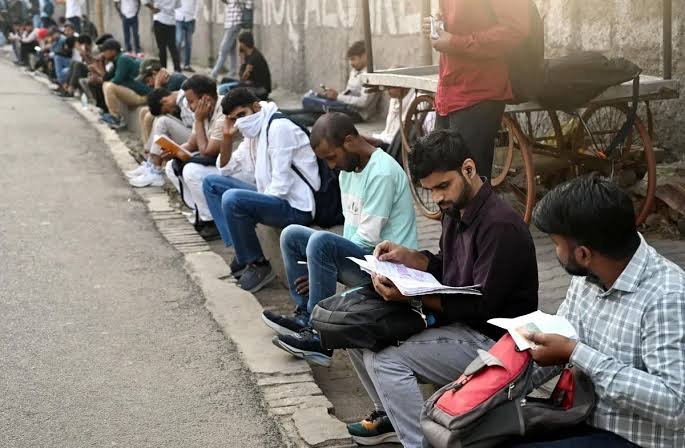
Youth unemployment in India is changing how young people choose careers, prepare for jobs and plan their futures. From graduates competing for corporate positions to young professionals exploring freelancing and entrepreneurship, employment uncertainty is influencing decisions across metropolitan, Tier-2 and Tier-3 cities.
Youth Unemployment in India: Understanding the Changing Job Market
Youth unemployment has become an important concern for India’s economy as millions of young people enter the labour market every year. According to the Ministry of Statistics and Programme Implementation’s Periodic Labour Force Survey (PLFS) Annual Report 2025, the unemployment rate among people aged 15 to 29 was 9.9% under the usual-status measure.
This figure provides an important starting point for understanding the employment challenge. However, unemployment rates do not capture every difficulty faced by young people. Some graduates accept jobs below their qualifications, while others work in positions that offer limited income growth or little security. Many continue searching for suitable employment even after completing professional degrees.
The International Labour Organization’s India Employment Report 2024 also highlighted the challenges faced by educated young people, including the gap between educational attainment and the availability of suitable jobs.
These conditions are influencing how students select courses, where graduates look for work and whether young professionals prefer salaried employment or independent income opportunities. A conventional career path remains attractive, but it is no longer the only option many young Indians consider.
Why Indian Graduates Are Rethinking Traditional Career Paths
For decades, careers in government services, banking, engineering, medicine and established corporate companies were considered reliable routes to financial stability. These professions continue to attract applicants, but competition for desirable positions can be intense.
A graduate may spend several years completing a degree and preparing for recruitment examinations before securing a suitable position. Government job aspirants, for example, can face uncertainty when examinations are delayed, recruitment schedules change or the number of vacancies is limited.
Private-sector employment presents a different set of challenges. Employers often seek practical experience, specialised technical knowledge and communication skills alongside formal qualifications. Fresh graduates may find it difficult to meet these expectations when their education provides limited workplace exposure.
As a result, many young people are reconsidering how they invest their time and money in education. Some choose short-term professional courses, internships or industry certifications alongside their degrees. Others explore fields such as digital marketing, data analytics, design, sales and customer support because these roles may offer alternative entry points into the workforce.
This does not mean that traditional degrees have lost their value. Instead, young job seekers increasingly need to consider how their qualifications connect with actual employment opportunities.
Tier-2 Cities Are Changing Young Indians’ Career Decisions
Employment opportunities are not distributed evenly across India. Metropolitan centres such as Bengaluru, Mumbai, Delhi, Hyderabad and Pune attract companies across technology, finance, consulting, manufacturing and other industries. However, relocating to these cities can be expensive for young professionals.
Rent, transport, food and other living expenses can consume a significant share of an entry-level salary. For graduates supporting their families, moving to another city may be difficult even when better opportunities are available there.
This is encouraging more young people to examine employment options closer to home. Cities such as Nagpur, Indore, Lucknow, Jaipur, Nashik and Coimbatore have local business ecosystems that can support careers in logistics, healthcare, education, manufacturing, retail and digital services.
The opportunities vary by city and industry, and smaller cities do not necessarily offer the same range of specialised positions as major metropolitan centres. Nevertheless, local employment can reduce relocation expenses and allow young professionals to remain connected to their families.
The long-term opportunity lies in expanding the number of productive jobs outside major technology and financial hubs. Better infrastructure, industry-linked education, reliable internet access and support for small businesses can help smaller cities attract employers and retain skilled workers.
For young Indians, the decision is increasingly about balancing salary, career growth, living costs and personal responsibilities rather than choosing a workplace based only on its reputation.
Freelancing and Side Hustles Are Becoming Alternative Career Options
Uncertainty around traditional employment has also encouraged some young Indians to explore freelancing and side businesses. Digital platforms have made it possible to offer services such as graphic design, video editing, content writing, website development, social media management and online tutoring to clients in different locations.
For a young professional in a Tier-2 city, these options can provide access to work without requiring immediate relocation. A student might manage social media accounts for local businesses, while a trained designer could work with clients in other Indian cities or overseas.
However, freelancing should not be treated as a guaranteed solution to unemployment. Income can fluctuate, clients may delay payments, and independent workers generally need to manage their own taxes, equipment costs and business expenses. Finding regular clients can also take time.
Side hustles are therefore often more practical as supplementary income sources before becoming full-time careers. Young people considering this route should evaluate demand for their services, build a portfolio and understand how they will manage irregular earnings.
Entrepreneurship offers another possibility, particularly in areas such as local services, food businesses, education, retail and technology. Yet starting a business involves financial risk and requires market research, customer acquisition and consistent execution.
The key change is that young people are exploring multiple ways to earn rather than depending entirely on one conventional career route.
Skills and Employability: Why a Degree Alone May Not Be Enough
The gap between education and employment is one of the major issues affecting young job seekers. Employers recruit people to perform specific tasks, solve business problems and work effectively with teams. Academic qualifications can provide foundational knowledge, but practical competence often matters during recruitment.
For example, a graduate interested in digital marketing may benefit from learning search engine optimisation, analytics and campaign planning while building a portfolio of practical work. An aspiring software developer may strengthen their prospects by understanding programming fundamentals, databases and software development tools through projects and internships.
Communication, problem-solving, adaptability and teamwork also matter across many occupations. These abilities can help candidates demonstrate how they would contribute to an organisation rather than simply listing their qualifications.
Artificial intelligence is adding another dimension to the skills debate. Businesses are adopting AI tools for tasks involving research, customer support, coding, data analysis and content production. This creates opportunities for people who can use these tools effectively, but it also means that some routine tasks may require fewer hours of manual work.
The effect on employment differs by industry and occupation. It would be inaccurate to assume that AI will eliminate all entry-level jobs or that learning a single AI tool guarantees employment.
A more practical strategy is to develop strong fundamentals, learn relevant tools and understand how technology is used in a chosen profession.
The Financial and Mental Pressure of an Uncertain Job Market
Career uncertainty affects more than professional plans. It can influence household budgets, relationships and decisions about marriage, relocation or further education.
Young adults who remain unemployed for extended periods may depend on family members for financial support. Families may also have invested savings or borrowed money to pay for college fees, coaching classes and accommodation.
The pressure can become particularly difficult when graduates compare their progress with peers who have secured well-paying jobs. Social media can intensify these comparisons by presenting career success without showing the financial support, professional networks or setbacks behind it.
Not every young person experiences unemployment in the same way. Family income, educational background, location, gender, disability and access to professional networks can influence the opportunities available to an individual.
Career planning should therefore include realistic financial expectations and alternative routes into employment. Internships, apprenticeships, vocational training and entry-level positions can help people gain experience while continuing to pursue their longer-term goals.
Access to career counselling and reliable employment information can also help students make decisions based on their interests and market conditions rather than pressure from relatives or online trends.
What Governments, Colleges and Employers Can Do
Addressing youth unemployment requires action from several parts of the economy. Governments can support employment through infrastructure development, policies that encourage business expansion and programmes that connect training with actual labour market demand.
Colleges can strengthen their role by providing practical learning, internships, placement support and career guidance. Regular interaction with employers can help institutions understand changing skill requirements and update their courses accordingly.
Businesses also have a role in creating clearer entry-level pathways. Structured apprenticeships, graduate training programmes and realistic expectations for first-time applicants can help young people move from education into employment.
Small and medium enterprises are particularly important because they operate across manufacturing, services, retail, logistics and many other sectors. Helping viable businesses access finance, infrastructure and skilled workers can support job creation beyond major metropolitan centres.
Employment programmes should be evaluated through measurable outcomes. The number of people enrolled in a training course is not enough to establish success. Relevant indicators include job placements, wages, employment retention and opportunities for career progression.
Ultimately, improving employability is only part of the solution. India also needs sufficient demand for workers and more productive jobs that offer reasonable pay and prospects for growth.
Key Takeaways
- Youth unemployment is influencing how Indian students and graduates choose careers, develop skills and evaluate traditional employment.
- Tier-2 and Tier-3 cities offer opportunities across several sectors, although job availability and salary levels vary by location.
- Freelancing, side businesses and digital services can create alternative income opportunities, but they also involve financial and professional risks.
- Sustainable progress requires stronger job creation, industry-linked education, practical training and clearer pathways from education into employment.
Frequently Asked Questions
1. What is the youth unemployment rate in India?
According to the PLFS Annual Report 2025, the unemployment rate among people aged 15 to 29 was 9.9% under the usual-status measure. Unemployment rates vary depending on the period, age group and statistical method used.
2. Why are young Indians changing their career choices?
Competition for suitable jobs, differences between qualifications and employer requirements, relocation costs and changing technology are influencing career decisions. Some young people are exploring professional certifications, freelancing and entrepreneurship alongside conventional salaried employment.
3. Which careers can young people explore in Tier-2 cities?
Depending on local demand and qualifications, opportunities may exist in healthcare, education, logistics, manufacturing, sales, finance, digital marketing and technology services. Job seekers should assess actual vacancies and salary levels before committing to a career path.
4. How can fresh graduates improve their employment prospects?
Fresh graduates can develop practical skills relevant to their chosen field, complete internships, build project portfolios and improve communication and problem-solving abilities. They should also research employers and apply for roles that match their current capabilities while continuing to learn.












Leave a comment