

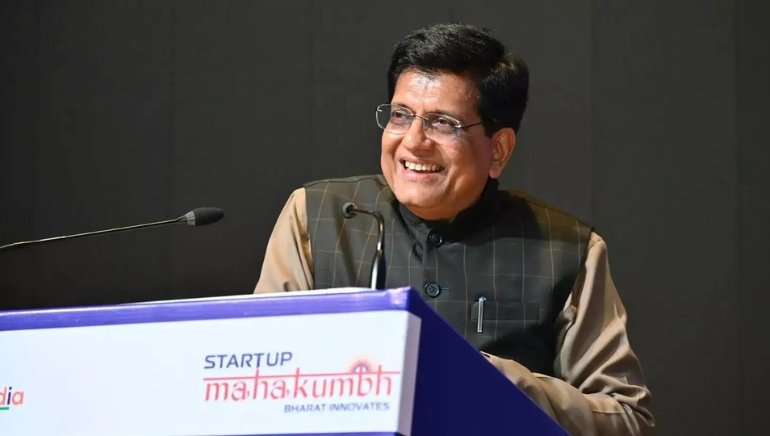
The Startup India crosses 2 lakh registered ventures milestone marks a significant phase in India’s entrepreneurial journey, highlighting rapid growth in new businesses, job creation, and innovation. At the same time, it exposes emerging stress points around funding quality, sustainability, and ecosystem depth.
This topic is time sensitive and linked to a recent official milestone. The tone remains news focused with analytical depth.
The Startup India initiative, launched to formalise and support entrepreneurship, has expanded far beyond its early metro centric footprint. The latest registration count reflects how deeply startup culture has penetrated Tier 2 and Tier 3 cities.
What the Two Lakh Startup Milestone Represents
Crossing two lakh registered startups signals scale, not just speed. It shows that entrepreneurship is no longer limited to technology hubs like Bengaluru or Delhi NCR. Smaller cities now account for a growing share of new registrations.
These ventures span sectors such as fintech, health tech, agritech, logistics, education, and climate solutions. Many focus on solving local problems with scalable models, a shift from earlier years dominated by consumer internet startups.
The milestone also reflects improved formalisation. More founders are choosing official registration to access tax benefits, government tenders, incubation support, and investor credibility.
Job Creation and Regional Employment Impact
One of the most tangible outcomes of Startup India crossing 2 lakh ventures is employment generation. Collectively, these startups have created millions of direct and indirect jobs across skill levels.
Tier 2 and Tier 3 cities have benefited the most. Startups in logistics, manufacturing support, agritech, and local services have absorbed talent that earlier migrated to metros. This has helped slow urban migration and strengthened regional economies.
Unlike large corporates, startups often hire locally and train on the job. This model has expanded employment opportunities for fresh graduates and semi skilled workers in smaller towns.
Innovation Shifts From Scale to Relevance
The innovation profile of Indian startups has evolved. Early phases focused heavily on scale and user acquisition. The current phase emphasizes relevance, unit economics, and problem solving.
Many registered ventures now operate in B2B, deep tech, and infrastructure linked domains. Examples include supply chain software for SMEs, low cost healthcare diagnostics, and climate focused solutions for agriculture and energy efficiency.
This shift aligns with India’s domestic priorities. Startups are increasingly integrated into value chains rather than operating as standalone digital platforms.
Funding Growth and Its Structural Challenges
While the number of registered startups has grown rapidly, funding has not expanded at the same pace across all segments. Capital remains concentrated among a small percentage of high visibility ventures.
Early stage startups, particularly in non metro regions, face longer fundraising cycles. Many rely on bootstrapping, angel investors, or government grants rather than large venture rounds.
This imbalance highlights a stress point. Quantity of startups does not automatically translate into financial sustainability. Investors are now more selective, prioritising profitability and clear business models over aggressive expansion.
Ecosystem Stress Points Beneath the Numbers
The headline milestone masks several ecosystem challenges. High startup mortality remains a concern, with many ventures failing within the first three years.
Access to experienced mentors, skilled talent, and advanced infrastructure varies widely by region. While policy support has expanded, execution quality differs across states and incubation centres.
Regulatory compliance, though improved, still poses hurdles for early stage founders. Navigating taxation, labour laws, and sector specific approvals can strain limited resources.
Another issue is innovation depth. While registrations are high, fewer startups scale into globally competitive companies, pointing to gaps in R&D and long term capital.
Government Support and Policy Effectiveness
Startup India has played a catalytic role through tax incentives, recognition frameworks, and procurement access. Government backed incubators and accelerators have lowered entry barriers for first time founders.
However, policy effectiveness depends on implementation. Some founders report delays in approvals and uneven access to benefits. The next phase will require tighter coordination between central and state agencies.
There is also a growing need to shift from registration metrics to outcome metrics such as survival rates, revenue growth, and export contribution.
What This Means for India’s Startup Future
The fact that Startup India crosses 2 lakh registered ventures shows momentum, but sustainability will define success. The ecosystem is entering a consolidation phase where quality will matter more than volume.
Startups that focus on solving real problems, maintain cost discipline, and build long term capabilities are more likely to survive. For policymakers, the challenge lies in nurturing these ventures beyond the initial launch stage.
India’s startup story is no longer about potential. It is about execution, resilience, and global competitiveness.
Takeaways
- Startup India crossed two lakh registrations, reflecting nationwide entrepreneurial growth
- Tier 2 and Tier 3 cities contributed significantly to new venture creation
- Job creation has expanded across sectors and skill levels
- Funding gaps and sustainability remain key ecosystem challenges
FAQs
What does crossing two lakh startups indicate?
It reflects the scale of entrepreneurship adoption and improved formalisation across India.
Are most startups based in metros?
No. A growing share comes from Tier 2 and Tier 3 cities.
Is funding keeping pace with startup growth?
Funding is selective, with early stage and regional startups facing tighter capital access.
What is the biggest challenge ahead?
Ensuring startup survival, profitability, and long term innovation depth.










Leave a comment