

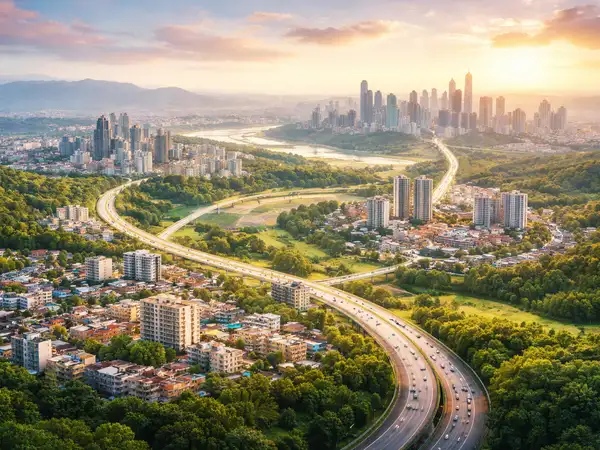
Rising urban congestion in 2026 is no longer limited to metro cities, as mid-sized Indian cities face growing traffic pressure due to rapid urbanization and vehicle growth. Local authorities are now adopting practical strategies to manage congestion and improve daily mobility.
Rising Urban Congestion in 2026 Expands Beyond Metros
Rising urban congestion in 2026 is increasingly visible in mid-sized cities such as Indore, Surat, Nagpur, and Coimbatore. These cities have witnessed a steady increase in private vehicle ownership, driven by rising incomes and expanding urban boundaries.
Unlike metros, where congestion has been a long-standing issue, mid-sized cities are experiencing this shift more recently. Road networks that were once sufficient are now under pressure, especially during peak hours. Commercial zones, school areas, and key junctions are becoming daily bottlenecks.
This transition highlights a broader trend where urban growth is outpacing infrastructure development, forcing cities to rethink mobility planning.
Traffic Management Strategies in Tier-2 Cities
Traffic management in Tier-2 cities is evolving as local authorities experiment with new approaches. Measures such as one-way traffic systems, signal synchronization, and dedicated turning lanes are being implemented to improve flow.
Cities like Indore and Surat have introduced adaptive traffic signals that adjust timings based on real-time vehicle density. While these systems are still in early stages, initial results show reduced waiting times at major intersections.
Enforcement has also improved, with stricter monitoring of illegal parking and encroachments. Clearing key roads of unauthorized stops has helped reduce unnecessary congestion in busy areas.
Public Transport Expansion Gains Momentum
One of the most important responses to rising congestion is the expansion of public transport. Mid-sized cities are investing in city bus services, electric buses, and in some cases, bus rapid transit systems.
For example, cities like Surat and Indore have strengthened their bus networks to provide more reliable alternatives to private vehicles. Increased frequency and better route coverage are encouraging commuters to shift modes.
However, challenges remain. Public transport adoption depends on reliability, affordability, and last-mile connectivity. Without these factors, private vehicle usage continues to dominate.
Role of Technology in Urban Mobility Solutions
Urban mobility solutions in 2026 are increasingly driven by technology, even in smaller cities. Traffic monitoring through CCTV cameras, GPS tracking in public transport, and mobile-based traffic updates are becoming more common.
Navigation apps are playing a key role by providing real-time route suggestions, helping commuters avoid congested areas. Some cities are also using data analytics to identify high-traffic zones and plan interventions.
While the scale of technology adoption varies, even basic digital tools are making a noticeable difference in managing congestion more efficiently.
Parking Management and Street-Level Interventions
Parking remains a major contributor to congestion in mid-sized cities. Unregulated roadside parking often reduces usable road space, leading to slower traffic movement.
To address this, cities are introducing designated parking zones and stricter enforcement. In some areas, paid parking systems have been implemented to discourage long-term vehicle occupancy on busy streets.
Street-level interventions such as better signage, pedestrian crossings, and lane markings are also being prioritized. These small but effective changes improve overall traffic discipline and safety.
Changing Commuter Behavior and Work Patterns
Another factor influencing congestion is changing commuter behavior. Flexible work hours, hybrid work models, and increased awareness of traffic conditions are gradually altering travel patterns.
Many commuters now plan their journeys based on peak traffic timings, using apps and local advisories. In some cities, staggered office hours are being encouraged to reduce peak load on roads.
These behavioral shifts, although gradual, are contributing to better traffic distribution throughout the day.
What Lies Ahead for Mid-Sized Cities
The way mid-sized cities respond to rising congestion in 2026 will shape their long-term urban growth. While infrastructure upgrades take time, immediate improvements can be achieved through better planning and management.
The focus is now shifting toward integrated mobility solutions that combine public transport, technology, and policy measures. Cities that act early are more likely to avoid the severe congestion challenges seen in metros.
This phase represents both a challenge and an opportunity for India’s growing urban centers to build more efficient and sustainable transport systems.
Takeaways
- Rising congestion is now a major issue in mid-sized Indian cities
- Traffic management strategies like signal synchronization are improving flow
- Public transport expansion is critical but still evolving
- Technology and commuter behavior are playing a growing role in congestion control
FAQs
Q1. Why are mid-sized cities facing more traffic congestion in 2026?
Rapid urbanization, increased vehicle ownership, and limited infrastructure upgrades are the main reasons.
Q2. What steps are cities taking to reduce congestion?
Measures include better traffic management, public transport expansion, parking regulation, and use of technology.
Q3. Is public transport improving in smaller cities?
Yes, many cities are expanding bus services and introducing electric buses, but adoption is still growing.
Q4. How can individuals help reduce traffic congestion?
Using public transport, avoiding peak travel times, and following traffic rules can make a significant difference.









Leave a comment