

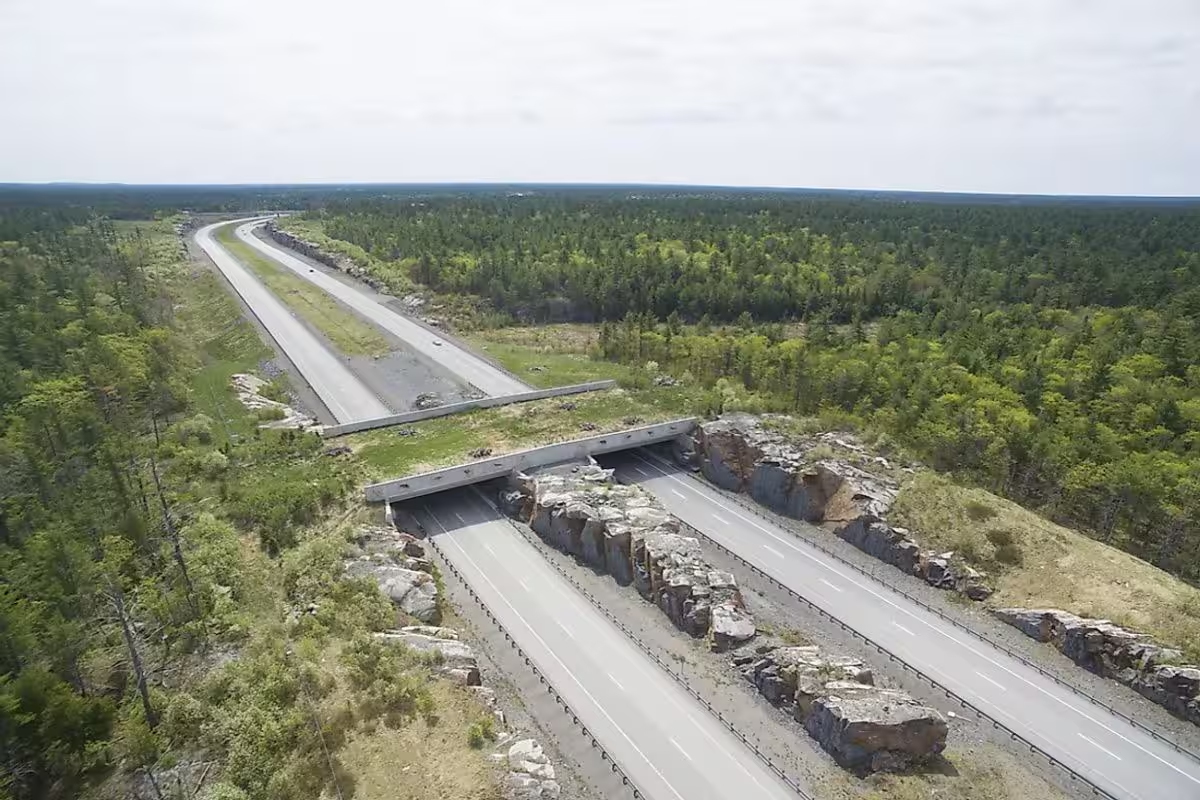
Wildlife corridor expansion across Northeast India is reshaping how towns balance conservation goals with development needs. While corridors are boosting animal safety and ecological continuity, communities living nearby are raising concerns about land access, livelihoods, and the pace of infrastructure growth.
This topic is evergreen with current relevance. The tone below focuses on detailed analysis and ground level realities.
Why wildlife corridors matter in the Northeast
Wildlife corridor initiatives in the Northeast aim to reconnect fragmented forests that support elephants, leopards, hoolock gibbons, and other species. Rapid road building, rail expansion, mining, and urban sprawl have cut traditional animal movement paths, increasing human wildlife conflict.
Corridors provide designated stretches where animal movement is prioritized, reducing collisions, crop damage, and retaliatory harm. In states like Assam, Meghalaya, and Arunachal Pradesh, corridors are critical because forests are interspersed with villages, tea estates, and highways.
From an ecological perspective, corridors improve genetic diversity and long term species survival. They also reduce pressure on protected areas by allowing animals to move naturally rather than being confined to shrinking habitats.
How corridor projects affect local communities
For towns and villages near proposed wildlife corridors, the impact is immediate and personal. Land use restrictions often accompany corridor notifications. Construction limits, fencing rules, and reduced access to forest resources directly affect farmers, daily wage workers, and small traders.
Many residents depend on forest fringes for firewood, grazing, and seasonal produce. Corridor rules can disrupt these practices without offering clear alternatives. In some areas, planned road widening or housing projects are delayed or rerouted, affecting local employment and connectivity.
Community voices frequently point out that while conservation benefits are long term, economic losses are felt immediately. This gap fuels skepticism toward projects perceived as top down decisions rather than collaborative solutions.
Environment versus growth in emerging towns
The environment versus growth debate is sharpest in fast growing Northeast towns transitioning from rural hubs to urban centers. Improved connectivity brings schools, hospitals, tourism, and markets. At the same time, it increases traffic, land prices, and construction pressure.
Wildlife corridors can slow or reshape this growth. Developers face restrictions near corridor zones. Local governments struggle to align urban plans with conservation boundaries that may not reflect ground realities like existing settlements or customary land rights.
Residents often argue that they support wildlife protection but oppose blanket restrictions that ignore local context. They seek flexible zoning, compensation mechanisms, and infrastructure designs that allow coexistence rather than exclusion.
Human wildlife conflict and lived experiences
Human wildlife conflict remains a key driver behind corridor planning. In elephant corridors, crop raids and property damage are common. Corridors can reduce random animal movement through villages, but only if they are wide, continuous, and respected.
When corridors are poorly marked or fragmented by new construction, conflict persists. Communities then bear the cost of both restriction and risk. Stories from Northeast towns reveal mixed outcomes. Some villages report fewer encounters after corridor enforcement. Others see animals pushed into narrower paths closer to homes.
These lived experiences shape public opinion more than policy statements. Where conflict reduction is visible, support grows. Where it is not, resistance hardens.
Role of consultation and local governance
One recurring theme in community feedback is consultation. Projects that involve village councils, local NGOs, and traditional institutions tend to face less opposition. Early engagement helps identify customary routes, seasonal land use, and culturally important spaces.
Local governance bodies play a critical role in mediating between conservation agencies and residents. They can negotiate compensation, livelihood support, and adaptive land use plans. Where this mediation is weak, mistrust escalates quickly.
Effective wildlife corridor planning increasingly depends on social design alongside ecological mapping. Ignoring community dynamics undermines long term success.
Economic opportunities linked to conservation
Despite tensions, wildlife corridors also open new economic pathways. Eco tourism, conservation jobs, and research activity create income streams for local youth. Homestays, guiding services, and handicrafts linked to biodiversity attract visitors seeking responsible travel.
Some towns are experimenting with community managed buffer zones where sustainable livelihoods are encouraged. These models show that conservation and growth are not always opposing forces. The challenge lies in scaling such approaches without diluting benefits.
Clear revenue sharing and skill training are essential to ensure that conservation linked growth does not bypass local residents.
Finding a workable balance
The Northeast’s unique geography and social fabric demand tailored solutions. Wildlife corridors cannot succeed as rigid lines on a map. They must function as living spaces where ecological needs and human aspirations intersect.
Balancing environment and growth requires transparent planning, fair compensation, adaptive infrastructure design, and continuous dialogue. When communities feel heard and supported, corridors are more likely to deliver both conservation and stability.
Takeaways
- Wildlife corridors improve ecological connectivity but affect local land use
- Communities raise concerns over livelihoods, access, and development delays
- Human wildlife conflict outcomes shape public support for corridors
- Consultation and shared economic benefits are critical for long term success
FAQs
What is a wildlife corridor?
It is a designated stretch of land that allows animals to move safely between fragmented habitats.
Why are corridors important in the Northeast?
The region has dense biodiversity and increasing infrastructure, making safe animal movement essential.
Do wildlife corridors stop development completely?
No. They regulate development to reduce ecological damage, but flexible planning can allow coexistence.
How can communities benefit from corridors?
Through eco tourism, conservation jobs, compensation, and community managed buffer zones.











Leave a comment