

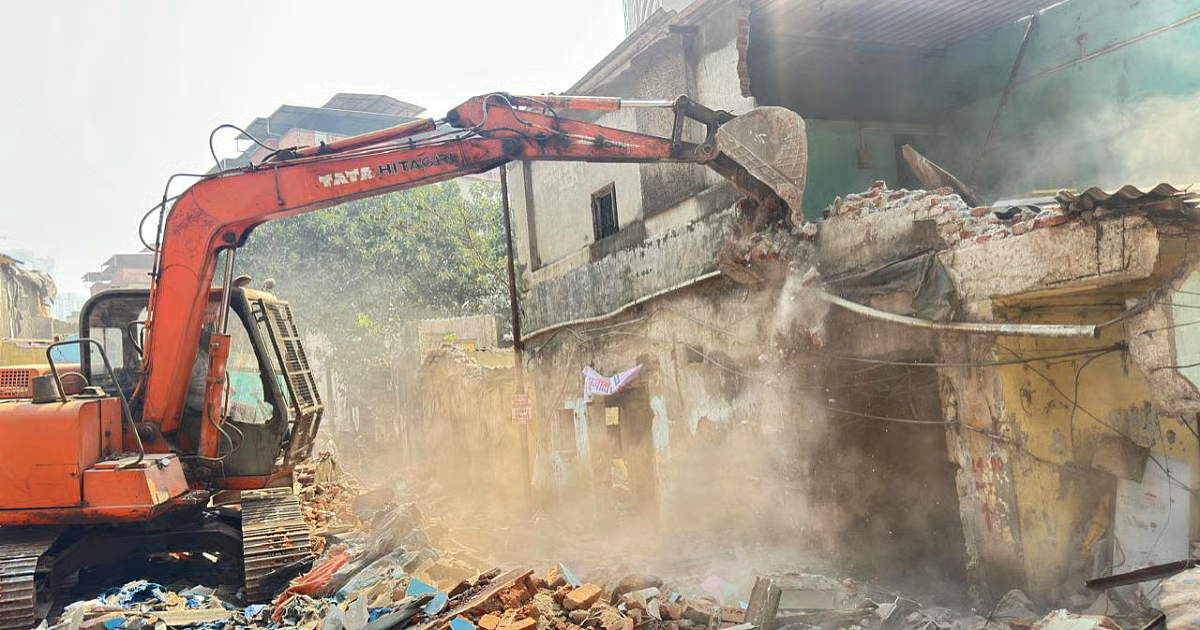
Municipal corporations across Maharashtra have begun tightening rules on illegal constructions, a move that directly impacts small city homebuyers. The crackdown focuses on unauthorised buildings, layout violations, and irregular approvals, especially in Tier-2 and Tier-3 cities where enforcement was historically weak.
Why Maharashtra Is Cracking Down Now
This topic is time-sensitive news, not evergreen. The stricter action follows repeated court observations, rising urban safety concerns, and pressure to clean up long-pending illegal developments. Several municipal bodies have been instructed to act against unauthorised constructions rather than regularising them retroactively, which was common practice earlier.
In many smaller cities, illegal buildings expanded due to lax oversight, political patronage, and demand for affordable housing. Recent incidents involving building collapses, fire safety failures, and infrastructure overload have forced authorities to act. Municipal corporations are now cancelling approvals, issuing demolition notices, and freezing utilities for non-compliant properties.
What Counts as Illegal Construction in Small Cities
Illegal construction is no longer limited to completely unauthorised buildings. Municipal bodies are targeting partial violations as well. These include extra floors beyond sanctioned plans, conversion of residential units into commercial spaces, deviation from approved layouts, encroachment on open spaces, and construction without occupancy certificates.
In Tier-2 cities, many buyers purchased flats assuming post-construction regularisation would be possible. That assumption is now risky. Authorities are signalling that amnesty schemes will be limited and selective, not automatic.
Immediate Impact on Small City Homebuyers
For homebuyers in smaller cities, the biggest concern is legal uncertainty. Properties without clear approvals can face penalties, denial of basic services like water and electricity, or even demolition orders. Buyers who invested in affordable housing projects may find resale difficult as banks become cautious about financing disputed properties.
New homebuyers are also seeing delays in project handovers. Builders are being asked to rectify violations before receiving completion or occupancy certificates. While this improves long-term safety, it increases short-term costs and timelines, which may be passed on to buyers.
How Builders and Developers Are Responding
Developers in non-metro areas are adjusting strategies. Many are revisiting project documentation, reducing construction density, and avoiding aggressive floor additions. Some smaller builders who relied on informal approvals are exiting the market altogether.
Larger developers with compliance experience are gaining an advantage. Municipal scrutiny is pushing the market toward fewer but more regulated players. Over time, this could improve housing quality, but in the short term, supply in affordable segments may tighten.
What Homebuyers Should Check Before Buying Now
Homebuyers in Maharashtra’s small cities need to be more cautious than before. Checking sanctioned building plans, commencement certificates, and occupancy certificates is no longer optional. Buyers should also verify land use zoning and ensure the project matches approved layouts.
Local agents may downplay risks, but buyers must rely on official municipal records. Legal due diligence costs may rise slightly, but the alternative could be far more expensive.
Long-Term Effects on Small City Real Estate
In the long run, stricter enforcement may stabilise the market. Cleaner records, safer buildings, and predictable rules can attract institutional financing and organised developers to Tier-2 cities. However, prices may rise gradually as compliance costs increase.
For genuine end-users, this shift favours safety and transparency over short-term affordability. Speculative buyers and informal builders are likely to be the biggest losers in this transition.
Takeaways
Municipal bodies are acting against both full and partial construction violations
Homebuyers face higher legal risk if approvals are incomplete or unclear
Small developers are under pressure, while compliant builders gain ground
Stricter rules may improve safety but increase costs in the short term
FAQs
Are all unauthorised buildings in Maharashtra facing demolition?
No. Action depends on the nature of the violation, safety risks, and court directions. However, blanket regularisation is no longer guaranteed.
Can buyers be penalised for builder violations?
While penalties usually target builders, buyers can suffer consequences like loss of services or resale issues if a property is illegal.
Is it safe to buy under-construction property now?
Yes, but only after verifying all municipal approvals and ensuring the project follows sanctioned plans strictly.
Will affordable housing become costlier in small cities?
Compliance costs may push prices up gradually, but it could also improve construction quality and buyer confidence.











Leave a comment