

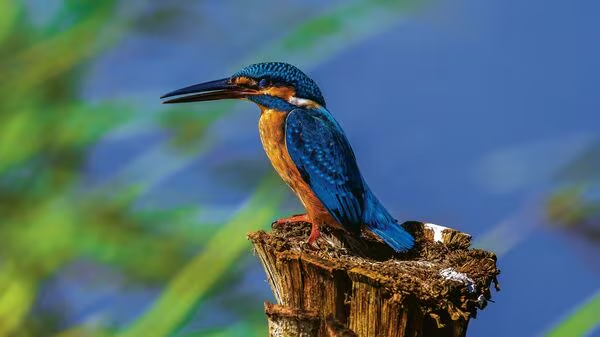
The Great Backyard Bird Count in Pune has brought together citizens, researchers and students to document local bird species. The annual global event highlights the role of citizen science in strengthening urban ecology awareness and biodiversity monitoring.
The Great Backyard Bird Count in Pune is drawing active participation from residents who are stepping out with binoculars and mobile apps to record bird sightings across parks, housing societies and lakes. As part of a global citizen science initiative held every February, the event encourages people to observe and upload bird data over four days. In a rapidly urbanizing city like Pune, this exercise provides valuable insight into urban biodiversity and ecological balance.
The initiative connects everyday birdwatchers with global conservation databases.
What Is the Great Backyard Bird Count
The Great Backyard Bird Count is an annual worldwide bird monitoring event that invites individuals to count and report bird species in their local area. Participants can record sightings for as little as 15 minutes on one or more days during the event period. Data is uploaded through online platforms and contributes to a global bird population database.
In Pune, the event is coordinated by local nature groups, educational institutions and environmental volunteers. Guided bird walks are organized in biodiversity rich locations such as Vetal Tekdi, Pashan Lake and Empress Garden. These walks help beginners identify common urban species like sunbirds, parakeets, mynas and kingfishers.
Citizen participation transforms casual observation into structured ecological data.
Citizen Science and Urban Biodiversity Monitoring
Citizen science refers to public involvement in scientific research through data collection and reporting. In the context of the Great Backyard Bird Count Pune event, residents act as data collectors, expanding the reach of formal ecological surveys.
Urban biodiversity monitoring is essential in cities experiencing rapid construction and infrastructure growth. Pune has witnessed expansion in residential complexes, IT parks and transport corridors. These changes can alter bird habitats and migration patterns.
When thousands of participants upload observations, scientists gain access to real time data on species diversity, seasonal movements and population trends. This information helps conservation planners identify sensitive zones and assess the health of urban ecosystems.
Bird Species Commonly Observed in Pune
Pune’s geography includes hills, lakes and riverine areas, creating diverse habitats. During the Great Backyard Bird Count, participants often record species such as the Indian robin, red vented bulbul, black kite and white throated kingfisher. Wetland areas attract egrets, herons and occasionally migratory ducks.
The presence of migratory birds during winter months makes February an ideal period for the count. Pune lies along migratory routes used by several species traveling between Central Asia and the Indian subcontinent.
Tracking these patterns annually allows researchers to detect changes that may be linked to climate variability, habitat loss or pollution levels. Repeated participation improves data reliability and long term ecological insights.
Impact on Environmental Awareness and Youth Engagement
Beyond data collection, the Great Backyard Bird Count in Pune plays a significant educational role. Schools and colleges encourage students to participate, introducing them to basic bird identification and environmental ethics.
For urban families, birdwatching becomes a low cost outdoor activity that builds ecological awareness. Children learn to observe behavior, listen to bird calls and appreciate green spaces. Such engagement can influence attitudes toward conservation and sustainable urban planning.
Nature clubs in Pune report growing interest among young professionals who seek recreational activities aligned with environmental values. Social media also amplifies participation as residents share photographs and checklists, creating a community around urban ecology.
Challenges Facing Urban Bird Habitats
Despite active participation in citizen science, urban bird habitats face pressures. Construction activity, tree loss, noise pollution and waste mismanagement can reduce nesting sites and food availability.
Water bodies such as lakes and rivers require consistent monitoring to prevent contamination. Wetland degradation directly impacts water dependent bird species. Urban planning decisions that ignore ecological corridors may fragment habitats.
Events like the Great Backyard Bird Count bring visibility to these challenges. Data generated can support advocacy for green cover protection and biodiversity friendly urban policies.
The Future of Citizen Science in Pune
As digital tools become more accessible, participation in citizen science initiatives is likely to grow. Mobile applications simplify bird identification and geotagging, making data submission more accurate.
Municipal authorities and environmental planners can use citizen generated data to complement official surveys. Collaboration between researchers, local government and community groups can strengthen biodiversity conservation strategies.
The Great Backyard Bird Count in Pune demonstrates that urban residents can actively contribute to ecological research. When sustained annually, such initiatives create a valuable dataset that supports long term urban sustainability planning.
Takeaways
The Great Backyard Bird Count in Pune connects citizens with global bird monitoring efforts
Citizen science strengthens urban biodiversity data collection and ecological awareness
Pune’s diverse habitats support both resident and migratory bird species
Urban planning and habitat protection remain critical for sustaining bird populations
FAQs
Q1. What is the purpose of the Great Backyard Bird Count?
It aims to collect global data on bird species distribution through public participation, supporting scientific research and conservation planning.
Q2. Who can participate in the Pune bird count?
Anyone can participate, including students, families and experienced birdwatchers, by observing and reporting bird sightings.
Q3. Why is Pune suitable for urban bird monitoring?
The city’s mix of hills, lakes and green spaces creates diverse habitats that support a wide range of bird species.
Q4. How does citizen science help conservation?
It generates large scale data sets that researchers use to track species trends, identify ecological risks and guide environmental policy decisions.










Leave a comment