

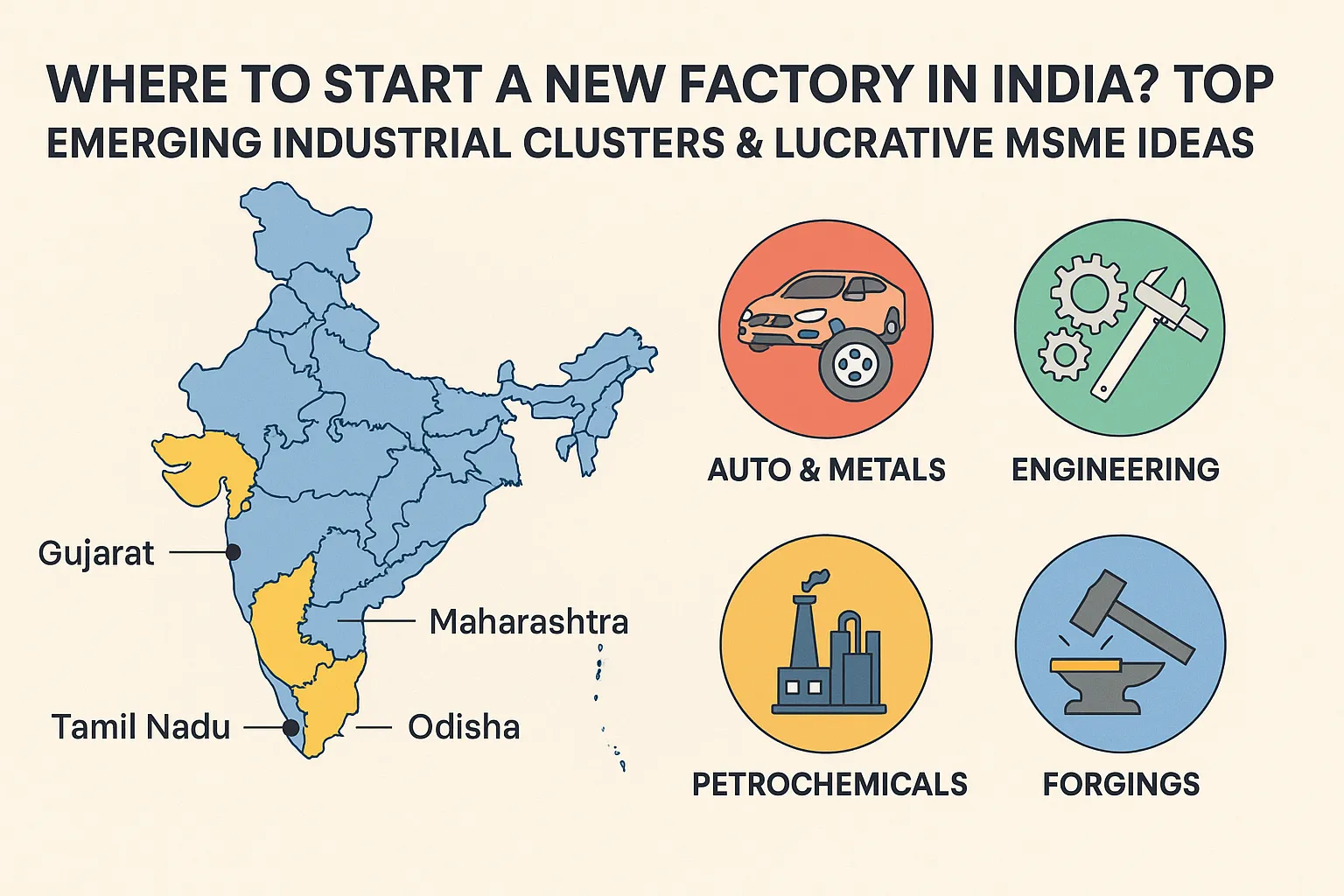
India’s manufacturing landscape is shifting as cities like Surat and Coimbatore emerge as powerful industrial clusters. These Tier-2 hubs are attracting investments, skilled workers, and export businesses, gradually challenging the long-standing manufacturing dominance of major metropolitan regions.
Rise of Manufacturing Clusters in Tier-2 Cities
The rise of manufacturing clusters in Surat and Coimbatore reflects a broader trend in India’s industrial development. Traditionally, large metro regions such as Mumbai, Delhi NCR, and Chennai dominated manufacturing activity due to better infrastructure, financial access, and proximity to ports. However, rising costs and congestion in these cities are pushing industries to explore alternatives.
Surat in Gujarat and Coimbatore in Tamil Nadu have emerged as two of the most prominent manufacturing clusters outside metropolitan regions. Both cities have long industrial histories and strong networks of small and medium enterprises. Over the past decade, these networks have expanded into global supply chains, making them important production centers.
The shift is supported by improved highways, industrial corridors, and digital connectivity. These developments make it easier for companies to operate efficiently outside traditional metro hubs.
Surat’s Textile and Diamond Industries Driving Growth
Surat is widely recognized as one of the world’s largest textile and diamond processing centers. The city produces a significant share of India’s synthetic fabric and processes a majority of the world’s rough diamonds.
The Surat textile cluster includes thousands of power loom units, dyeing facilities, and garment manufacturing units. The city’s textile markets supply fabrics to wholesalers and fashion manufacturers across India and abroad. Over time, the industry has adopted modern machinery and automated processes, increasing productivity.
The diamond industry has also strengthened Surat’s manufacturing ecosystem. The city hosts a large workforce of skilled artisans who cut and polish diamonds exported to global markets. Large integrated facilities such as the Surat Diamond Bourse have further consolidated the city’s position as a global trading hub.
These industries create strong backward and forward linkages, supporting logistics companies, machinery suppliers, and financial services.
Coimbatore’s Engineering and Textile Manufacturing Ecosystem
Coimbatore has developed a reputation as a major engineering and textile manufacturing cluster in southern India. Often referred to as the Manchester of South India, the city has a long tradition in textile production, spinning mills, and machinery manufacturing.
One of Coimbatore’s key strengths is its engineering ecosystem. The city hosts hundreds of small and medium enterprises producing pumps, motors, precision components, and industrial equipment. These firms supply products to industries across India and export to international markets.
The presence of technical institutions and engineering colleges has helped sustain a steady pipeline of skilled workers. Entrepreneurs in the region have also built strong supplier networks, which allow companies to manufacture components locally instead of relying on distant supply chains.
This ecosystem approach has made Coimbatore one of the most resilient manufacturing clusters in the country.
Why Businesses Are Moving Away From Metro Manufacturing Hubs
Several structural factors are encouraging manufacturers to expand operations in cities like Surat and Coimbatore instead of major metropolitan areas. One of the most important reasons is cost.
Industrial land and real estate in metro cities have become extremely expensive. Smaller cities offer significantly lower costs for land, labor, and factory operations. This cost advantage is particularly attractive for small and medium manufacturers.
Infrastructure improvements are also making non metro locations more viable. National highway expansions, dedicated freight corridors, and port connectivity projects are reducing transportation delays. Digital infrastructure and improved banking services further support business operations in these regions.
Another factor is workforce availability. Many Tier-2 cities have strong technical education ecosystems that supply skilled workers to manufacturing industries.
Government Policies Supporting Regional Industrial Growth
Government policy has also played a role in encouraging the growth of new manufacturing clusters. Programs such as the Production Linked Incentive scheme aim to boost domestic manufacturing in sectors like electronics, automotive components, and textiles.
State governments are also competing to attract industrial investments by offering incentives such as tax benefits, subsidized land, and infrastructure support. Gujarat and Tamil Nadu have both implemented industrial policies designed to strengthen regional manufacturing hubs.
Industrial parks and special economic zones are another important element of this strategy. These zones provide ready infrastructure, streamlined regulatory processes, and logistics support for manufacturers.
Such initiatives are helping Tier-2 manufacturing clusters compete with established industrial regions in metropolitan areas.
Future Outlook for India’s Emerging Industrial Clusters
The rise of cities like Surat and Coimbatore signals a broader decentralization of India’s manufacturing economy. As supply chains diversify and industries seek cost efficiencies, more companies are likely to expand in smaller cities.
New manufacturing clusters are also emerging in cities such as Indore, Rajkot, and Hosur. These regions benefit from proximity to raw materials, industrial networks, and improving infrastructure.
However, sustaining growth will require continued investment in logistics, skilled workforce development, and environmental sustainability. Industrial expansion must be supported by urban planning that ensures housing, transportation, and public services keep pace with economic activity.
If these conditions are met, Tier-2 manufacturing clusters could play a major role in India’s ambition to expand its industrial output and global export presence.
Takeaways
• Cities like Surat and Coimbatore are emerging as powerful manufacturing clusters in India
• Rising costs in metro cities are pushing industries toward Tier-2 industrial hubs
• Strong SME networks and skilled workforce supply are key advantages of these cities
• Government incentives and infrastructure improvements are accelerating regional industrial growth
FAQs
Why are Surat and Coimbatore important manufacturing clusters?
Surat is a global hub for textile production and diamond processing, while Coimbatore is known for engineering equipment, pumps, and textile manufacturing.
Why are companies moving manufacturing outside metro cities?
Lower costs, improved infrastructure, and availability of skilled workers make Tier-2 cities attractive alternatives for manufacturing operations.
How do manufacturing clusters benefit local economies?
Clusters create employment, encourage supplier networks, attract investment, and support export growth.
Will more Tier-2 manufacturing clusters emerge in India?
Yes. Infrastructure projects and industrial policies are encouraging new manufacturing hubs in several smaller cities across the country.











Leave a comment