

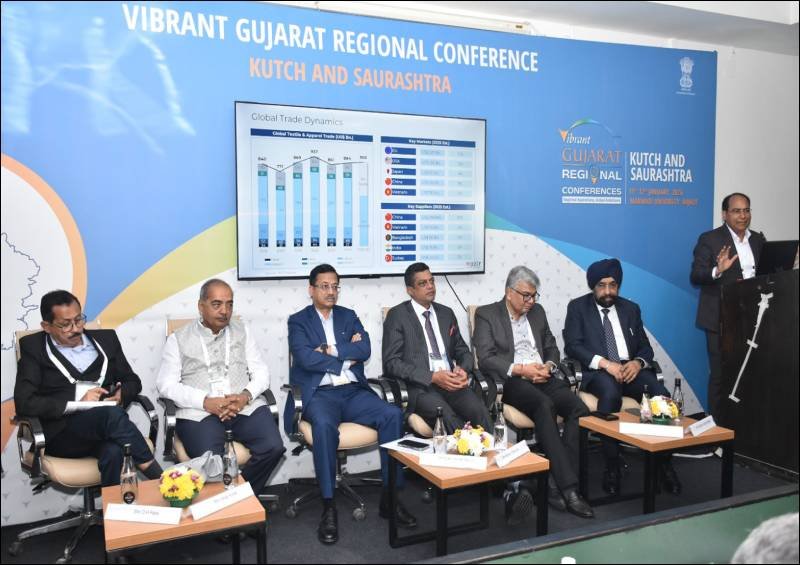
Gujarat’s textile sector is showing clear signs of recovery, with Surat and Rajkot leading export growth after a period of slowdown. Improved global demand, stabilising input costs, and strong local manufacturing networks are driving this rebound across key textile clusters.
Gujarat Textile Industry Shows Signs of Export Recovery
Gujarat textile hubs rebound is becoming evident as export orders pick up in major centres like Surat and Rajkot. After facing challenges such as fluctuating raw material prices and weak global demand in previous periods, the sector is now seeing renewed momentum.
Surat, known for its synthetic textile production, has reported increased activity in weaving and processing units. Rajkot, which supports textile machinery and allied industries, is also benefiting from this upward trend.
Export markets in regions such as the Middle East, Africa, and parts of Asia are contributing to the recovery. As demand stabilises, manufacturers are gradually scaling operations back to pre-slowdown levels.
Surat Textile Hub Leads Production and Export Growth
Surat textile hub recovery is central to Gujarat’s overall rebound. The city accounts for a significant share of India’s man-made fabric production, particularly polyester and synthetic textiles.
Thousands of small and medium units in Surat form a dense manufacturing ecosystem. This cluster-based model allows for quick adaptation to market demand and efficient production cycles.
Recent months have seen improved utilisation of power looms and processing units. Traders report better order flow, especially for affordable fabrics that cater to both domestic and export markets.
The flexibility of Surat’s textile industry has helped it respond quickly to changing global demand patterns.
Rajkot Supports Growth Through Textile Machinery Sector
Rajkot textile industry plays a crucial supporting role in Gujarat’s textile ecosystem. The city is a key hub for manufacturing textile machinery, spare parts, and engineering solutions used across the sector.
As textile production increases in Surat and other regions, demand for machinery maintenance, upgrades, and new installations also rises. This creates a ripple effect, benefiting Rajkot’s industrial base.
Local manufacturers in Rajkot are seeing higher demand for equipment related to weaving, dyeing, and processing. This indicates a broader recovery beyond just finished textile exports.
The interdependence between production hubs and machinery suppliers strengthens Gujarat’s overall textile competitiveness.
Factors Driving the Textile Export Recovery in Gujarat
Several factors are contributing to the Gujarat textile hubs rebound. One of the key drivers is the stabilisation of raw material prices, particularly polyester and yarn, which had seen volatility earlier.
Improved global demand is another important factor. As international markets recover and supply chains normalise, Indian exporters are regaining orders.
Government support through export promotion schemes and infrastructure development has also played a role. Policies aimed at boosting manufacturing and exports are helping textile businesses remain competitive.
Additionally, the cost advantage of Indian textiles compared to some global competitors continues to attract buyers.
Challenges That Still Impact the Textile Sector
Despite the recovery, the textile sector in Gujarat continues to face challenges. Energy costs remain a concern for many units, especially small manufacturers operating on thin margins.
Competition from countries such as Bangladesh and Vietnam persists in certain segments, particularly in garments and low-cost textiles.
Compliance requirements in export markets, including sustainability standards, are becoming stricter. Smaller units may find it difficult to adapt quickly without additional support.
Access to finance and working capital also remains an issue for some MSMEs, especially after periods of slowdown.
Outlook for Gujarat’s Textile Industry in 2026
The outlook for Gujarat textile hubs remains cautiously optimistic. If global demand continues to improve and input costs remain stable, the sector is likely to sustain its recovery.
Surat and Rajkot are expected to remain key drivers due to their established industrial ecosystems. Continued investment in technology and infrastructure will be important for long-term growth.
There is also increasing focus on value-added products and diversification into technical textiles. This can help Gujarat move beyond traditional segments and capture new market opportunities.
For now, the current rebound signals resilience and adaptability within one of India’s most important manufacturing sectors.
Takeaways
Gujarat textile hubs are recovering with Surat leading production growth
Rajkot’s machinery sector is benefiting from increased industrial activity
Export demand and stabilising input costs are key recovery drivers
Challenges like competition and compliance still require attention
FAQs
Why are Gujarat’s textile hubs recovering now?
Improved global demand, stable raw material prices, and strong manufacturing networks are driving the recovery.
What role does Surat play in the textile industry?
Surat is a major hub for synthetic textile production and contributes significantly to India’s fabric output.
How is Rajkot connected to the textile sector?
Rajkot manufactures textile machinery and equipment, supporting production hubs like Surat.
What challenges does the textile industry still face?
Energy costs, global competition, and compliance requirements remain key concerns.









Leave a comment