

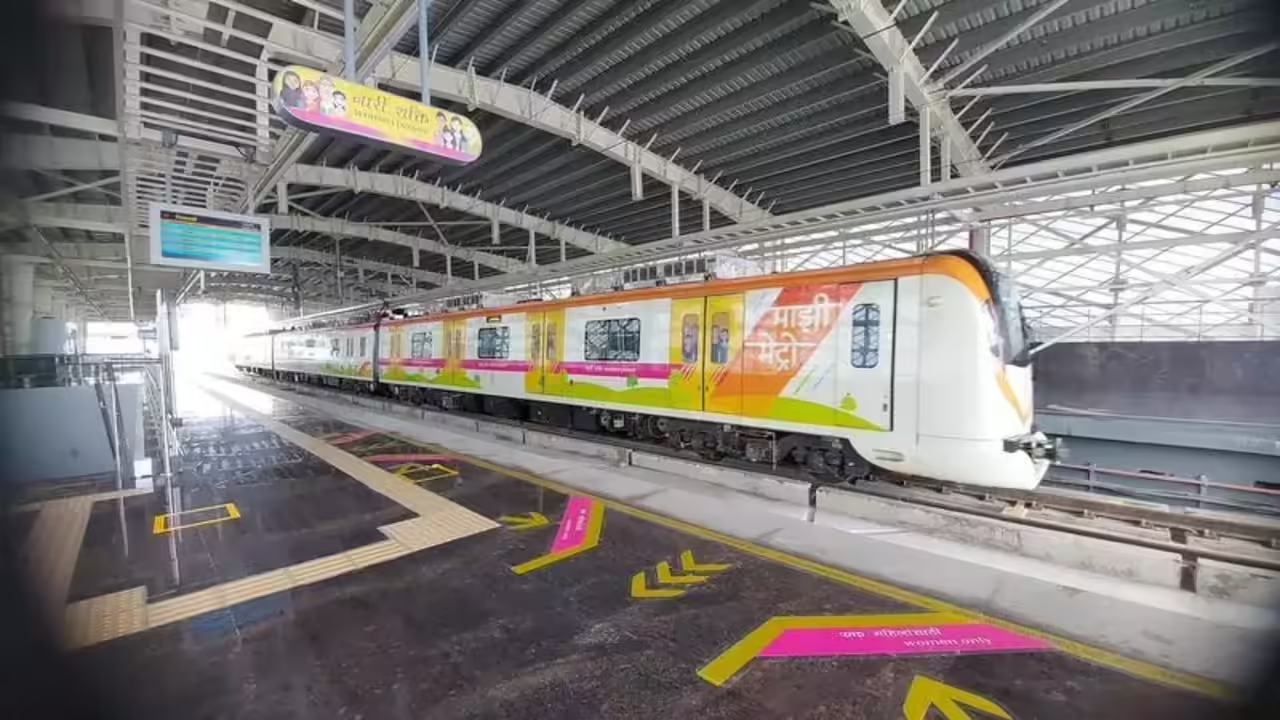
Maharashtra’s new transport rules are set to influence daily commuting patterns in non-metro cities. Changes around enforcement, safety compliance, and vehicle regulations are expected to affect costs, convenience, and travel behaviour across smaller urban centres.
Maharashtra Transport Rules Bring Changes for Daily Commuters
Maharashtra transport rules have been updated with a focus on road safety, stricter enforcement, and improved compliance. While such measures are often designed with larger cities in mind, their impact is significant in non-metro regions like Nagpur, Nashik, Aurangabad, and Amravati.
For daily commuters, especially those relying on two-wheelers, shared autos, and private vehicles, these changes can directly influence travel routines. Increased checks, revised penalties, and updated documentation requirements are already being noticed in several cities.
The rules aim to standardise road usage and reduce violations, but they also introduce new responsibilities for regular commuters.
Stricter Enforcement and Higher Penalties Affect Behaviour
One of the most visible aspects of the Maharashtra transport rules is stricter enforcement. Traffic police are increasing checks on helmet usage, seat belts, valid licences, and vehicle documents.
Higher penalties for violations are intended to act as deterrents. For example, riding without a helmet or driving without proper documentation can result in significant fines compared to earlier norms.
In non-metro cities, where enforcement was previously less strict than metros, this shift is leading to behavioural changes. Commuters are becoming more cautious, ensuring compliance to avoid penalties.
However, for some daily wage earners and low-income groups, higher fines can become a financial burden.
Impact on Two-Wheeler and Shared Transport Users
Two-wheelers remain the primary mode of transport in smaller cities across Maharashtra. The updated rules directly impact this segment through stricter helmet enforcement and documentation checks.
Shared transport options such as auto-rickshaws and local taxis are also affected. Drivers are required to maintain proper permits, fitness certificates, and fare compliance.
For passengers, this can mean slightly higher fares if operators pass on compliance costs. At the same time, better regulation can improve safety and service quality.
In cities where informal transport systems are common, enforcing uniform rules may take time but is expected to bring long-term benefits.
Vehicle Fitness, Documentation, and Compliance Requirements
Another key component of the Maharashtra transport rules is the focus on vehicle fitness and documentation. Periodic fitness checks for commercial vehicles are being emphasised to ensure roadworthiness.
Digital documentation systems are also being promoted. Apps and online platforms allow commuters to store and present vehicle documents electronically, reducing the need for physical copies.
This shift towards digital compliance is particularly important for younger users and working professionals. However, awareness and adoption in smaller towns may take time.
Ensuring that all vehicles meet emission and safety standards is also part of the broader regulatory push.
Public Transport and Last-Mile Connectivity Challenges
While rules focus on regulation, the availability of reliable public transport remains a challenge in many non-metro cities. Buses and local transport services are often limited or inconsistent.
Stricter rules on private and shared vehicles can indirectly highlight gaps in public transport infrastructure. If alternatives are not strengthened, commuters may face inconvenience.
Improving last-mile connectivity is essential to balance regulation with accessibility. Without adequate options, stricter rules alone may not fully address commuting challenges.
State authorities are gradually working on expanding services, but progress varies across regions.
Balancing Safety, Cost, and Convenience for Commuters
The Maharashtra transport rules aim to improve safety and reduce accidents, which is a positive step. However, their impact on daily commuters depends on how well they balance enforcement with practicality.
For regular commuters, compliance may lead to slightly higher costs, whether through fines, vehicle upgrades, or increased fares. At the same time, safer roads and better-regulated transport systems offer long-term benefits.
The transition phase is likely to see mixed reactions, especially in smaller cities where habits and systems are still evolving.
Over time, consistent enforcement and improved infrastructure can help create a more efficient and safer commuting environment.
Takeaways
Maharashtra transport rules introduce stricter enforcement in non-metro cities
Two-wheeler users and shared transport operators are most affected
Higher penalties are driving behavioural changes among commuters
Better public transport is needed to support regulatory changes
FAQs
What are the key changes in Maharashtra transport rules?
They include stricter enforcement, higher penalties, improved documentation checks, and focus on vehicle fitness and safety.
How do these rules affect daily commuters?
Commuters may face higher compliance requirements and costs but benefit from improved road safety.
Are two-wheeler users impacted the most?
Yes, due to stricter helmet enforcement and frequent document checks.
Will transport costs increase due to these rules?
In some cases, shared transport fares may rise as operators adjust to compliance costs.










Leave a comment