

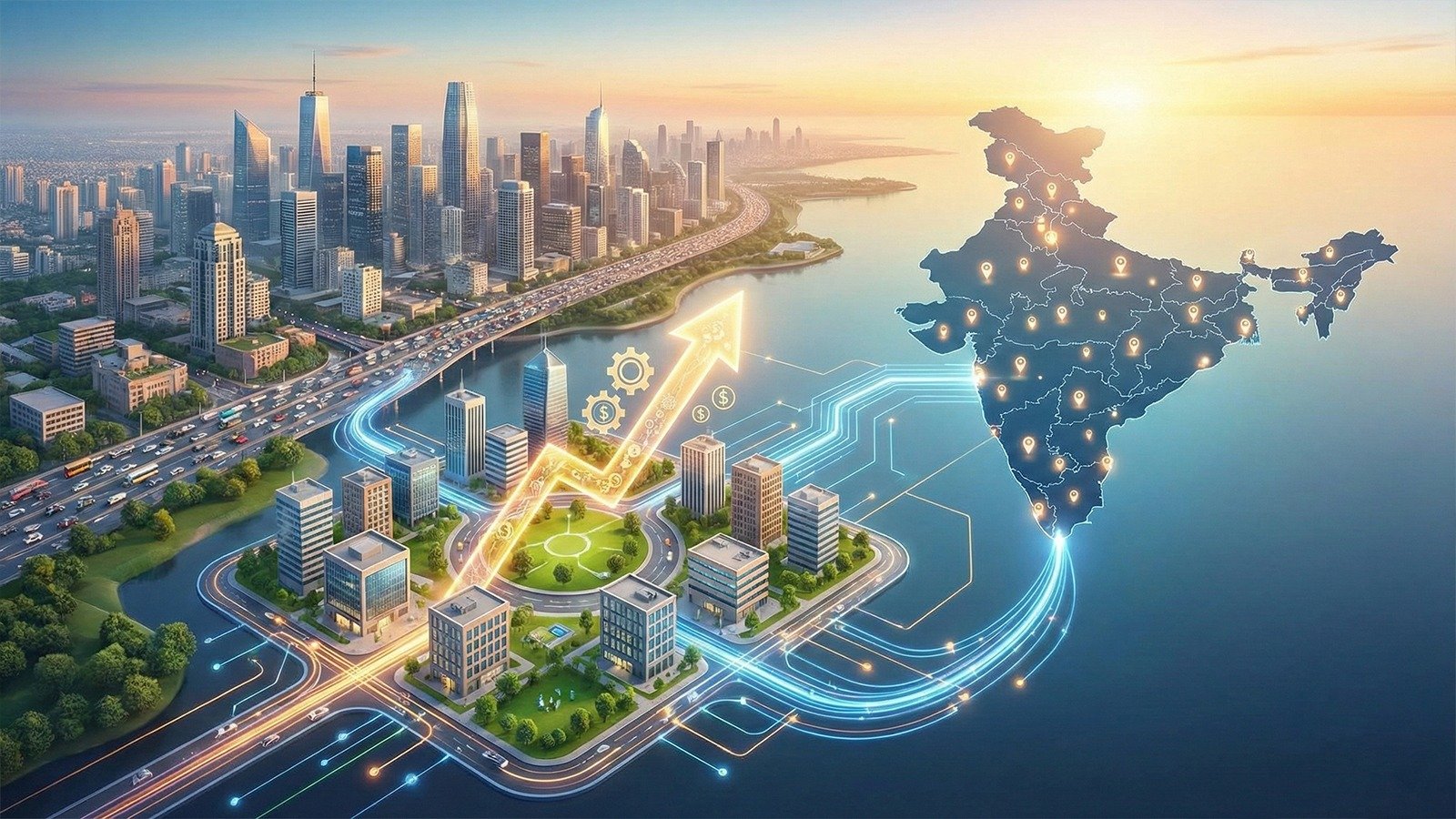
Government schemes in 2026 are increasingly targeting Tier-2 cities as India shifts its development focus beyond metros. From infrastructure to startups and digital services, policy direction suggests a clear push toward decentralised growth and regional expansion.
Policy Shift Toward Tier-2 City Development
The focus on Tier-2 cities in government schemes 2026 reflects a structural shift in India’s development strategy. Over the past few years, central and state governments have expanded initiatives beyond metro hubs to include cities like Indore, Nagpur, Coimbatore, Lucknow, and Surat.
Programs linked to urban development, digital infrastructure, housing, and entrepreneurship are now being designed with Tier-2 scalability in mind. This is partly driven by saturation in metros and rising population pressure in large cities.
Schemes such as Smart Cities Mission, AMRUT, and various state-level startup policies have already laid groundwork in these regions. In 2026, the emphasis appears to be on deepening impact rather than just expanding coverage.
Infrastructure Push Driving Regional Expansion
A major component of this shift is infrastructure investment. Tier-2 cities are seeing increased allocation for roads, public transport, logistics parks, and airport expansion projects. Improved connectivity is central to making these cities viable alternatives to metros.
For example, regional airport development under UDAN has enhanced air connectivity across smaller cities. Similarly, highway and freight corridor projects are improving access for businesses and industries operating outside major urban centers.
This infrastructure push is not limited to transport. Urban amenities such as water supply systems, waste management, and digital connectivity are also being upgraded through targeted schemes. The goal is to improve livability while enabling economic activity.
Startup and Business Schemes Expanding Beyond Metros
Another clear indicator is the expansion of startup-focused government schemes into Tier-2 ecosystems. State governments are actively promoting entrepreneurship in cities that were previously not considered startup hubs.
Policies offering incubation support, seed funding, and mentorship are now being implemented in cities like Jaipur, Bhubaneswar, and Chandigarh. However, the effectiveness of these schemes varies depending on execution and local ecosystem strength.
The rise of remote work and digital businesses has also contributed to this shift. Founders no longer need to be based in metros to build scalable ventures. As a result, government schemes are adapting to support distributed startup ecosystems.
Digital Inclusion and Public Service Delivery
Digital governance initiatives are playing a critical role in expanding government schemes into Tier-2 cities. Services related to healthcare, education, banking, and documentation are increasingly being delivered through online platforms.
Initiatives under Digital India have improved access to government services in smaller cities and towns. This includes digital payments infrastructure, e-governance portals, and online service delivery systems.
In 2026, the focus is on improving service quality and reliability. Ensuring that digital systems work efficiently in Tier-2 and Tier-3 regions is essential for broader policy success. Without consistent access and usability, adoption remains limited.
Why Tier-2 Cities Are Becoming Strategic Priorities
There are clear economic and demographic reasons behind this shift. Tier-2 cities offer lower cost of living, relatively affordable real estate, and growing consumer markets. These factors make them attractive for both businesses and policymakers.
Population growth in these cities is also outpacing some metro regions. As migration patterns change, governments are focusing on strengthening infrastructure and services where demand is rising.
Additionally, developing Tier-2 cities helps reduce pressure on metros like Delhi, Mumbai, and Bengaluru. Balanced regional development is now seen as essential for long-term economic stability.
Challenges That Could Slow Down Progress
Despite the increased focus, several challenges remain. Policy implementation at the ground level is often inconsistent. Delays in approvals, lack of coordination between departments, and bureaucratic hurdles can limit impact.
Skill gaps in local workforces also pose a challenge. While infrastructure may improve, availability of trained talent is still uneven across regions. This affects both business growth and service delivery.
Another issue is awareness. Many beneficiaries are not fully aware of available schemes or how to access them. Without strong outreach mechanisms, even well-designed policies may fail to achieve desired outcomes.
What to Watch in the Coming Years
The next phase of government schemes will likely focus on integration rather than isolated initiatives. Linking infrastructure, digital services, and economic programs can create stronger ecosystems in Tier-2 cities.
There is also growing emphasis on sector-specific development. Areas like manufacturing, logistics, IT services, and tourism are being targeted based on regional strengths.
If execution improves and policies remain adaptive, Tier-2 cities could play a central role in India’s growth story over the next decade.
Takeaways
- Government schemes in 2026 are increasingly targeting Tier-2 cities for balanced growth
- Infrastructure and digital initiatives are key drivers of this shift
- Startup and business policies are expanding beyond metro ecosystems
- Execution challenges and awareness gaps still limit full impact
FAQs
Q1. Why are Tier-2 cities becoming important for government schemes?
They offer growth potential, lower costs, and help reduce pressure on metro cities while supporting balanced regional development.
Q2. Which sectors are being targeted in Tier-2 cities?
Infrastructure, startups, digital services, manufacturing, and logistics are key focus areas.
Q3. What challenges do these schemes face?
Implementation delays, lack of awareness, and skill gaps are common issues affecting effectiveness.
Q4. Will Tier-2 cities replace metros in importance?
They are not replacing metros but are becoming equally important in India’s overall economic strategy.











Leave a comment