

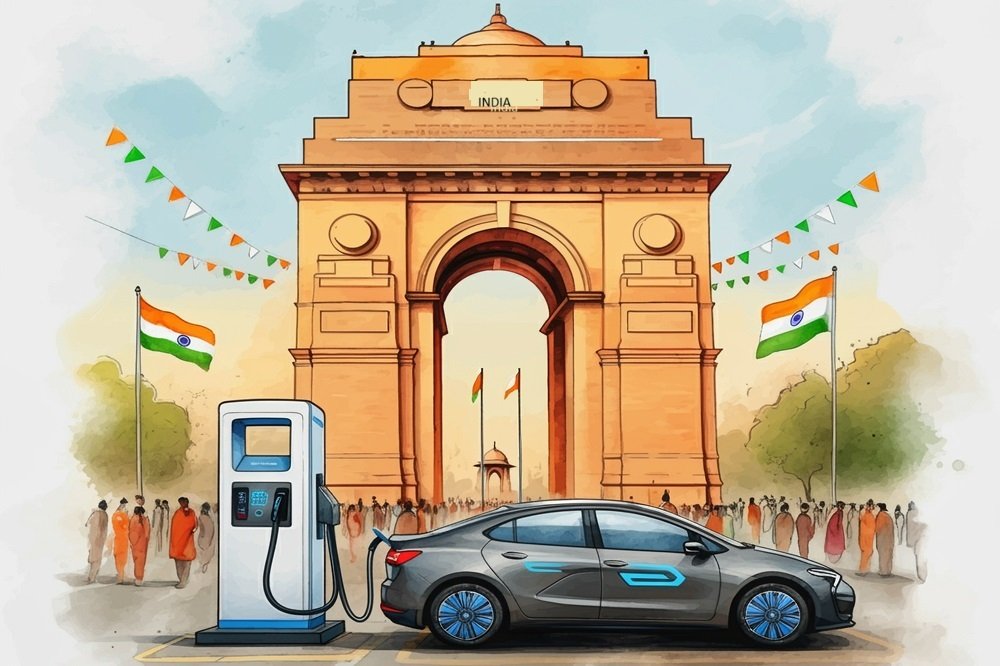
Electric vehicle adoption in Tier-2 cities like Nagpur, Indore, and Surat is accelerating due to rising fuel costs, government incentives, and improved charging infrastructure. These cities are emerging as strong growth hubs, reflecting a broader shift in India’s mobility landscape beyond metro regions.
The surge in EV adoption in Tier-2 cities has become a significant trend in 2026, with cities such as Nagpur, Indore, and Surat witnessing a sharp increase in electric two-wheelers, three-wheelers, and fleet vehicles. This shift is not limited to early adopters anymore. It is now being driven by practical economics, local policy support, and expanding infrastructure. Data from transport departments and industry reports indicates that non-metro regions are contributing a growing share of new EV registrations, especially in the two-wheeler and commercial segments.
Rising Fuel Costs and Cost Savings Driving EV Demand
One of the primary drivers behind EV adoption in Tier-2 cities is the consistent rise in petrol and diesel prices over the past few years. For daily commuters and small business owners, fuel expenses have become a major monthly burden. Electric vehicles offer a clear cost advantage in this context.
The cost of running an electric two-wheeler is significantly lower compared to petrol alternatives, often translating to savings of up to 60 to 70 percent on fuel expenses. In cities like Nagpur and Indore, where commuting distances are moderate and traffic congestion is manageable, EVs become even more practical.
Secondary keyword focus like EV cost savings India highlights how users are making long-term decisions. Many buyers are calculating total cost of ownership rather than just upfront prices, and EVs are increasingly coming out ahead.
Government Incentives and State EV Policies Accelerating Growth
Government EV policies in states like Maharashtra, Madhya Pradesh, and Gujarat are playing a crucial role in boosting adoption. Subsidies on electric two-wheelers and three-wheelers, reduced registration fees, and road tax exemptions are lowering entry barriers for consumers.
Nagpur, often referred to as one of India’s early EV pilot cities, has benefited from Maharashtra’s EV policy and public-private partnerships in mobility projects. Indore has seen strong uptake due to Madhya Pradesh’s incentives for electric auto-rickshaws, while Surat is leveraging Gujarat’s EV-friendly ecosystem.
These policies are not just encouraging private buyers but also pushing commercial adoption. Delivery services, ride-hailing drivers, and local logistics operators are increasingly switching to electric fleets due to lower operating costs and policy benefits.
Charging Infrastructure Expands Beyond Metro Cities
Charging infrastructure in Tier-2 India is no longer a major bottleneck as it was a few years ago. Public and private players have started expanding charging networks in smaller cities, focusing on key areas such as residential zones, commercial hubs, and highways.
In Nagpur, several public charging stations have been set up under city mobility initiatives. Indore and Surat are also seeing increased installation of both slow and fast chargers, including in shopping complexes and parking areas.
Secondary keyword focus like EV charging stations in Tier-2 cities reflects a key confidence factor for buyers. The availability of home charging options, especially for two-wheelers, further simplifies adoption. For many users, overnight charging at home eliminates the need for frequent public charging.
Commercial and Fleet Adoption Leading the Shift
Another major factor behind the surge is the rapid adoption of EVs in the commercial segment. Electric three-wheelers and small cargo vehicles are becoming common in cities like Surat and Indore, particularly for last-mile delivery and passenger transport.
E-commerce companies and local delivery businesses are actively transitioning to electric fleets to reduce operational costs. Auto-rickshaw drivers are also switching to electric variants due to lower maintenance and fuel expenses.
This trend is creating a visible network effect. As more commercial vehicles adopt EVs, awareness and trust among general consumers are increasing. Seeing EVs in daily use builds confidence in their reliability and performance.
Changing Consumer Mindset in Smaller Cities
The perception of electric vehicles in Tier-2 cities has evolved significantly. Earlier, EVs were seen as expensive or experimental. Today, they are viewed as practical, economical, and future-ready options.
Young buyers and first-time vehicle owners are particularly driving this shift. In cities like Nagpur and Surat, there is growing awareness about sustainability and long-term savings. Social media, local dealer networks, and word-of-mouth recommendations are influencing purchase decisions.
At the same time, improved product offerings from manufacturers have made EVs more appealing. Better battery range, improved design, and competitive pricing have addressed many of the earlier concerns.
Challenges That Still Remain
Despite the growth, certain challenges continue to affect EV adoption in Tier-2 regions. Charging infrastructure, although improving, is still unevenly distributed. Smaller towns surrounding these cities may not have adequate access.
Battery replacement costs and resale value remain concerns for some buyers. Additionally, awareness about government incentives and technical aspects of EV ownership is still limited in semi-urban areas.
However, these challenges are gradually being addressed through policy updates, industry innovation, and increasing market competition.
Takeaways
Tier-2 cities are becoming key growth drivers for EV adoption in India
Rising fuel costs and lower running expenses are pushing consumer shift
Government incentives and expanding charging infrastructure are enabling adoption
Commercial vehicle usage is accelerating trust and visibility of EVs
FAQs
Q1. Why are Tier-2 cities adopting electric vehicles faster now?
Lower running costs, supportive government policies, and improved infrastructure are making EVs more practical and accessible in smaller cities.
Q2. Which EV segments are growing the fastest in these cities?
Electric two-wheelers and three-wheelers are leading the growth, especially for personal commuting and commercial use.
Q3. Is charging infrastructure sufficient in Tier-2 cities?
It is improving steadily, with more public and private charging stations being installed, but coverage is still uneven in some areas.
Q4. Are electric vehicles cost-effective for long-term use?
Yes, EVs generally offer lower running and maintenance costs, making them more economical over time despite higher upfront prices.












Leave a comment