

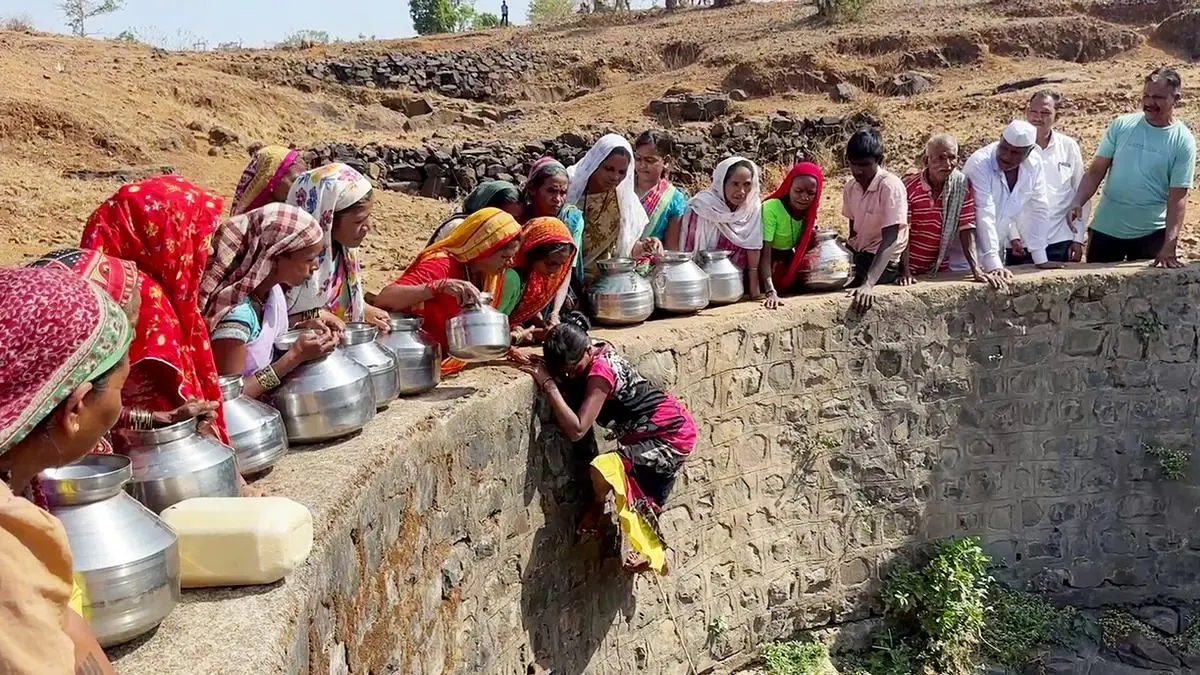
The water crisis in Marathwada has intensified in 2026, with several villages increasingly dependent on tanker supply. Low rainfall, depleting groundwater, and rising summer temperatures have pushed demand to critical levels, affecting daily life and agriculture across the region.
Marathwada Water Crisis Worsens Amid Rising Temperatures
The water crisis in Marathwada is a recurring issue, but current conditions indicate a sharper strain on resources. Districts such as Latur, Beed, Osmanabad, and Jalna are witnessing falling groundwater levels as summer peaks earlier than usual.
Rainfall in the previous monsoon season was uneven across parts of the region, leading to inadequate recharge of reservoirs and wells. As a result, many villages have entered the summer months with already stressed water reserves.
Daily water availability in several areas has dropped significantly, forcing residents to rely on limited supply schedules. In some villages, water is available only once every two or three days, increasing pressure on households.
Tanker Demand Surges Across Rural Villages
Water tanker demand in Marathwada has surged as local sources fail to meet basic needs. Tankers are now a primary source of drinking water in many villages, especially in remote areas where pipeline infrastructure is weak or absent.
Local administrations have increased tanker deployments, but demand often exceeds supply. Villagers frequently report long waiting hours and irregular distribution patterns.
The reliance on tankers also increases financial strain. While government-supplied tankers are subsidized, private tankers operate at higher costs, making water access expensive for low-income households.
Groundwater Depletion and Over-Extraction Concerns
One of the structural causes of the crisis is excessive groundwater extraction. Marathwada relies heavily on borewells for both domestic use and agriculture. Over time, this has led to a sharp decline in water tables.
In several parts of the region, borewells have either dried up or require deeper drilling, increasing costs for farmers. The lack of sustainable water management practices has compounded the issue.
Crops such as sugarcane, which require significant water, continue to be cultivated in some areas. This creates additional pressure on already scarce water resources.
Impact on Agriculture and Livelihoods
The water shortage is not limited to household consumption. It is directly affecting agriculture, which remains the primary source of income in Marathwada.
Farmers are facing difficulties in irrigating crops, leading to reduced yields and financial stress. In extreme cases, fields are left fallow due to lack of water.
Livestock is also impacted, as water scarcity affects feeding and maintenance. This has a cascading effect on rural incomes and local economies.
Migration to nearby cities increases during such periods, as families seek temporary work and stable access to water.
Government Measures and Ongoing Challenges
State authorities have initiated measures such as increased tanker supply, desilting of water bodies, and monitoring of groundwater levels. Schemes aimed at improving water storage and conservation are also being implemented.
However, execution gaps remain a challenge. Delays in infrastructure projects and uneven distribution systems limit the effectiveness of these interventions.
Long-term solutions such as rainwater harvesting, watershed development, and crop pattern changes require sustained effort and community participation.
Without structural reforms, tanker dependency is likely to remain a recurring emergency response rather than a temporary solution.
Need for Sustainable Water Management Solutions
Experts have consistently highlighted the need for sustainable water management in Marathwada. This includes promoting less water-intensive crops, improving irrigation efficiency, and strengthening local water storage systems.
Community-led initiatives such as village-level water budgeting have shown positive results in some areas. Expanding these models could help reduce dependency on external supply.
Urban water usage patterns also influence rural availability, making integrated planning essential. Addressing the crisis requires coordination between government bodies, farmers, and local communities.
Takeaways
- Marathwada is facing an intensified water crisis with rising tanker dependency
- Groundwater depletion and uneven rainfall are key contributing factors
- Agriculture and rural livelihoods are severely impacted by water shortages
- Long-term solutions require sustainable water management and policy execution
FAQs
Why is Marathwada facing a water crisis again?
Low rainfall, high temperatures, and excessive groundwater extraction have led to reduced water availability across the region.
Which districts are most affected in Marathwada?
Latur, Beed, Osmanabad, and Jalna are among the most impacted districts facing severe shortages.
Why are water tankers being used extensively?
Local water sources have dried up or become insufficient, making tankers a primary supply method for many villages.
What are the long-term solutions to this crisis?
Sustainable practices such as rainwater harvesting, efficient irrigation, and crop diversification are essential to address the issue.









Leave a comment