

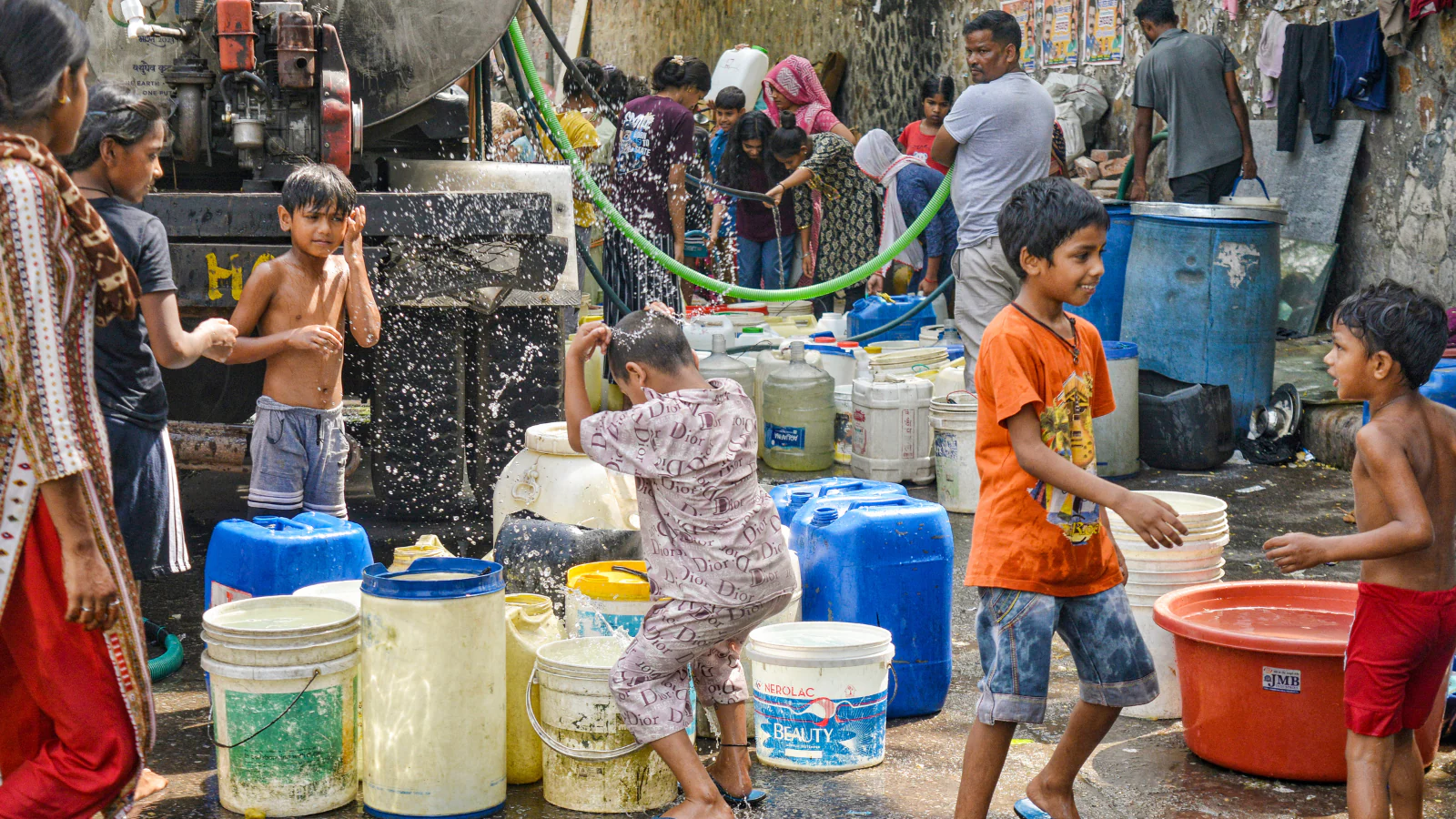
The water crisis in Tier-2 cities has intensified in summer 2026, with several regions across central and western India facing acute shortages. Rising temperatures, falling groundwater levels, and uneven supply systems are pushing cities like Nagpur and Indore into critical conditions.
The water crisis in Tier-2 cities is emerging as one of the most urgent urban challenges this summer. With demand surging and supply systems under stress, residents in cities such as Nagpur, Indore, and Raipur are facing irregular water access, forcing authorities to implement emergency measures.
Rising Demand and Falling Supply in Urban India
The growing water shortage in Tier-2 India is closely linked to population expansion and increasing urbanization. Cities that were once considered manageable in size are now dealing with infrastructure pressure similar to metros.
In many areas, daily water demand has outpaced supply capacity. Municipal corporations are struggling to maintain consistent distribution, leading to reduced supply hours or alternate-day water access in residential zones.
Groundwater levels have also dropped significantly due to over-extraction. Borewells that once provided reliable backup are now either drying up or producing limited output. This has made households more dependent on municipal supply or private water tankers.
Groundwater Depletion and Climate Impact
One of the key drivers of the water crisis in Tier-2 cities is groundwater depletion. Over the past decade, reliance on borewells has increased sharply, especially in rapidly expanding urban outskirts.
In cities like Nagpur and Indore, reports indicate that groundwater tables have declined steadily, making extraction more difficult and expensive. This trend is further aggravated by reduced rainfall in recent seasons and delayed pre-monsoon showers.
Climate variability is also playing a role. Longer summers and unpredictable rainfall patterns are reducing natural recharge cycles. As a result, reservoirs and lakes are not replenishing at the same rate as before.
Uneven Water Distribution and Infrastructure Gaps
Water distribution systems in many Tier-2 cities remain outdated and inefficient. Leakage, illegal connections, and poor pipeline maintenance contribute to significant water loss before it even reaches households.
In some neighborhoods, residents receive water for only one to two hours a day, while others depend entirely on tanker deliveries. This uneven distribution highlights gaps in planning and execution.
Urban expansion has also outpaced infrastructure development. Newly developed residential areas often lack proper pipeline connectivity, forcing reliance on temporary solutions such as private tankers or shared borewells.
Dependence on Tankers and Rising Costs
As the water crisis deepens, dependence on private water tankers has increased sharply. In cities like Raipur and Nagpur, tanker demand peaks during April and May, often leading to price hikes.
For middle and lower-income households, this becomes a financial burden. Regular tanker purchases can significantly impact monthly budgets, especially in areas with no alternative supply.
There are also concerns about water quality. Not all tanker sources are regulated, raising risks of contamination and health issues. Despite this, many residents have limited choice due to supply shortages.
Government Measures and Short-Term Solutions
Local administrations have introduced several measures to manage the crisis. These include rationing water supply, deploying additional tankers, and repairing major pipeline leaks.
Public awareness campaigns are also being conducted to encourage water conservation. Citizens are being advised to reduce wastage and adopt efficient usage practices.
However, most of these measures are short-term. While they provide immediate relief, they do not address the structural issues causing recurring shortages every summer.
Long-Term Challenges and Need for Sustainable Planning
The recurring water crisis in Tier-2 cities points to deeper systemic issues. Rapid urban growth without parallel investment in water infrastructure is a major concern.
Experts suggest that cities need to adopt sustainable water management practices. This includes rainwater harvesting, wastewater recycling, and better groundwater regulation.
Urban planning must also integrate water resource management as a core component. Without long-term strategies, seasonal crises will continue to escalate.
Takeaways
- Water crisis in Tier-2 cities has become severe during summer 2026
- Groundwater depletion and rising demand are key contributing factors
- Uneven distribution and infrastructure gaps are worsening the situation
- Long-term sustainable water management solutions are urgently needed
FAQ
Why are Tier-2 cities facing more water shortages in 2026?
Rapid urban growth, declining groundwater levels, and inadequate infrastructure have increased pressure on existing water resources.
How do residents manage water shortages in these cities?
Many rely on private tankers, store water during supply hours, and reduce daily consumption where possible.
Is groundwater the main source of water in Tier-2 cities?
Yes, groundwater is a major supplementary source, but overuse has led to significant depletion in many areas.
What are the long-term solutions to this crisis?
Rainwater harvesting, improved infrastructure, wastewater recycling, and stricter groundwater regulation can help address the issue.







Leave a comment