

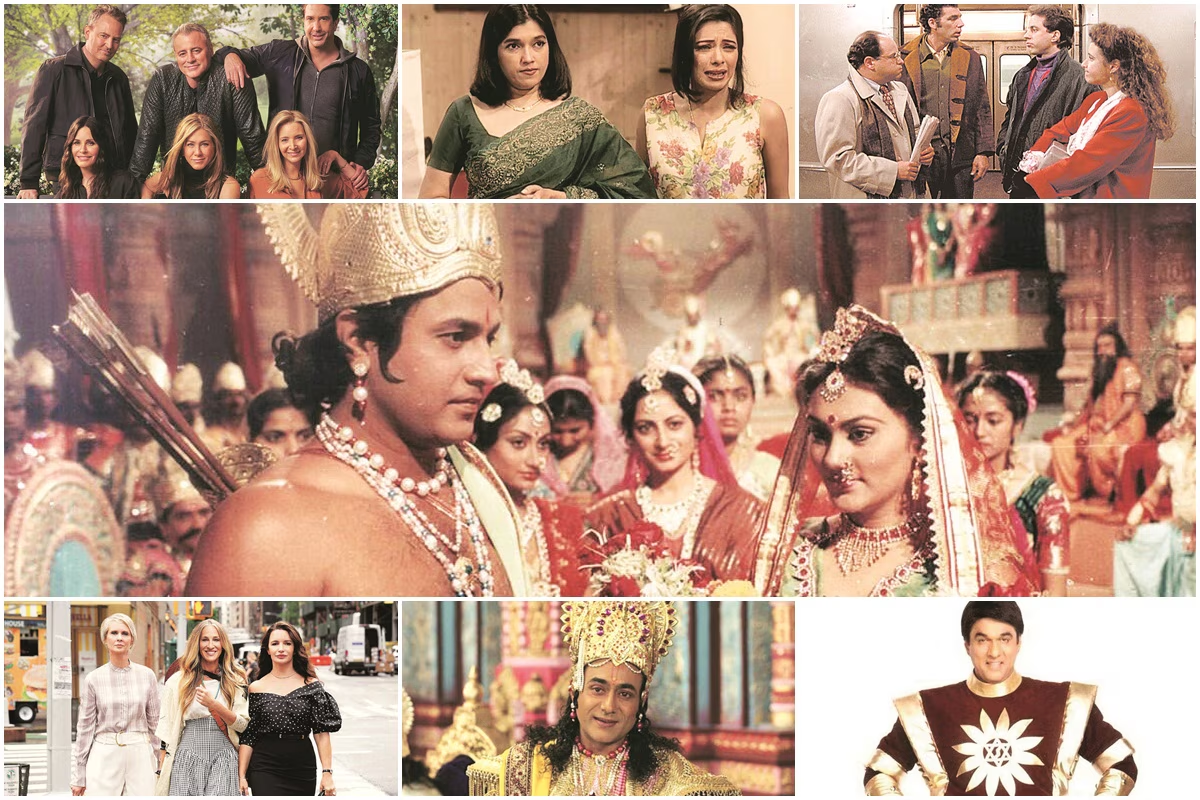
90s nostalgia has become one of the strongest trends in Indian entertainment in 2026. Bollywood films, OTT shows, music remakes, fashion references, and social media content are increasingly drawing inspiration from the 1990s as audiences seek emotional familiarity, cultural comfort, and simpler storytelling experiences.
Indian Entertainment Is Revisiting the 1990s Era
The influence of 90s nostalgia is visible across almost every part of India’s entertainment industry today. Bollywood movies are reviving classic songs, OTT platforms are producing retro-themed dramas, and music labels are reworking old hits for younger audiences.
This trend is not limited to cinema alone. Television reboots, retro fashion styling, vintage advertising aesthetics, and old-school romance themes are returning strongly in digital culture.
The 1990s hold a special emotional place for Indian audiences because the decade represented a major cultural transition period. It was the era of satellite television growth, cassette music culture, family-oriented films, early cable entertainment, and rapidly changing urban lifestyles.
For millennials who grew up during that period, nostalgic entertainment creates emotional connection and familiarity. At the same time, Gen Z audiences often see the 90s as visually unique and culturally interesting compared to today’s highly digital environment.
As a result, nostalgia has become both a creative and commercial strategy for entertainment companies.
Bollywood Is Using Nostalgia as a Commercial Formula
Bollywood filmmakers increasingly rely on nostalgic elements because they already carry emotional recognition among audiences.
Classic songs from the 1990s are frequently remixed for modern films and dance tracks. Familiar dialogues, retro costume styling, old romantic storytelling formats, and callbacks to iconic movies are regularly used to attract viewers.
Film producers often believe nostalgic references help reduce audience risk because viewers already recognize the emotional value attached to older content. Audiences may feel more interested in watching projects that remind them of childhood memories or earlier entertainment experiences.
Family-oriented storytelling has also returned partly because of this nostalgia wave. Many recent films and OTT shows revisit themes such as joint families, friendship groups, school life, middle-class struggles, and traditional neighborhood culture.
At the same time, some audiences criticize excessive dependence on nostalgia and remakes. Critics argue that repeated reworking of older material can reduce originality and creative experimentation in Bollywood.
Still, the commercial effectiveness of nostalgia-driven entertainment remains strong in 2026.
OTT Platforms Are Expanding Retro-Themed Content
Streaming platforms are also heavily participating in the nostalgia trend.
OTT services increasingly produce shows set in the late 1990s or early 2000s because these settings create emotional familiarity without requiring large-scale fantasy storytelling. Retro settings also allow creators to explore social relationships before smartphones and social media transformed everyday communication.
Many viewers enjoy stories built around simpler lifestyles, slower communication, local friendships, and offline childhood experiences. For younger audiences, these settings often feel refreshing compared to constantly connected digital life.
OTT platforms are also reviving old television properties and creating documentary-style content about iconic entertainment from previous decades. Retro playlists and classic film collections remain popular across streaming apps.
The nostalgia trend works especially well because OTT audiences are highly segmented. Platforms can target specific age groups through personalized recommendations based on familiar cultural references.
This strategy increases viewer engagement and repeat watch value.
Music Industry Is Seeing a Massive Retro Revival
India’s music industry has experienced one of the biggest nostalgia-driven transformations.
Songs from the 1990s continue dominating social media reels, wedding playlists, karaoke performances, and remix culture. Music labels frequently recreate old melodies using updated production techniques to attract both older listeners and younger streaming audiences.
The emotional appeal of 90s music remains powerful because the era produced highly memorable film soundtracks and romantic songs. Many listeners associate those tracks with family memories, festivals, school years, and early television culture.
Retro music is also performing strongly on short-video platforms where nostalgic audio clips often become viral trends. Old songs are repeatedly rediscovered through dance videos, meme culture, and influencer content.
At the same time, several artists are blending retro musical styles with modern electronic production to create hybrid nostalgia-driven content.
This has allowed older music styles to remain commercially relevant in India’s streaming economy.
Audiences Are Looking for Emotional Comfort and Simplicity
The popularity of nostalgia is connected not only to entertainment trends but also to broader emotional behavior.
Modern digital life is fast-paced, highly competitive, and constantly connected through screens and social media. Nostalgic entertainment offers audiences emotional comfort by reminding them of slower and simpler experiences.
Many viewers feel emotionally attached to the cultural atmosphere of the 1990s because it represents a pre-social media period with different social interactions and entertainment habits.
Family viewing experiences also play an important role. Parents and younger viewers can often enjoy nostalgic content together because older references create intergenerational connection.
In uncertain or stressful times, audiences frequently gravitate toward familiar cultural memories rather than highly experimental storytelling. This psychological comfort makes nostalgia commercially powerful for entertainment platforms.
The trend is therefore not only about retro aesthetics. It reflects deeper emotional and social preferences among modern audiences.
Nostalgia Is Becoming a Long-Term Entertainment Strategy
What began as occasional retro referencing has now become a central strategy across India’s entertainment industry.
Bollywood studios, music companies, streaming platforms, advertisers, and social media creators increasingly use nostalgia to maintain audience attention and emotional engagement.
While excessive dependence on nostalgia can eventually create creative repetition, its popularity in 2026 shows that audiences still strongly value emotional familiarity alongside modern entertainment experiences.
As digital culture becomes more fragmented and fast-moving, nostalgia-driven storytelling is likely to remain an important part of Indian entertainment for years ahead.
Takeaways
- 90s nostalgia is strongly influencing Bollywood, OTT platforms, music, and digital culture
- Audiences connect emotionally with retro storytelling, classic music, and familiar cultural memories
- OTT platforms are producing more retro-themed shows and reviving older entertainment properties
- Nostalgia offers emotional comfort and simplicity in a highly digital modern environment
FAQ
Why is 90s nostalgia popular in India again?
Many audiences feel emotionally connected to the 1990s because of childhood memories, family entertainment culture, and simpler lifestyles associated with that period.
How is Bollywood using nostalgia?
Bollywood frequently uses song remakes, retro references, classic storytelling themes, and familiar cultural imagery to attract audiences.
Why are OTT platforms producing retro-themed content?
Retro settings create emotional familiarity and allow creators to explore storytelling before smartphones and social media changed daily life.
Is nostalgia popular only among millennials?
No. Millennials connect through personal memories, while Gen Z audiences often enjoy retro aesthetics and older cultural styles through digital trends.











Leave a comment