

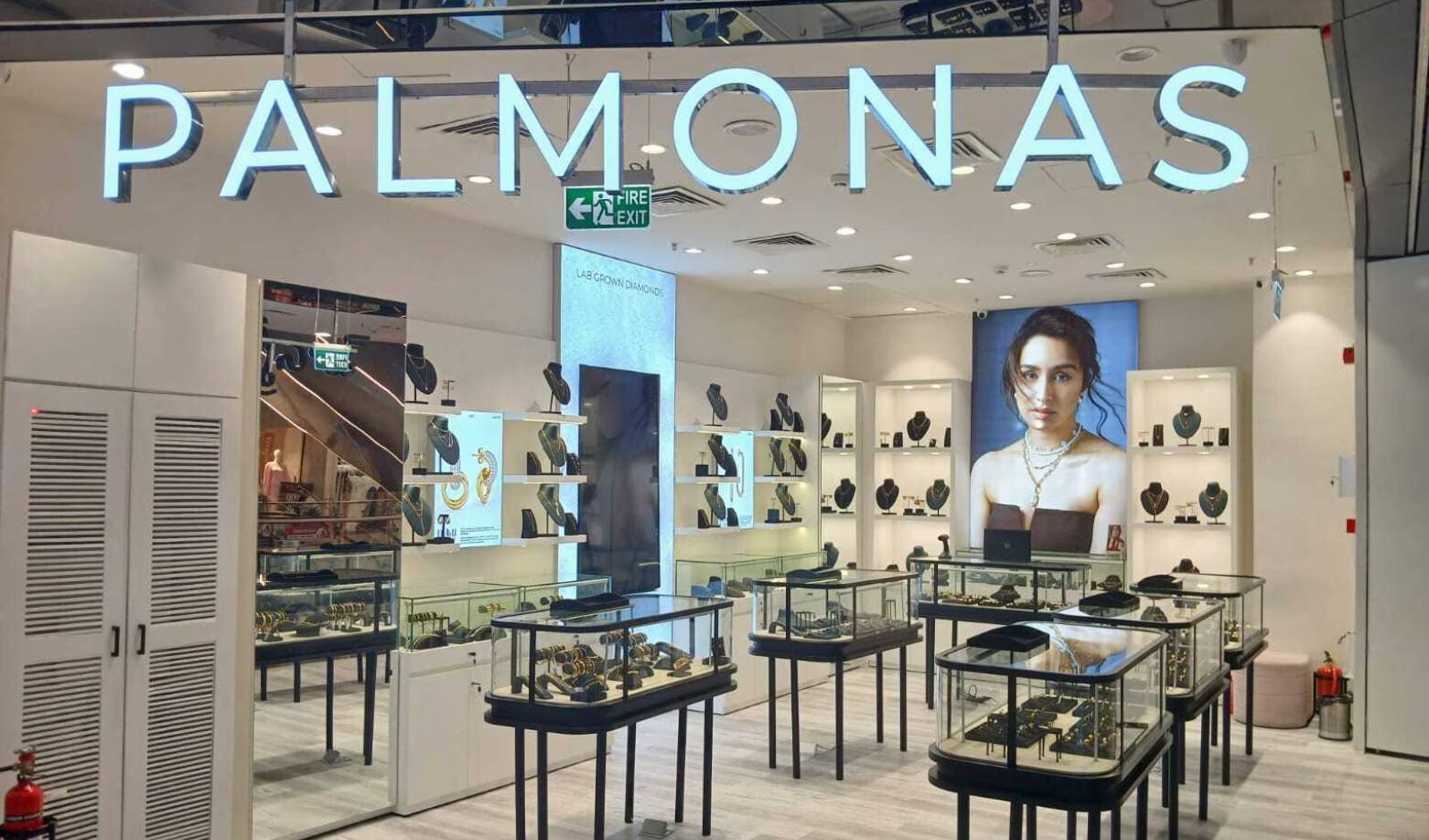
Palmonas is increasing its focus on physical retail as competition intensifies across India’s branded jewellery market. The four-year-old demi-fine jewellery company plans to expand from 105 stores to 160 by the end of FY27, while working to build repeat customers and reduce marketing costs.
Palmonas Plans 160 Stores by FY27
Palmonas is betting on offline retail as it enters its next stage of expansion in India. According to a report published by The Economic Times on October 1, the company plans to increase its store network from 105 outlets to 160 by the end of financial year 2026-27. The strategy comes as India’s branded jewellery market becomes increasingly competitive.
The Pune-based company operates in the demi-fine jewellery segment, offering products positioned between traditional fine jewellery and lower-priced fashion jewellery. Its strategy has largely combined digital discovery with physical retail.
The move towards more stores reflects a wider shift among Indian consumer brands. Digital-first companies have increasingly turned towards physical outlets to build customer trust, improve product discovery and encourage repeat purchases. For jewellery, the importance of physical retail can be particularly significant because customers often want to see the finish, size and appearance of a product before purchasing.
Why Offline Jewellery Retail Still Matters in India
India’s jewellery market has a strong offline component, particularly when customers are making higher-value purchases or buying products for weddings, festivals and other occasions.
For a demi-fine jewellery brand such as Palmonas, physical stores serve a somewhat different purpose. The products are generally positioned for more frequent and everyday use, meaning customers may discover a design online but still prefer the option of seeing it in person.
Offline stores can also help brands establish visibility in shopping districts and malls where customers already visit for fashion, beauty and lifestyle purchases.
Palmonas has been developing this omnichannel model since its earlier expansion phase. In August 2025, the company raised ₹55 crore in a Series A funding round led by Vertex Ventures Southeast Asia and India. At the time, it said the capital would support an aggressive expansion of its offline presence, with a plan to reach 100 company-owned stores. The company then had 25 stores across metros and Tier-2 cities.
The current target of 160 stores shows how substantially that retail ambition has expanded.
Demi-Fine Jewellery Creates a Different Market Position
Palmonas operates in the growing demi-fine jewellery segment, where brands attempt to combine contemporary designs with materials and pricing that sit between fashion jewellery and traditional fine jewellery.
The company has historically focused on stainless steel, sterling silver and related jewellery categories. Its current product strategy also includes a platinum-plated 925 sterling silver collection, launched in September 2026 with prices starting at ₹1,700. The launch extends a silver-focused strategy that the company has been developing since 2022.
This positioning allows brands to target consumers who want jewellery that can be worn regularly without making the kind of expenditure associated with conventional gold or diamond jewellery.
The segment is also attracting other businesses. ET reported in September that D2C silver jewellery brand Unniyarcha had raised ₹10 crore, with plans to invest in branding, manufacturing, supply-chain capacity and new product categories.
The growing number of brands means product differentiation, pricing, design and customer retention are becoming increasingly important.
Competition Is Growing Across Branded Jewellery
Palmonas is not expanding into an empty market. India’s jewellery sector includes established national chains, regional retailers and newer digital-first companies.
Large organised retailers continue to expand their physical footprints. DP Abhushan, for example, said in September that it was targeting 51 stores by FY30, with a particular focus on Tier-2 and Tier-3 cities. The company has also been exploring locations including Nagpur and Nashik in Maharashtra.
Kalyan Jewellers has also continued expanding its presence outside India’s largest metros. In September, the company announced the opening of its 12th showroom in Andhra Pradesh in Rajahmundry, highlighting the continued importance of regional markets to organised jewellery retailers.
At the premium and digital end of the market, companies such as BlueStone and other newer jewellery businesses are also expanding their physical retail networks.
For Palmonas, this means store expansion alone may not be enough. The company will need to convert its growing physical presence into repeat purchases and sustainable customer relationships.
Customer Retention Becomes Important as Marketing Costs Rise
One of the key issues behind Palmonas’ current strategy is customer acquisition.
Digital jewellery brands can build awareness rapidly through social media, influencers and performance marketing. But acquiring every customer through paid digital channels can become expensive as more brands compete for the same audience.
The Economic Times reported that Palmonas is focusing on repeat customers while also working to lower marketing costs. That shift is important because repeat purchases can improve the economics of a consumer brand without requiring the same level of spending on acquiring new buyers.
For jewellery companies selling products at relatively accessible prices, repeat buying can be particularly relevant. Customers may purchase multiple pieces over time rather than making one large transaction.
Physical stores could support that strategy by giving existing online customers a place to interact directly with the brand and by introducing the company to customers who do not regularly shop through D2C websites.
Palmonas Has Already Recorded Sharp Revenue Growth
The company’s expansion follows a significant increase in reported revenue.
Moneycontrol reported in March 2026 that Palmonas’ revenue increased from ₹1 crore in FY24 to ₹39 crore in FY25. The company also reported a net profit of ₹4.3 crore for FY25, compared with a loss in the previous year, according to the report.
The same report said the company had adopted an omnichannel strategy combining online sales with physical stores. Its growth had also received visibility through its appearance on Shark Tank India Season 4, where it secured ₹1.26 crore in funding, according to Moneycontrol.
The company later raised ₹55 crore in its Series A round in 2025, providing additional capital for expansion.
These figures explain why Palmonas is now pursuing a larger retail footprint. However, revenue growth and store-count growth do not automatically establish long-term profitability. The performance of individual stores, inventory management, customer retention and marketing expenses will all matter as the network expands.
Tier-2 Cities Could Become Important for Expansion
Palmonas’ retail strategy is also relevant to India’s Tier-2 consumer market.
The company had previously identified cities such as Aurangabad and Bhagalpur as emerging markets for its expansion plans.
This reflects a broader retail trend. Organised jewellery companies are increasingly looking beyond Mumbai, Delhi, Bengaluru and other major metros for new customers.
Tier-2 cities have growing mall infrastructure, expanding digital adoption and consumers who are increasingly familiar with national and D2C brands. At the same time, regional jewellery retailers remain deeply established in many of these markets.
For newer brands, entering these cities can therefore provide access to fresh demand, but it also requires understanding local preferences, purchasing patterns and competition.
The opportunity is particularly relevant for demi-fine jewellery because younger consumers in smaller cities may be interested in contemporary designs while still maintaining strong connections with traditional jewellery buying.
The Challenge Will Be Turning Stores Into a Scalable Model
Opening 55 additional stores is a significant operational undertaking.
Each outlet requires inventory, employees, rent, store design, local marketing and ongoing operating costs. Jewellery retail also ties up capital in stock, making inventory management particularly important.
The company will therefore need to balance rapid expansion with store-level economics.
Its decision to focus on repeat customers could become an important part of that equation. A store that attracts customers once but struggles to generate repeat purchases may not deliver the same value as an outlet with a strong local customer base.
The competitive environment also means Palmonas will have to continue differentiating itself through design, materials, pricing and brand positioning.
What Palmonas’ Expansion Says About India’s Jewellery Market
Palmonas’ decision to increase its store target comes at a time when India’s jewellery sector is becoming more organised and more competitive.
Traditional jewellers continue to operate large regional networks, while national chains are expanding into smaller cities and digital-first brands are opening physical outlets.
The result is a market where the boundaries between online and offline retail are becoming less distinct.
For consumers, this means more choices across price points and product categories. For brands, it means competing not only for visibility but also for customer trust, repeat purchases and efficient retail economics.
Palmonas’ 160-store target will therefore be closely linked to how successfully it can combine its digital presence with physical retail.
The company’s next phase will show whether offline expansion can help a young demi-fine jewellery brand build a larger and more durable customer base as competition increases across India’s jewellery market.
Takeaways
- Palmonas plans to expand from 105 stores to 160 by the end of FY27, according to The Economic Times.
- The company is focusing on offline retail, repeat customers and lower marketing costs as competition increases.
- Palmonas reported revenue of ₹39 crore in FY25, up from ₹1 crore in FY24, according to Moneycontrol.
- The wider jewellery industry is also expanding into Tier-2 and Tier-3 cities, increasing competition for emerging consumers.
FAQ
What is Palmonas?
Palmonas is a Pune-based demi-fine jewellery brand that combines online and offline retail. The company sells contemporary jewellery and has expanded its physical store network alongside its digital business.
How many stores does Palmonas plan to have?
Palmonas plans to increase its store network from 105 to 160 by the end of FY27, according to reporting by The Economic Times on October 1, 2026.
Why is Palmonas expanding offline?
The company is focusing on physical stores to support customer acquisition and repeat purchases while reducing reliance on marketing-led digital customer acquisition. Physical stores also allow customers to see and try jewellery before purchasing.
Is competition increasing in India’s jewellery market?
Yes. Established jewellery chains, regional retailers and newer D2C brands are expanding their presence. Several organised jewellery companies are also targeting Tier-2 and Tier-3 cities, increasing competition across different segments of the market.











Leave a comment