

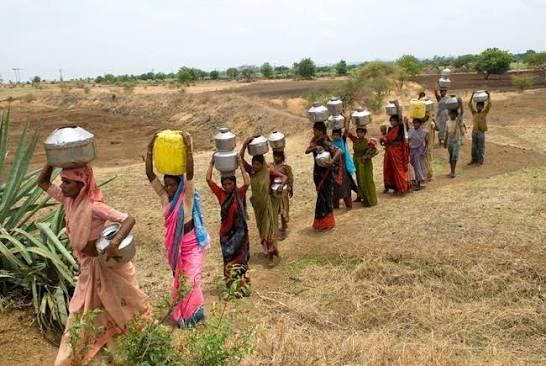
Maharashtra’s drought situation is putting rural families under growing pressure as prolonged rainfall deficits affect crops, drinking water and farm incomes. With 265 of the state’s 358 talukas declared drought-affected, communities are already preparing for a difficult period ahead, particularly across Marathwada and Vidarbha.
Maharashtra Drought Situation Puts Rural Families Under Pressure
The Maharashtra drought situation has moved from a rainfall concern to a broader rural livelihood crisis. The state government has declared 265 of 358 talukas drought-affected, covering nearly three-fourths of the state. The decision followed deficient monsoon rainfall and prolonged dry spells that affected the 2026 kharif season.
The impact is being felt differently across districts, but farmers in Marathwada and Vidarbha are among those facing serious challenges. According to rainfall data reported by The Times of India, Maharashtra had received 798.2 mm of rainfall against a normal 970.9 mm by September 25, leaving an overall deficit of about 18%. Marathwada recorded a much larger 38% deficit, while Vidarbha recorded a 23% deficit.
For rural households, the problem is not limited to fields. Water availability, livestock, household expenses and employment are all connected to the success or failure of the agricultural season.
Water Shortages Are Changing Daily Rural Life
In drought-prone villages, families are already preparing for the possibility that existing water sources may not last through the coming months.
Wells that normally support households and farms can become unreliable after a weak monsoon. In some areas, residents are increasingly dependent on tankers for drinking water. Reports from Marathwada indicate that villages are facing pressure on local water sources, while tanker-based supply has become an important part of the response.
This affects household routines as well. When water has to be collected from a distant source or arrives only at specific times, families need to spend more time managing basic domestic requirements.
Women and older family members can be particularly affected when households have to spend additional time arranging water. Children can also feel the impact when water shortages interfere with school attendance or household responsibilities.
The situation becomes more difficult when drinking water, livestock needs and farming requirements compete for the same limited sources.
Farmers Are Rethinking the Kharif Season
The rainfall shortage has also damaged the economics of farming households.
Maharashtra farmers commonly grow crops such as soybean, cotton, tur, maize, millet, moong and urad during the kharif season. Reports from drought-affected districts indicate crop failures and damage linked to inadequate rainfall, along with increased pest and disease problems in some areas.
For a small farmer, a failed crop can affect much more than one season’s income. Money set aside for seeds, fertilisers, labour and other farm expenses may not be recovered. At the same time, household spending continues.
Some families are therefore considering alternative sources of income. Recent reporting from drought-affected parts of Maharashtra found that agricultural labourers and small farmers have started travelling outside their usual areas in search of work. Some families have travelled as far as Tamil Nadu for employment.
This early movement of workers is significant because seasonal migration can become a survival strategy when agriculture cannot provide sufficient income.
Fodder Shortage Adds Pressure on Livestock Owners
Water stress does not affect only crops. Livestock-dependent households face another challenge: fodder availability.
On October 1, district administrations in Nanded and Latur restricted the sale and transportation of green and dry fodder, grass and cattle feed outside their respective districts because of concerns about shortages. The restrictions came amid below-average monsoon rainfall and drought conditions.
For families that keep cows, buffaloes, goats or other livestock, fodder shortages can quickly become an income problem. Animals require regular food and water even when farm income falls.
Selling livestock may provide immediate cash, but it can also reduce a household’s ability to earn from dairy or other livestock-related activities later.
This is why drought management in rural Maharashtra involves more than providing water for people. Crop protection, cattle feed, employment and access to credit are closely linked parts of the same problem.
Government Relief Is Now Being Rolled Out
The drought declaration has triggered a set of relief measures for affected areas.
The state government has directed authorities to conduct crop-loss assessments and prepare taluka-level relief plans. Measures announced in connection with the drought declaration include crop damage assessment, land revenue-related relief, loan restructuring and drinking water arrangements.
The Centre has also announced that teams will visit Maharashtra and Karnataka from October 3 to assess the drought situation. The assessment is expected to examine issues linked to water availability, the remaining kharif crop and preparations for the rabi season.
For families on the ground, however, the effectiveness of relief will depend on how quickly assistance reaches individual villages and households.
Students and Young People Are Also Feeling the Impact
The drought is beginning to affect rural families beyond agriculture and household water supply.
The Maharashtra State Board has announced that students from the 265 drought-affected talukas appearing for the February-March 2027 SSC and HSC examinations will not have to pay examination fees. The decision is intended to reduce the financial burden on families facing drought-related difficulties.
The wider impact on young people can be harder to measure. When household income falls, families may have to reconsider spending on education, transportation, coaching and other expenses.
Students from farming families studying in cities can also remain financially connected to their rural households. Recent reporting from Pune highlighted how students from drought-affected farming families are facing financial pressure as their parents struggle with declining agricultural income.
Vidarbha and Marathwada Face Different Forms of Water Stress
The drought is not uniform across Maharashtra.
Marathwada has experienced particularly severe rainfall shortages, while Vidarbha has also recorded substantial deficits. The Times of India reported that rainfall deficits varied significantly between districts, with some areas recording shortages of more than 30%.
Nagpur and other parts of Vidarbha are also seeing the agricultural effects. A recent report from Kalmeshwar described farmers dealing with lower yields in crops including cotton and tur, while orange growers have also reported losses. All 14 talukas of Nagpur district have been declared drought-affected.
The situation shows why a single statewide rainfall figure cannot fully describe the crisis. Local rainfall patterns, groundwater availability, irrigation infrastructure, crop choices and reservoir conditions can determine how severely an individual village experiences water stress.
What Rural Families Are Likely to Prioritise Next
For households facing uncertain water availability, the immediate priority is likely to remain drinking water and livestock needs. Farming decisions will depend on local water conditions, available government support and the possibility of income from non-farm employment.
Families may also reduce discretionary spending, seek temporary work, depend more heavily on relatives working in cities and reconsider the crops they plant in the next season.
The bigger challenge will be maintaining household income while conserving limited water resources.
The current drought also raises questions about how Maharashtra can strengthen village-level water storage, groundwater management and irrigation systems before the next weak monsoon becomes a crisis.
The Bigger Water Stress Challenge for Maharashtra
The 2026 drought illustrates how rainfall distribution matters as much as total rainfall.
Maharashtra has received intense rainfall in some locations during the monsoon, while other areas have experienced repeated deficient weeks. IMD-linked analysis reported that Marathwada had deficient or large-deficient rainfall in 12 of the 17 weeks tracked, while Vidarbha experienced similar conditions in 11 weeks.
That pattern can leave farmers vulnerable even when heavy rainfall occurs elsewhere.
For rural families, the months ahead will therefore depend on more than the end of the monsoon. Access to drinking water, fodder, employment, crop-loss compensation, credit relief and preparation for the rabi season will determine how households navigate the drought.
The immediate response can reduce hardship, but longer-term water management will be important if villages are to become less vulnerable to repeated rainfall uncertainty.
Key Takeaways
- Maharashtra has declared 265 of its 358 talukas drought-affected following deficient rainfall and prolonged dry spells.
- Marathwada and Vidarbha are among the regions facing significant rainfall deficits and agricultural stress.
- Rural families are dealing with crop losses, water shortages, fodder concerns and reduced farm incomes.
- Government crop assessments, financial relief, drinking water measures and the upcoming central assessment will shape the next phase of the drought response.
FAQ
Why has Maharashtra declared drought in 265 talukas?
The declaration follows deficient monsoon rainfall and prolonged dry spells that affected agricultural activity and water availability across large parts of the state. Government data cited in reports showed an overall rainfall deficit of around 18% by September 25.
Which parts of Maharashtra are facing the most serious rainfall shortages?
Marathwada and Vidarbha have recorded significant rainfall deficits. Marathwada’s deficit was reported at around 38% and Vidarbha’s at around 23% by September 25, although conditions vary between districts and talukas.
How is the drought affecting rural families?
The effects include crop losses, reduced agricultural income, drinking water shortages, fodder concerns and increased pressure to find work outside agriculture. Some families in drought-affected areas have already begun travelling elsewhere for employment.
What happens next after the drought declaration?
Authorities are expected to conduct crop-loss assessments and implement relief measures. The Centre has also announced assessment teams for Maharashtra and Karnataka from October 3 to examine the drought situation and its impact on agriculture and water availability.
(







Leave a comment