

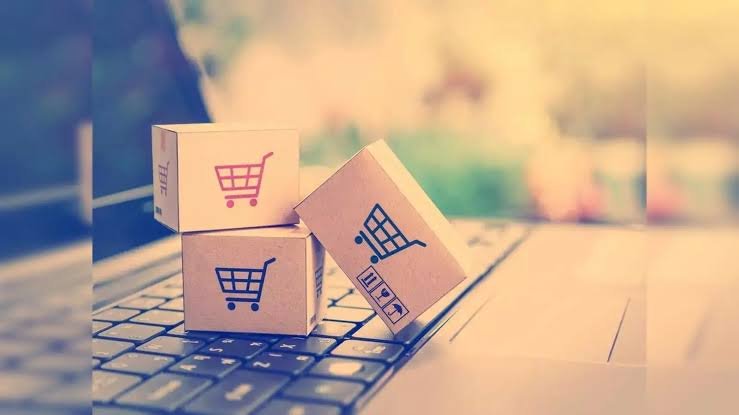
Small-city businesses across India are increasingly combining physical stores with digital channels as e-commerce, UPI, social media and open digital networks make online selling more accessible. The shift is helping local retailers, artisans and small manufacturers reach customers beyond their immediate markets.
Small-City Businesses Enter a Bigger Digital Market
The digital transformation of small-city businesses is becoming a significant part of India’s retail and MSME story. Local shops that once depended almost entirely on neighbourhood customers are increasingly using social media, marketplaces, digital payments and online catalogues to find new buyers.
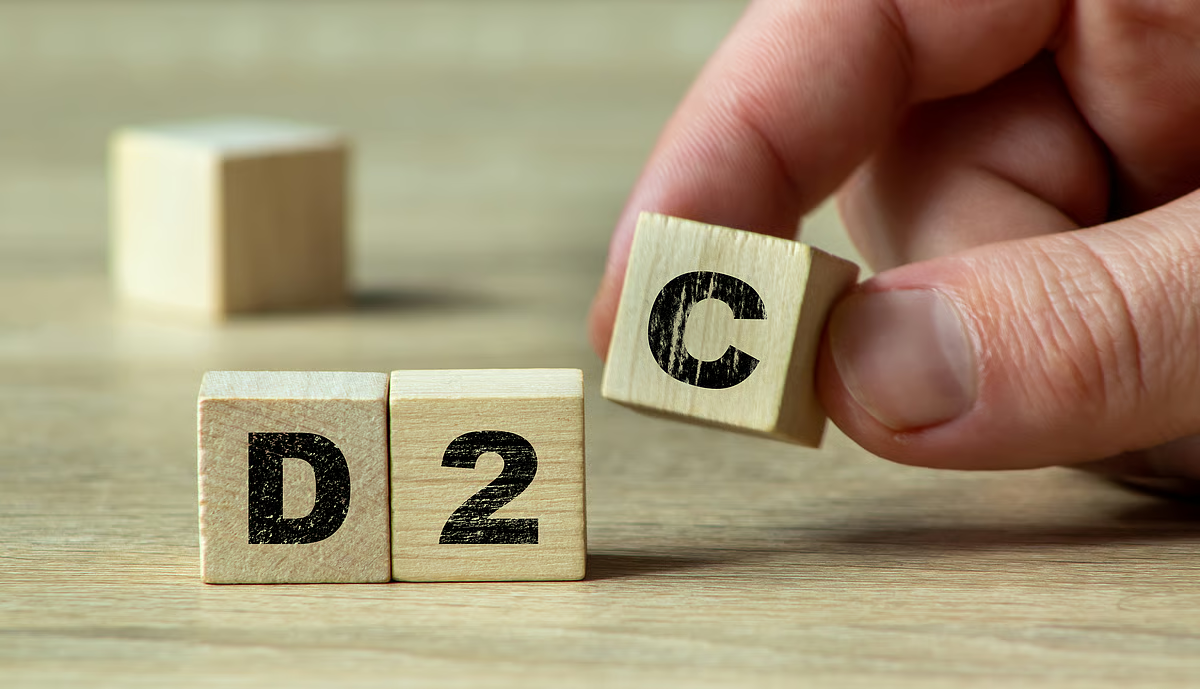
The change is visible in India’s direct-to-consumer market. According to a Unicommerce report cited by The Economic Times, Tier-2 and Tier-3 cities accounted for nearly 66% of new D2C orders in financial year 2025-26. Overall D2C order volumes grew 33%, while gross merchandise value increased 32% during the year.
This does not mean physical stores are disappearing. In many smaller cities, the emerging model is a combination of offline trust and online convenience.
A customer may discover a local business through Instagram, check its products on WhatsApp, make a digital payment and still visit the physical shop before placing a larger order.
Why Local Retailers Are Going Digital
For many small businesses, going online is no longer only about creating a website.
Digital tools now cover several parts of the business. A shopkeeper can display products through social media, accept UPI payments, maintain customer records digitally, communicate through messaging platforms and use online marketplaces to reach customers outside the city.
This is particularly useful for businesses selling products with a regional identity.
Handicrafts, traditional clothing, regional food products, home-based products and locally manufactured goods can find customers in other states without requiring the seller to open another physical store.
The government has also recognised this opportunity. The Ministry of MSME’s Trade Enablement and Marketing initiative, or TEAM, is designed to help micro and small enterprises participate in digital commerce through onboarding, cataloguing, account management, logistics and packaging support.
The initiative specifically emphasises outreach in Tier-2 and Tier-3 cities and MSME clusters.
ONDC Is Creating Another Route to Online Selling
The Open Network for Digital Commerce, or ONDC, is one of the major developments in India’s digital commerce ecosystem.
Unlike a conventional marketplace where sellers operate within one platform, ONDC uses open protocols intended to connect buyers and sellers across participating applications.
Government data published in December 2025 showed more than 1.16 lakh retail sellers live on the ONDC network across more than 630 cities and towns. The government has also positioned the network as a way to reduce digital exclusion among small businesses and local traders.
By June 2026, a government factsheet reported that ONDC had more than 20 crore buyers, 5 lakh sellers, a presence in 1,000 cities and nearly 90 lakh monthly transactions.
For a small business owner, the significance is not simply the size of the network. It is the possibility of accessing digital commerce without having to build an entire technology infrastructure independently.
Kirana Stores Are Also Becoming More Digital
The transformation is not limited to businesses that were created specifically for e-commerce.
Traditional kirana stores remain one of India’s largest retail networks. In June 2026, the Department for Promotion of Industry and Internal Trade and ONDC brought FMCG companies, distributors, technology providers and logistics players together to discuss digitising India’s general trade ecosystem.
The government said India has more than 1.4 crore kirana stores and that general trade accounts for around 75% to 80% of FMCG sales. It also highlighted challenges including fragmented ordering systems, limited inventory visibility and manual sales processes.
Digitisation can address some of these problems.
A retailer can maintain better inventory information, communicate with distributors digitally, monitor sales and potentially connect with customers through online ordering systems.
For a shop in a smaller city, this can be more valuable than simply listing products on a marketplace. Better digital records can help the owner understand which products sell, when demand increases and where money is being tied up in inventory.
Social Media Is Becoming a Storefront
Instagram, Facebook, YouTube and WhatsApp have changed how small businesses market themselves.
A clothing store in a Tier-2 city can photograph a new collection and show it to customers beyond the local market. A home baker can post short videos of products and accept orders through messaging. A furniture maker can show the manufacturing process and communicate directly with potential buyers.
This form of social commerce has a relatively low entry barrier.
A business does not necessarily need a large advertising budget to begin. A smartphone, internet connection, basic product photography and consistent communication can create an initial digital presence.
But visibility does not automatically translate into sales. Businesses still need reliable pricing, product quality, delivery arrangements, return policies and customer service.
The strongest digital presence is therefore often an extension of the existing business rather than a replacement for it.
Tier-2 and Tier-3 Consumers Are Driving Demand
The growth of online businesses in smaller cities is closely connected to changing consumer behaviour.
A February 2026 report cited by The Economic Times found that Tier-3 to Tier-5 towns had outpaced metros and Tier-1 and Tier-2 cities in physical retail spending growth during 2025. The report attributed the shift partly to rising aspirations, social media and newer forms of digital commerce.
The D2C numbers tell a similar story from the online side. Nearly two-thirds of new D2C orders in FY2026 came from Tier-2 and Tier-3 cities, according to Unicommerce data reported by The Economic Times.
This creates a two-way opportunity.
Small-city consumers are becoming more comfortable buying digitally, while local businesses are gaining more tools to serve them. At the same time, businesses can potentially sell to customers in other regions.
Logistics Still Remains a Major Challenge
Going online solves only part of the problem.
A local retailer can receive an order from another city, but that order still has to be packed, shipped and delivered. Address quality, delivery costs, returns and cash-on-delivery orders can affect profitability.
Technology is being used to address some of these problems. A 2026 report from ETCIO, citing data from shipping platform Velocity, said AI-based interventions such as automated address verification, voice calls and conversion from cash on delivery to prepaid orders improved delivery completion rates by 11% in Tier-2 markets in the company’s reported data.
For small businesses, logistics therefore needs to be considered before expanding nationally.
Selling online can increase the potential customer base, but a business also needs a dependable fulfilment process.
Government Support Is Expanding Digital Access
Government programmes are increasingly focused on helping small businesses participate in digital commerce rather than leaving them to figure out the process independently.
The TEAM initiative aims to support five lakh micro and small enterprises, including through digital literacy, cataloguing and onboarding. The scheme is valid through March 2027, according to the Ministry of MSME.
In May 2026, the ministry said its TEAM initiative was supporting artisans, home-based entrepreneurs, local manufacturers and small retailers with different stages of e-commerce participation, including packaging, logistics and customer management.
Such support is particularly relevant in smaller cities where business owners may have strong product knowledge but limited experience with digital catalogues, online marketing or marketplace operations.
Digital Payments Have Reduced One Major Barrier
UPI has also played an important role in making digital commerce easier for small businesses.
A government factsheet published in 2026 said UPI connected more than 55.49 crore individuals and 6.5 crore merchants, while accounting for 85% of India’s digital payment transactions by volume in FY2025-26.
For a small retailer, accepting digital payments can be as simple as displaying a QR code.
This has changed the relationship between physical and digital commerce. A business does not need to become a full-fledged e-commerce company before adopting digital transactions.
A customer can discover a product online, visit the store, inspect it physically and pay digitally. Another customer may order remotely and receive the same product through delivery.
This hybrid model is likely to remain important for India’s smaller markets.
What Small Businesses Need Before Going Online
Going digital does not require every local business to immediately build a sophisticated online store.
The first step can be creating an accurate digital catalogue with prices, product details, photographs and contact information. The business can then establish a reliable process for receiving orders and payments.
The next stage could involve marketplace or ONDC onboarding, depending on the product and target market.
Businesses also need to consider packaging, delivery charges, returns, customer support and taxation requirements where applicable.
Data protection is another consideration. Customer phone numbers, addresses and payment-related information should be handled carefully.
Most importantly, businesses should measure whether digital activity is actually improving sales or reducing costs. A large social media following does not necessarily mean a profitable business.
The Shift Is From Local Reach to Wider Market Access
The digitalisation of small-city businesses is not simply about replacing traditional shops with websites.
It is creating a more flexible relationship between local businesses and customers.
A shop in Nagpur, Indore, Jaipur, Ranchi, Kolhapur or Coimbatore can retain its local customer base while gradually reaching buyers elsewhere. A traditional artisan can combine physical production with digital discovery. A kirana store can continue serving its neighbourhood while adopting digital ordering and inventory tools.
The numbers around D2C growth, ONDC participation and digital payments indicate that smaller cities are becoming an important part of India’s digital commerce expansion.
The next stage will depend on whether businesses can turn digital access into sustainable operations.
For many small-city entrepreneurs, the question is no longer whether customers are online. It is how effectively the business can connect its existing local strengths with that expanding digital market.
Key Takeaways
- Tier-2 and Tier-3 cities accounted for nearly 66% of new D2C orders in FY2025-26, according to Unicommerce data reported by The Economic Times.
- ONDC is expanding digital commerce access for local retailers, artisans, MSMEs and other small sellers across hundreds of Indian cities.
- UPI, social media and improved logistics are making it easier for traditional businesses to combine physical stores with digital sales.
- Government programmes such as MSME TEAM are providing support for digital cataloguing, onboarding, logistics, packaging and market access.
FAQ
Why are small-city businesses going online?
Businesses are using digital channels to reach more customers, accept online payments, promote products and potentially sell outside their immediate geographic markets. Growing internet access and digital commerce infrastructure have made these tools easier to adopt.
What is ONDC and how can it help small businesses?
ONDC is an open digital commerce network designed to connect buyers and sellers across participating applications. Government initiatives such as MSME TEAM provide onboarding and related support to eligible micro and small enterprises.
Do local shops need their own website to sell online?
Not necessarily. Businesses can begin with social media, messaging platforms, digital catalogues and participating marketplaces or open networks. The appropriate channel depends on the business, products, customers and logistics capabilities.
What is the biggest challenge for small businesses moving online?
Getting online is only the first step. Businesses also need to manage inventory, packaging, shipping, customer service, returns, pricing and data responsibly. Without these systems, higher online visibility may not translate into sustainable profits.







Leave a comment