

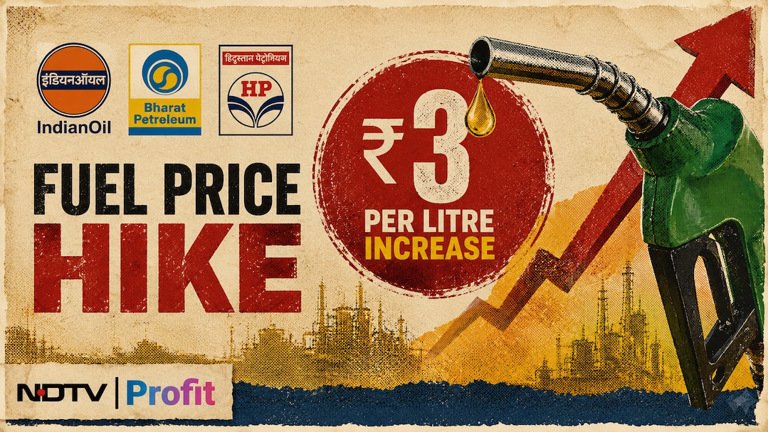
After nearly four years of stable retail fuel rates, India has seen a fresh increase in petrol and diesel prices. The hike may appear modest at first glance, but its ripple effects are likely to be felt across household budgets, transport costs, and local businesses in cities such as Nagpur, Indore, and Ranchi.
The petrol and diesel price hike has become one of the most closely watched economic developments this month. Fuel prices influence far more than what motorists pay at the pump. They affect bus fares, grocery delivery costs, agricultural transport, and the prices of essential goods.
For residents of Tier-2 cities like Nagpur, Indore, and Ranchi, where personal vehicles, two-wheelers, and road transport play a central role in daily life, even a small increase in fuel prices can have a noticeable impact.
Why Petrol and Diesel Prices Have Increased After Four Years
India’s retail fuel prices had remained broadly unchanged for several years despite fluctuations in global crude oil markets. The latest revision reflects a combination of higher international oil prices, currency pressures, and the need for oil marketing companies to align domestic prices with actual costs.
India imports the majority of its crude oil requirement. When global oil prices rise or the rupee weakens against the US dollar, the landed cost of crude increases. Retail price revisions eventually pass some of that burden to consumers.
Although the recent increase is around ₹3 per litre for petrol and diesel, the effect multiplies when households purchase fuel regularly throughout the month.
Impact on Household Budgets in Tier-2 Cities
For middle-class families in Nagpur, Indore, and Ranchi, transportation is a recurring expense. Many households own one or two two-wheelers, and some also use cars for commuting, school runs, and errands.
Consider a commuter who uses 40 litres of petrol each month. A ₹3 per litre increase adds ₹120 to monthly fuel expenses for one vehicle. For families with multiple vehicles, the added cost can be significantly higher.
That amount may seem manageable on its own, but it comes alongside rising spending on food, school fees, electricity, and housing. Over time, small increases across categories put pressure on disposable income.
Public Transport and Auto Fare Pressure
Higher diesel prices directly affect operators of buses, autos, taxis, and goods carriers.
In cities like Nagpur and Ranchi, many commuters rely on shared autos and local bus services. Transport operators facing higher fuel bills may seek fare increases or reduce margins to stay competitive.
Even where fares do not rise immediately, operators often adjust rates gradually. This means commuters may end up paying more over the following weeks, especially on routes with limited alternatives.
Rising Fuel Costs and Everyday Essentials
Fuel is a key component in the supply chain. Vegetables, milk, packaged foods, and household products are transported by road from farms, warehouses, and distribution centers.
When diesel prices increase, logistics costs go up. Retailers and distributors may absorb part of the burden initially, but sustained higher transport costs often feed into consumer prices.
For cities like Indore, which serve as regional trade hubs, fuel price changes can influence the cost of a wide range of products sold in local markets.
Effects on Small Businesses and Local Traders
Small businesses are especially sensitive to fuel costs.
Delivery services, wholesalers, construction contractors, and service professionals all depend on transportation. A caterer delivering orders, a plumber visiting clients, or a small retailer sourcing inventory from nearby cities may all face higher operating expenses.
Some businesses may raise prices slightly. Others may accept lower profit margins to remain competitive.
In both cases, the fuel price hike adds another cost challenge for local entrepreneurs.
Farmers and Rural Linkages Also Feel the Impact
Tier-2 cities are closely connected to surrounding rural areas. Diesel is used in tractors, irrigation pumps, and the transport of agricultural produce.
Higher diesel prices can increase farm operating costs and raise transportation expenses for crops moving to mandis and urban markets.
This may indirectly affect food prices in cities such as Nagpur, Indore, and Ranchi, especially for perishable goods.
Could Inflation Rise Further?
Fuel prices have a broad influence on inflation because they affect transportation and production costs across sectors.
Economists typically monitor fuel price changes closely because they can trigger second-round effects on consumer goods and services.
If global oil prices remain elevated, the pressure on household budgets may persist over the coming months.
How Consumers Can Manage the Impact
Households can reduce the effect of higher fuel prices by combining trips, maintaining proper tyre pressure, using public transport when practical, and planning monthly budgets more carefully.
Small businesses may focus on route optimization and efficient delivery scheduling to offset some of the added costs.
While these measures do not eliminate the impact, they can help control expenses.
Key Takeaways
- Petrol and diesel prices have increased after nearly four years of relative stability.
- Households in Nagpur, Indore, and Ranchi are likely to face higher monthly transportation costs.
- Diesel price increases can push up fares and the cost of everyday goods.
- Small businesses and farmers may experience higher operating expenses.
FAQs
How much have petrol and diesel prices increased?
Retail prices have risen by about ₹3 per litre, though final rates vary slightly by city.
Why do fuel prices affect grocery costs?
Most goods are transported by road, and higher diesel prices increase logistics expenses.
Which groups are most affected?
Daily commuters, transport operators, small businesses, and farmers are among the most impacted.
Will this increase inflation?
Higher fuel prices can contribute to inflation if transport and production costs are passed on to consumers.











Leave a comment