

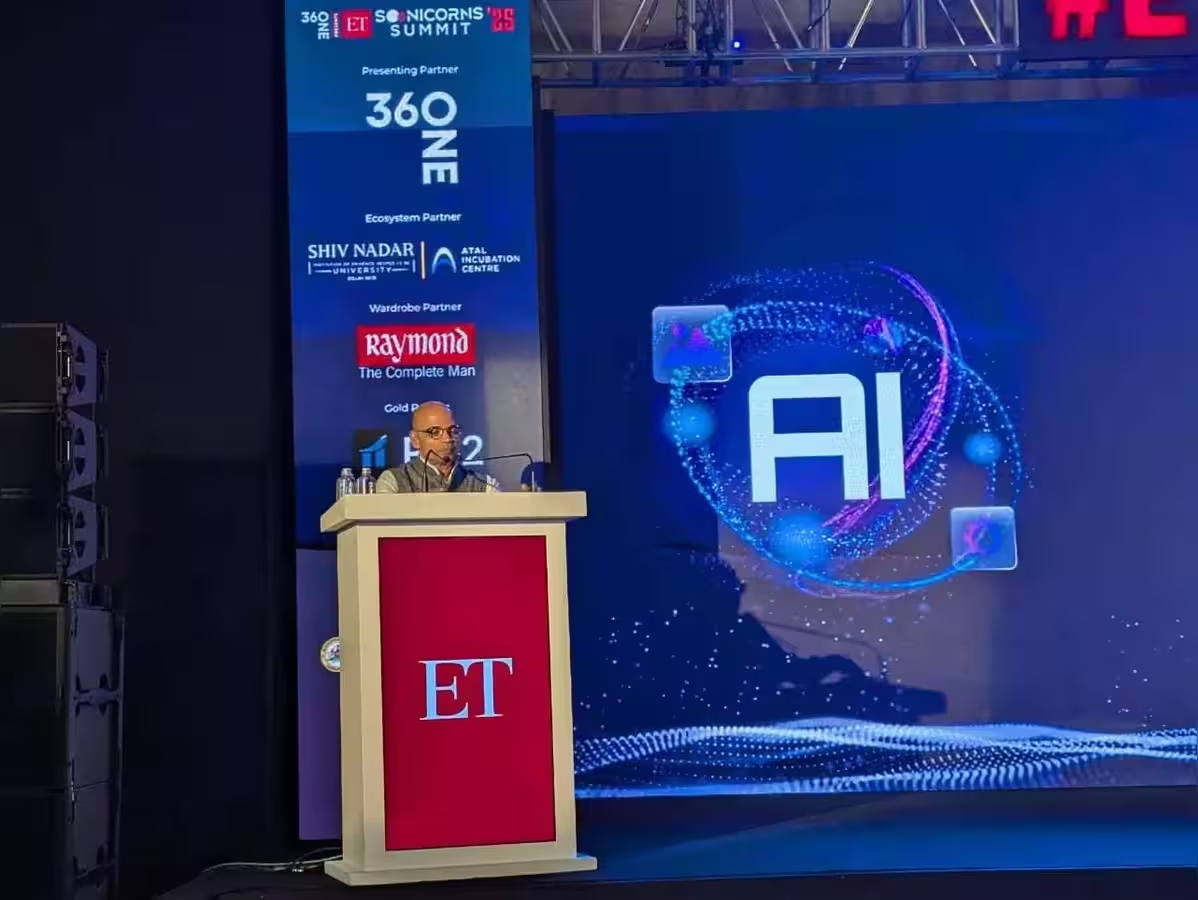
India’s startup ecosystem is no longer limited to Bengaluru, Delhi NCR and Mumbai. A growing number of entrepreneurs, investors and technology companies are building successful businesses from Tier 2 and Tier 3 cities, creating jobs, attracting funding and contributing to the country’s innovation-driven economy.
India’s startup ecosystem has entered a new phase of growth, with entrepreneurship expanding well beyond traditional technology hubs such as Bengaluru and Delhi NCR. While these cities continue to attract the largest share of venture capital, emerging startup centres including Jaipur, Indore, Kochi, Ahmedabad, Nagpur, Bhubaneswar, Coimbatore, Surat, Chandigarh and Lucknow are witnessing increased business activity. Better digital infrastructure, government support, affordable operating costs and access to skilled talent are encouraging founders to build companies closer to their hometowns instead of relocating to metro cities.
This shift is reshaping India’s innovation landscape and creating opportunities for entrepreneurs across the country.
Why Tier 2 and Tier 3 Cities Are Gaining Momentum
For years, India’s startup ecosystem was concentrated in Bengaluru, Delhi NCR, Mumbai, Hyderabad and Pune because these cities offered access to investors, technology talent and business networks. However, the rapid expansion of digital infrastructure has reduced many of these barriers.
High-speed internet, widespread smartphone adoption, digital payment systems and cloud-based business tools now allow founders to launch and scale companies from almost any location. Video conferencing, remote hiring and online collaboration have further reduced the need for businesses to operate from expensive metropolitan offices.
At the same time, many entrepreneurs are choosing to build companies in their home states, where operational expenses are lower and they have a better understanding of local market needs.
Government Initiatives Supporting Startup Growth
Several government programmes have contributed to the expansion of entrepreneurship beyond major cities.
The Startup India initiative has helped simplify business registration, improve access to funding support and encourage innovation across multiple sectors. State governments have also launched startup policies offering incubation centres, grants, mentorship programmes and tax incentives for new businesses.
In addition, institutions such as Atal Innovation Mission, technology business incubators and university-based innovation centres are nurturing young entrepreneurs in smaller cities. These initiatives have improved access to mentorship and networking opportunities that were once available mainly in metro regions.
The result is a broader startup ecosystem where founders have greater institutional support regardless of their location.
Investors Are Looking Beyond Traditional Startup Hubs
Venture capital firms, angel investors and family offices are increasingly exploring opportunities outside Bengaluru and Delhi.
Many investors believe the next generation of high-growth companies will emerge from cities where founders understand local industries such as agriculture, manufacturing, logistics, healthcare, education and financial services. Startups solving regional challenges often have strong potential for national expansion.
Lower operating costs also allow many companies to achieve sustainable growth with less capital. Businesses in smaller cities generally spend less on office space, employee salaries and infrastructure, improving their financial efficiency during the early stages.
As investment activity spreads across India, founders from non-metro regions are finding it easier to access funding than they could a decade ago.
Local Innovation Is Driving New Business Opportunities
One of the biggest advantages of startups emerging from Tier 2 and Tier 3 cities is their focus on solving practical local problems.
Many entrepreneurs are developing solutions for farmers, small retailers, healthcare providers, educational institutions, logistics companies and rural consumers. Instead of copying global business models, these startups often create products designed specifically for Indian conditions.
Sectors such as agritech, healthtech, fintech, edtech, electric mobility, renewable energy and software services are witnessing significant innovation outside traditional startup clusters.
As India’s digital economy continues to grow, businesses serving regional markets are also finding opportunities to expand nationally through online platforms.
Talent Is Becoming More Distributed Across India
The availability of skilled professionals in smaller cities has improved significantly over the past few years.
Engineering colleges, management institutes and technical universities across India are producing graduates who no longer feel compelled to relocate permanently to metropolitan cities. Many professionals who previously worked in Bengaluru or Delhi have returned to their hometowns after gaining industry experience.
Hybrid work models and remote employment have further accelerated this trend. Startups can now recruit employees from multiple states without requiring everyone to work from a single office.
This wider talent pool is helping founders build competitive businesses while creating quality employment opportunities in emerging cities.
Challenges Still Need to Be Addressed
Despite the encouraging progress, startups outside major metros continue to face several challenges.
Access to large venture capital firms remains relatively limited in many regions. Networking opportunities with experienced founders, industry experts and global investors are still more frequent in established startup hubs.
Infrastructure gaps also persist in some cities, particularly regarding research facilities, advanced manufacturing capabilities and specialised technical talent.
However, these challenges are gradually reducing as government initiatives, private incubators and investor networks expand their presence across the country.
The Future of India’s Startup Ecosystem
India’s startup ecosystem is becoming more geographically diverse than ever before. Instead of relying on only a few metropolitan centres, entrepreneurship is spreading across multiple states and smaller cities.
This broader distribution is expected to strengthen regional economies, generate local employment and encourage innovation that reflects India’s diverse social and economic needs.
While Bengaluru and Delhi will remain major startup hubs, the next decade is likely to see many successful companies emerging from cities that previously received little attention from investors. This transformation reflects the growing maturity of India’s innovation ecosystem and highlights the increasing role of Tier 2 and Tier 3 cities in shaping the country’s economic future.
Key Takeaways
- India’s startup ecosystem is expanding rapidly beyond Bengaluru and Delhi NCR.
- Tier 2 and Tier 3 cities are attracting entrepreneurs because of lower costs and improved infrastructure.
- Government initiatives, incubators and investor interest are supporting regional startup growth.
- Emerging cities are becoming important centres for innovation, employment and economic development.
FAQ
Q1. Why are startups moving beyond Bengaluru and Delhi?
Lower operating costs, better digital infrastructure, government support and access to skilled talent are encouraging founders to build businesses in smaller cities.
Q2. Which sectors are growing in Tier 2 cities?
Agritech, fintech, healthtech, edtech, logistics, renewable energy, software services and electric mobility are among the fastest-growing sectors.
Q3. Does Startup India support entrepreneurs in smaller cities?
Yes. Startup India and various state government programmes provide policy support, incubation, mentorship and funding opportunities for startups across India.
Q4. Will Bengaluru remain India’s leading startup hub?
Yes. Bengaluru is expected to remain India’s largest startup ecosystem, but many high-growth companies are increasingly emerging from Tier 2 and Tier 3 cities.
(Internal keyword suggestions: India’s startup ecosystem, Tier 2 startups India, Startup India, Indian entrepreneurs, startup funding India, innovation in Tier 3 cities, emerging startup hubs, Indian startup ecosystem 2026)









Leave a comment