

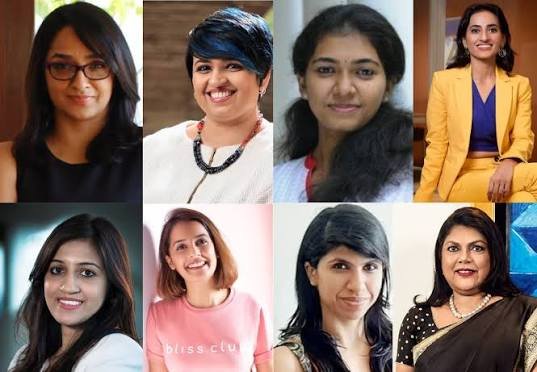
Women entrepreneurs from smaller cities are playing an increasingly important role in India’s startup ecosystem. Backed by digital technology, government support, and changing consumer markets, founders from Tier-2 and Tier-3 cities are building businesses in sectors such as e-commerce, education, healthcare, agriculture, and financial services, proving that innovation is no longer limited to metropolitan India.
Women Entrepreneurs From Smaller Cities Are Changing India’s Startup Story
India’s startup ecosystem has expanded far beyond major metropolitan centres, and women entrepreneurs from smaller cities are becoming a significant part of this transformation. Over the past decade, founders from Tier-2 and Tier-3 cities have launched businesses that solve local challenges while serving customers across the country. Improved internet access, digital payments, social commerce, and startup support programs have created opportunities that were difficult to imagine a few years ago.
Unlike earlier generations that often had to relocate to cities like Bengaluru, Mumbai, or Delhi to build companies, many women today are choosing to establish businesses in their hometowns. This trend is creating employment, encouraging local innovation, and contributing to more balanced economic development across India.
Digital India and Startup Support Are Creating New Opportunities
The growth of women-led startups outside metro cities has been supported by several structural changes. Affordable smartphones, widespread internet connectivity, Unified Payments Interface (UPI), and online marketplaces have reduced the barriers to starting and scaling a business.
Government initiatives such as Startup India, Stand-Up India, Mudra loans, digital skill development programmes, and state-level startup policies have also improved access to funding, mentorship, and business registration support. Incubation centres in universities and innovation hubs are helping aspiring entrepreneurs refine their ideas before entering the market.
These developments have enabled women from cities like Indore, Jaipur, Surat, Kochi, Lucknow, Coimbatore, Bhubaneswar, Nagpur, and Mysuru to launch businesses without relocating to traditional startup hubs.
Local Problems Are Inspiring Innovative Business Ideas
Many successful women entrepreneurs build businesses by addressing challenges they personally experience in their communities. Instead of focusing only on technology products, they often develop practical solutions that improve everyday life.
Some startups focus on affordable healthcare services, while others offer online education, regional language learning platforms, agricultural technology, sustainable fashion, handicrafts, food processing, logistics, or financial inclusion. Several founders also use social media and e-commerce platforms to sell locally made products across India.
This approach allows businesses to grow while preserving regional identity and supporting local artisans, farmers, and small manufacturers. It also creates employment opportunities for women within their own communities.
The Rise of Social Commerce and Digital Marketing
Social media has become an important growth engine for entrepreneurs in smaller cities. Platforms such as Instagram, YouTube, Facebook, and WhatsApp Business allow founders to market products, engage directly with customers, and build trusted brands without investing heavily in physical retail outlets.
Content creation has also become a powerful business tool. Many entrepreneurs educate customers through videos, product demonstrations, and storytelling, helping them compete with established brands at relatively low marketing costs.
Online marketplaces have expanded customer reach beyond local markets. A handcrafted product made in a Tier-3 town can now be purchased by customers in major cities across India, giving small businesses access to national demand.
This digital-first approach has significantly reduced the importance of geographical location in business growth.
Challenges Still Limit Faster Growth
Despite encouraging progress, women entrepreneurs continue to face several challenges, particularly outside metropolitan regions.
Access to early-stage funding remains uneven. Many founders depend on personal savings or family support during the initial stages because venture capital investment is still concentrated in larger cities.
Professional mentoring, industry networking opportunities, and access to experienced advisors are also less readily available in many smaller cities. In addition, balancing family responsibilities with business expansion continues to be a practical challenge for many women.
Certain sectors also require specialised talent, advanced infrastructure, or manufacturing facilities that may not be easily accessible outside major urban centres.
Addressing these gaps through better financial access, stronger mentorship networks, and regional startup ecosystems will be essential for sustaining long-term growth.
Why This Shift Matters for India’s Economy
The growing participation of women entrepreneurs from smaller cities is changing the character of India’s startup ecosystem. Innovation is becoming more inclusive, reflecting the needs of diverse communities rather than being concentrated in a few metropolitan regions.
This shift contributes to employment generation, promotes financial independence, strengthens local economies, and encourages more women to consider entrepreneurship as a viable career option.
As India’s digital economy continues to expand, businesses founded outside traditional startup centres are expected to play a larger role in driving economic growth. Their success also demonstrates that entrepreneurial talent exists across the country when supported by the right infrastructure, education, and access to markets.
Rather than competing with established startup hubs, these emerging ecosystems are making India’s innovation landscape broader, stronger, and more representative of the country’s diversity.
Key Takeaways
- Women entrepreneurs from Tier-2 and Tier-3 cities are becoming important contributors to India’s startup ecosystem.
- Digital technology, government initiatives, and online marketplaces have reduced barriers to entrepreneurship.
- Local problem-solving and regional innovation are helping businesses scale beyond their hometowns.
- Better access to funding, mentorship, and business networks can further strengthen women-led startups across India.
Frequently Asked Questions
Q1. Why are more women starting businesses in smaller Indian cities?
Improved internet access, digital payments, government support schemes, and online marketplaces have made it easier to launch and grow businesses without relocating to metro cities.
Q2. Which sectors are popular among women entrepreneurs from Tier-2 cities?
Many women-led startups operate in education, healthcare, fashion, food processing, handicrafts, agritech, financial services, beauty, wellness, and e-commerce.
Q3. What challenges do women entrepreneurs still face?
Limited access to funding, fewer networking opportunities, shortage of experienced mentors, and balancing personal responsibilities remain common challenges.
Q4. How do women-led startups benefit local communities?
They create employment, support local suppliers and artisans, encourage innovation, strengthen regional economies, and inspire more women to pursue entrepreneurship.
(Internal Keyword Suggestions: women entrepreneurs India, women-led startups, Tier-2 startup ecosystem, women founders India, startup ecosystem India, women entrepreneurship, Startup India, women business owners, Tier-2 cities India, digital entrepreneurship, women entrepreneurs in small cities, Indian startups, social commerce India, startup opportunities for women, regional innovation India)









Leave a comment