

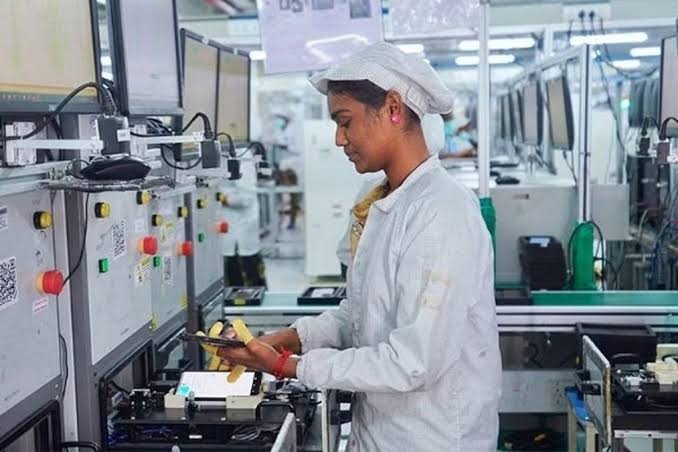
India’s manufacturing push is opening new career opportunities for young professionals in emerging industrial cities. With government initiatives, expanding industrial corridors, and growing investments across sectors such as electronics, automobiles, renewable energy, and semiconductors, Tier-2 cities are becoming important destinations for employment, skill development, and entrepreneurship.
India’s Manufacturing Push: Opportunities for Youth in Emerging Industrial Cities
India’s manufacturing push has become one of the country’s key economic priorities, with a strong focus on increasing domestic production, creating jobs, and strengthening global competitiveness. As industries expand beyond traditional metropolitan regions, emerging industrial cities are creating fresh opportunities for young people seeking careers in manufacturing, technology, logistics, and engineering.
Government initiatives such as the Make in India programme, the Production Linked Incentive (PLI) schemes, the National Industrial Corridor Development Programme, and investments in infrastructure have encouraged companies to establish manufacturing facilities across multiple states. This shift is helping Tier-2 and Tier-3 cities attract industries that were once concentrated around major urban centres.
Emerging Industrial Cities Are Driving Regional Growth
Industrial development is no longer limited to cities such as Mumbai, Chennai, Bengaluru, or Pune. Several emerging cities are becoming manufacturing and logistics hubs due to improved connectivity, land availability, and supportive state policies.
Cities including Sanand in Gujarat, Hosur in Tamil Nadu, Sri City in Andhra Pradesh, Aurangabad in Maharashtra, Indore in Madhya Pradesh, Lucknow and Kanpur in Uttar Pradesh, Coimbatore in Tamil Nadu, and Nagpur in Maharashtra are witnessing increasing industrial investments across diverse sectors.
These locations benefit from expanding highway networks, freight corridors, airports, and multimodal logistics infrastructure. Better connectivity reduces transportation costs and enables manufacturers to reach domestic and international markets more efficiently.
The growth of industrial clusters also encourages the development of supplier networks, service businesses, housing, healthcare, and educational institutions, creating a broader economic impact beyond factory employment.
Manufacturing Sectors Creating Jobs for Young Indians
The manufacturing sector today offers opportunities that extend well beyond traditional factory work. Modern production facilities require professionals with expertise in automation, robotics, quality control, artificial intelligence, industrial design, supply chain management, and digital manufacturing.
Electronics manufacturing continues to expand with increased domestic production of smartphones, consumer electronics, and electronic components. The automobile industry is investing heavily in electric vehicles and advanced manufacturing technologies, creating demand for engineers, technicians, and research professionals.
Renewable energy manufacturing, including solar modules, battery systems, and clean energy equipment, is another fast-growing sector. India’s semiconductor ecosystem is also developing through new fabrication and assembly projects, opening opportunities for highly skilled technical professionals.
Young graduates from engineering, diploma, vocational, and technical institutions are increasingly finding employment in these emerging industries.
Skill Development Is Becoming More Important Than Ever
As manufacturing becomes more technology-driven, employers are looking for candidates with practical skills alongside academic qualifications.
Government programmes such as Skill India, industrial training institutes (ITIs), polytechnic colleges, apprenticeship initiatives, and industry-academia partnerships are helping young people prepare for modern manufacturing careers. Many companies also provide specialised on-the-job training in areas such as automation, machine operation, industrial safety, and quality assurance.
Digital skills have become equally valuable. Knowledge of computer-aided design, data analysis, programmable machinery, industrial software, and smart manufacturing systems improves employability across multiple industries.
Continuous learning is becoming essential as manufacturing technologies evolve rapidly.
Manufacturing Growth Is Supporting Local Economies
The expansion of manufacturing in smaller cities is generating benefits that extend beyond direct employment. New industries stimulate demand for transportation, warehousing, retail, hospitality, construction, maintenance services, and local suppliers.
This economic activity creates opportunities for entrepreneurs, small businesses, and service providers while increasing income levels within surrounding communities.
Many young professionals are also choosing to remain closer to their hometowns instead of relocating to metropolitan cities. This helps reduce migration pressures while allowing families to benefit from local employment opportunities.
For several states, industrial development has become an important strategy for balanced regional growth and improved economic resilience.
Challenges That Need Continued Attention
Despite strong momentum, India’s manufacturing sector still faces several challenges. Skill shortages remain a concern in specialised industries, particularly those requiring advanced technical expertise.
Infrastructure gaps continue to exist in some regions, while access to reliable power, logistics efficiency, and industrial land varies across states. Small and medium enterprises also require greater access to technology, financing, and skilled workers to remain globally competitive.
In addition, rapid technological change means workers must regularly upgrade their skills to stay relevant in an increasingly automated manufacturing environment.
Addressing these challenges through investment in education, vocational training, infrastructure, and innovation will strengthen India’s long-term manufacturing ambitions.
A Stronger Manufacturing Base Can Shape India’s Future
India’s manufacturing push represents more than an industrial policy. It is creating a foundation for long-term employment, technological advancement, and economic diversification.
As global companies continue to expand their presence in India and domestic manufacturers invest in new facilities, emerging industrial cities are expected to play a larger role in the country’s development. These cities are becoming centres of innovation, production, and skilled employment rather than simply supporting larger metropolitan economies.
For young Indians, this transformation offers an opportunity to build careers in high-growth industries while contributing to the country’s manufacturing ambitions. With the right skills and continuous learning, the next generation can benefit significantly from India’s evolving industrial landscape.
Key Takeaways
- India’s manufacturing expansion is creating employment opportunities across emerging industrial cities.
- Electronics, automobiles, renewable energy, logistics, and semiconductors are among the fastest-growing sectors.
- Technical skills, vocational education, and digital expertise are becoming increasingly important for manufacturing careers.
- Industrial growth in Tier-2 cities is supporting balanced regional development and strengthening local economies.
Frequently Asked Questions
Q1. What is driving India’s manufacturing growth?
Government initiatives such as Make in India, PLI schemes, industrial corridors, infrastructure investments, and increasing domestic and global demand are supporting manufacturing expansion.
Q2. Which cities are emerging as manufacturing hubs?
Cities including Sanand, Hosur, Sri City, Aurangabad, Indore, Nagpur, Coimbatore, Lucknow, and Kanpur are attracting significant manufacturing investments across multiple sectors.
Q3. Which industries offer the most opportunities for young professionals?
Electronics, electric vehicles, renewable energy, logistics, semiconductors, industrial automation, precision engineering, and advanced manufacturing are among the fastest-growing employment sectors.
Q4. What skills are important for a career in manufacturing?
Technical knowledge, automation, robotics, quality control, computer-aided design, industrial software, data analysis, and problem-solving skills are increasingly valued by employers.
(Internal Keyword Suggestions: India’s manufacturing push, Make in India, manufacturing jobs India, emerging industrial cities, industrial corridors India, PLI scheme, youth employment India, manufacturing sector India, Tier-2 industrial cities, Skill India, industrial growth India, electronics manufacturing India, semiconductor industry India, renewable energy manufacturing, manufacturing careers)











Leave a comment