

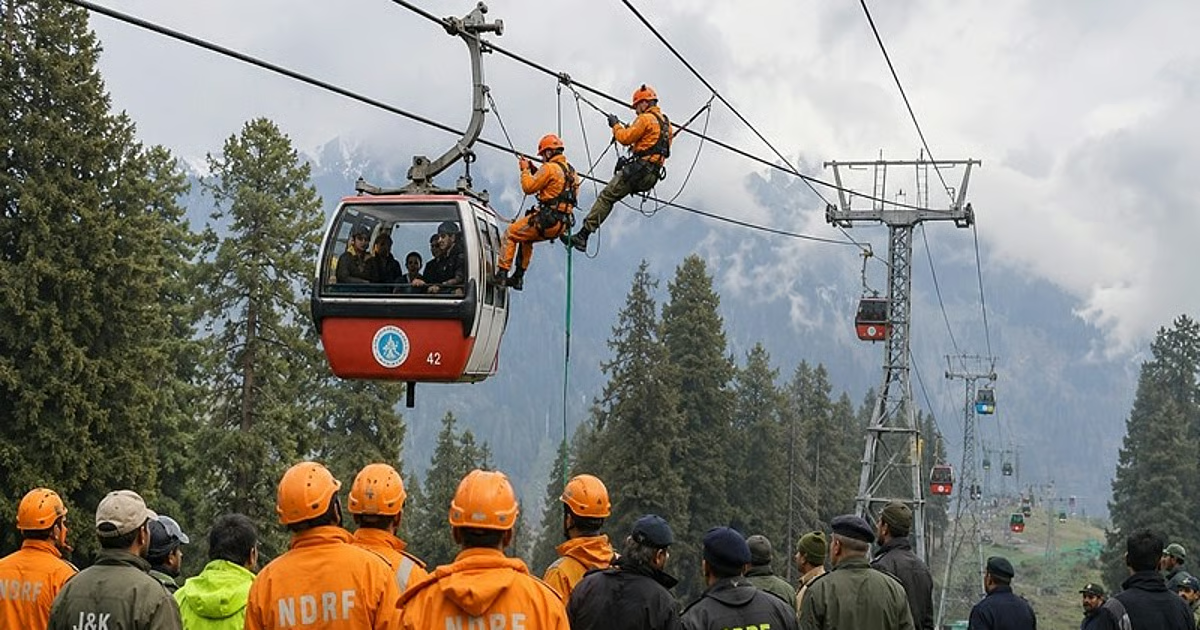
The recent Gulmarg Gondola rescue operation brought attention to the importance of safety infrastructure at major tourist destinations. While the incident ended without large-scale casualties, it has sparked discussions about emergency preparedness, maintenance standards, and visitor safety management across India’s tourism sector.
Gulmarg Gondola Rescue Operation Draws National Attention
The Gulmarg Gondola rescue operation became a major talking point after tourists were stranded following a technical disruption in one of India’s most popular ropeway systems. Located in Jammu and Kashmir’s Baramulla district, the Gulmarg Gondola is among the highest cable car systems in the world and attracts thousands of visitors annually.
Authorities, rescue personnel, and technical teams acted quickly to evacuate stranded passengers and restore operations. The incident highlighted both the effectiveness of emergency response mechanisms and the challenges involved in handling emergencies in high-altitude tourist destinations.
While the immediate focus remained on ensuring passenger safety, the event also raised broader questions about whether India’s tourism infrastructure is adequately prepared for unexpected technical failures and weather-related disruptions.
Importance of Safety Infrastructure at Tourist Destinations
Tourist safety infrastructure extends beyond physical attractions. It includes emergency response systems, evacuation procedures, communication networks, trained personnel, maintenance schedules, and real-time monitoring technologies.
In destinations such as Gulmarg, where weather conditions can change rapidly, safety planning becomes even more critical. Strong winds, snowfall, visibility issues, and temperature fluctuations can affect transportation systems and visitor movement.
Modern tourism infrastructure requires multiple layers of protection. These include backup power systems, automated fault detection technologies, emergency communication channels, and clearly defined rescue protocols.
The Gulmarg incident serves as a reminder that popular tourist attractions must continuously evaluate and upgrade safety systems to match increasing visitor numbers and changing operational challenges.
High-Altitude Tourism Presents Unique Challenges
Mountain tourism differs significantly from urban tourism. Locations such as Gulmarg, Auli, Manali, Rohtang Pass, and other hill destinations face environmental conditions that can impact transportation and visitor safety.
Rescue operations at high altitudes are often more complex due to terrain, weather, accessibility, and communication limitations. Even a minor technical disruption can require specialized teams and equipment.
The Gulmarg Gondola carries visitors to elevations where weather conditions may differ significantly from those at the base station. As a result, operators must maintain strict operational standards and continuously monitor environmental factors.
Tourism experts have long emphasized that emergency planning in mountainous regions should account for worst-case scenarios rather than only routine operational disruptions. This approach helps improve preparedness and reduce risks during unexpected events.
What the Incident Reveals About Emergency Preparedness
One of the positive aspects highlighted by the rescue operation was the relatively swift response from authorities and technical teams. Emergency procedures appeared to function effectively, allowing stranded passengers to receive assistance without major delays.
However, incidents of this nature also reveal areas where improvements may be necessary. Experts often recommend regular emergency drills, enhanced staff training, public awareness measures, and stronger coordination among agencies responsible for tourism and disaster management.
Visitors frequently assume that tourist attractions operate safely, but safety depends on continuous maintenance and preparedness efforts that remain largely invisible to the public.
The incident has renewed discussions about conducting independent safety audits of major tourist facilities, particularly those handling large visitor volumes during peak travel seasons.
Growing Tourism Requires Stronger Risk Management
India’s tourism sector has experienced steady growth over the past decade. Domestic tourism, adventure travel, religious tourism, and mountain tourism have all witnessed increasing demand.
As visitor numbers rise, infrastructure operators face greater pressure to maintain service quality and safety standards. Attractions that were originally designed for lower volumes may require periodic upgrades to meet modern operational requirements.
Risk management is becoming a central component of tourism planning. This includes predictive maintenance technologies, digital monitoring systems, crowd management solutions, and emergency response integration.
The Gulmarg Gondola incident demonstrates that tourism growth must be accompanied by equal investment in safety infrastructure. Expanding visitor access should not come at the expense of preparedness and operational reliability.
Lessons for India’s Tourism Industry
The rescue operation offers important lessons for tourism authorities, infrastructure operators, and policymakers. Tourist confidence depends not only on attractions but also on the perception that destinations can respond effectively during emergencies.
Regular inspections, updated safety protocols, modern monitoring systems, and transparent communication can strengthen public trust. Tourists are increasingly aware of safety standards and often consider them when choosing destinations.
For destinations located in environmentally sensitive or geographically challenging areas, emergency readiness should remain a continuous priority rather than a response to isolated incidents.
As India seeks to expand its tourism economy, the ability to balance growth with safety will become an important measure of long-term success.
Key Takeaways
- The Gulmarg Gondola rescue operation highlighted the importance of emergency preparedness in tourism infrastructure.
- High-altitude tourist destinations face unique safety and operational challenges.
- Strong maintenance systems and regular safety audits are critical for public confidence.
- Tourism growth must be supported by investments in safety, monitoring, and emergency response capabilities.
FAQ
Q1. What is the Gulmarg Gondola?
The Gulmarg Gondola is a cable car system in Jammu and Kashmir and is considered one of the highest operating gondola systems in the world.
Q2. Why is tourist safety infrastructure important?
Safety infrastructure helps prevent accidents and ensures rapid response during emergencies, protecting both visitors and staff.
Q3. What challenges do mountain tourist destinations face?
High-altitude destinations must deal with changing weather conditions, difficult terrain, communication limitations, and complex rescue operations.
Q4. What lessons can tourism authorities learn from such incidents?
Authorities can focus on stronger maintenance practices, emergency drills, staff training, safety audits, and improved risk management systems.
(Gulmarg Gondola rescue operation, tourist safety infrastructure, Jammu Kashmir tourism, ropeway safety India, emergency preparedness tourism, mountain tourism safety, tourist destination infrastructure, Gulmarg tourism news, tourism risk management, cable car safety India)







Leave a comment