

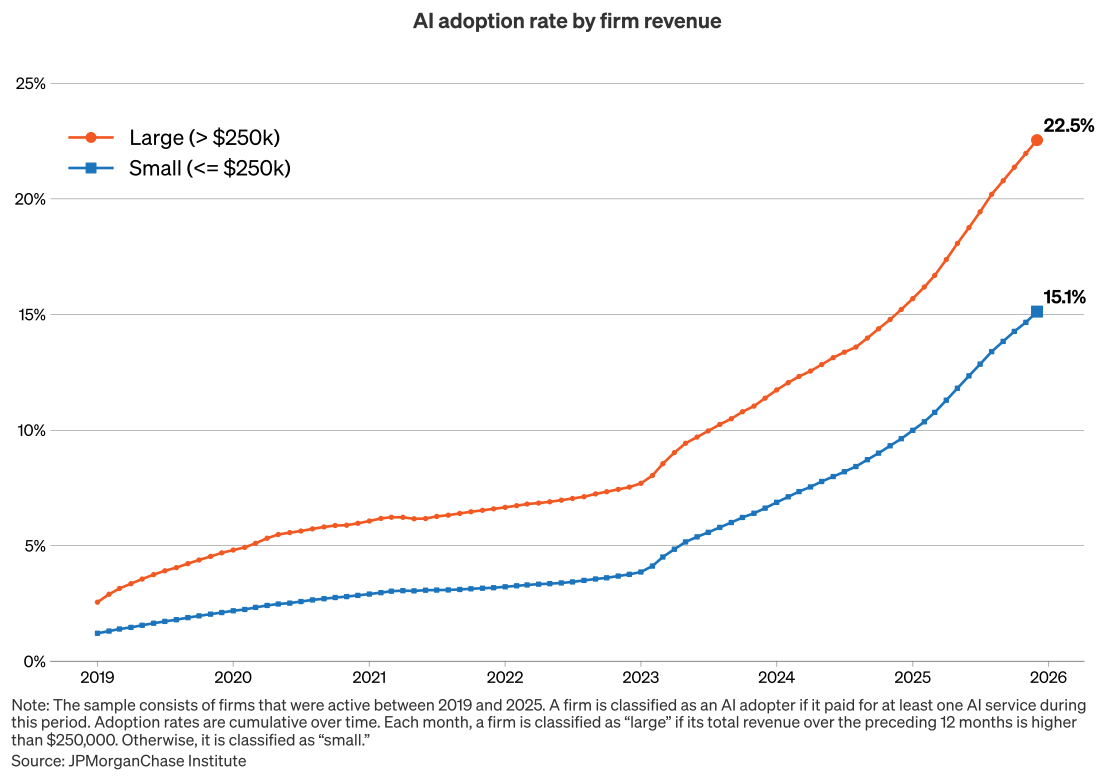
Artificial intelligence is no longer limited to large corporations. Across India, small businesses are rapidly adopting AI tools to improve customer service, marketing, inventory management and daily operations, making technology more accessible and affordable than ever before.
Time Sensitivity: This is an evergreen topic with strong current relevance. While AI adoption is accelerating due to ongoing technological developments, the subject focuses on a long-term business trend. The article is written in an educational and analytical style.
The adoption of AI by small businesses is accelerating across India as affordable artificial intelligence tools become easier to use. What was once considered an expensive technology reserved for large enterprises is now helping neighbourhood retailers, restaurants, service providers, manufacturers and startups improve efficiency without significantly increasing costs. From automating customer support to generating marketing content, AI is becoming an everyday business tool rather than an experimental technology.
Industry reports and business surveys over the past year have consistently shown that small and medium enterprises (SMEs) are investing more in AI-powered software. The availability of cloud-based platforms, subscription pricing and user-friendly applications has lowered the barriers to adoption, allowing businesses of every size to benefit from automation.
Affordable AI Tools Are Driving Rapid Adoption
One of the biggest reasons behind this shift is affordability. Earlier, implementing artificial intelligence required dedicated technical teams and expensive infrastructure. Today, many AI-powered applications are available through monthly subscriptions that fit the budgets of small businesses.
Business owners can now use AI to write emails, create advertisements, generate product descriptions, analyse sales data and respond to customer queries without hiring additional staff. Many accounting, customer relationship management (CRM) and e-commerce platforms have also integrated AI features directly into their software.
This has made AI adoption practical rather than aspirational. Even businesses with limited technical knowledge can begin using artificial intelligence after only a short learning period.
Marketing Has Become Easier for Small Enterprises
Digital marketing is one area where AI is making an immediate impact. Small businesses often operate with limited marketing budgets and smaller teams. AI-powered tools help them produce social media posts, website content, email campaigns and promotional graphics much faster than traditional methods.
These tools also analyse customer behaviour, helping businesses understand which products attract the most attention and when customers are most likely to make purchases.
For businesses operating in Tier-2 and Tier-3 cities, AI enables them to compete with larger brands by improving the quality and consistency of their online presence without requiring a dedicated marketing department.
Customer Service and Operations Are Becoming More Efficient
Artificial intelligence is also transforming customer service. AI chatbots can answer frequently asked questions, provide order updates and respond to customer enquiries throughout the day, even outside business hours.
Retail stores are using AI to forecast demand and manage inventory more efficiently, reducing stock shortages and unnecessary purchases. Restaurants are analysing customer preferences to improve menus, while manufacturers are using predictive maintenance tools to reduce equipment downtime.
These improvements allow business owners to spend more time on strategy and customer relationships instead of repetitive administrative tasks.
Indian SMEs Are Finding New Growth Opportunities
India’s growing digital economy has created favourable conditions for AI adoption. Government initiatives promoting digital payments, online commerce and business digitisation have encouraged SMEs to embrace technology more rapidly.
The expansion of affordable internet access and smartphone usage has further accelerated this transformation. Many AI applications are now accessible through mobile devices, allowing entrepreneurs to manage operations from virtually anywhere.
Startups developing AI solutions specifically for Indian businesses are also contributing to this trend by offering products that support multiple regional languages, GST compliance, local payment systems and customer communication tailored to Indian markets.
Challenges Still Remain Despite Growing Adoption
Although AI adoption is increasing, small businesses continue to face several challenges. Data privacy, cybersecurity and responsible use of artificial intelligence remain important concerns.
Many entrepreneurs also need additional training to fully understand AI capabilities and limitations. While AI can automate routine tasks, it cannot replace human judgement in areas such as business strategy, relationship management and complex decision-making.
There is also the risk of over-reliance on AI-generated content or inaccurate outputs if businesses fail to review information before using it. Experts recommend treating AI as an assistant rather than a complete replacement for human expertise.
The Future of AI in Small Businesses
Artificial intelligence is expected to become even more integrated into everyday business operations over the next few years. Improvements in voice recognition, multilingual support and automation will likely make AI accessible to businesses that currently have limited digital infrastructure.
As competition increases, companies that effectively combine AI with human creativity and customer service may gain a stronger competitive advantage. Rather than replacing employees, AI is expected to help teams become more productive by reducing repetitive work and enabling faster decision-making.
For Indian small businesses, especially those in Tier-2 and Tier-3 cities, AI represents an opportunity to improve efficiency, reach more customers and compete in an increasingly digital marketplace.
Key Takeaways
- Affordable AI tools have made artificial intelligence accessible to small businesses across India.
- Marketing, customer service and operational efficiency are the primary areas benefiting from AI adoption.
- Indian SMEs are increasingly using AI to improve productivity and compete with larger companies.
- Human oversight remains essential despite the growing capabilities of AI technology.
Frequently Asked Questions
Q1. Why are small businesses adopting AI more quickly today?
Affordable subscription-based AI tools, cloud computing and user-friendly applications have significantly reduced the cost and complexity of implementation.
Q2. Which business functions benefit the most from AI?
Marketing, customer support, inventory management, sales analysis, accounting assistance and content creation are among the most common applications.
Q3. Can AI replace employees in small businesses?
No. AI is primarily designed to automate repetitive tasks and improve efficiency, while human employees remain essential for decision-making, customer relationships and strategic planning.
Q4. Is AI suitable for businesses in Tier-2 and Tier-3 cities?
Yes. Many AI tools are cloud-based, mobile-friendly and affordable, making them practical for businesses across both urban and smaller markets.
(Internal keyword suggestions: AI for small businesses, AI adoption in India, artificial intelligence for SMEs, business automation, AI marketing tools, Indian startups, AI customer service, digital transformation, AI productivity, small business technology)










Leave a comment