

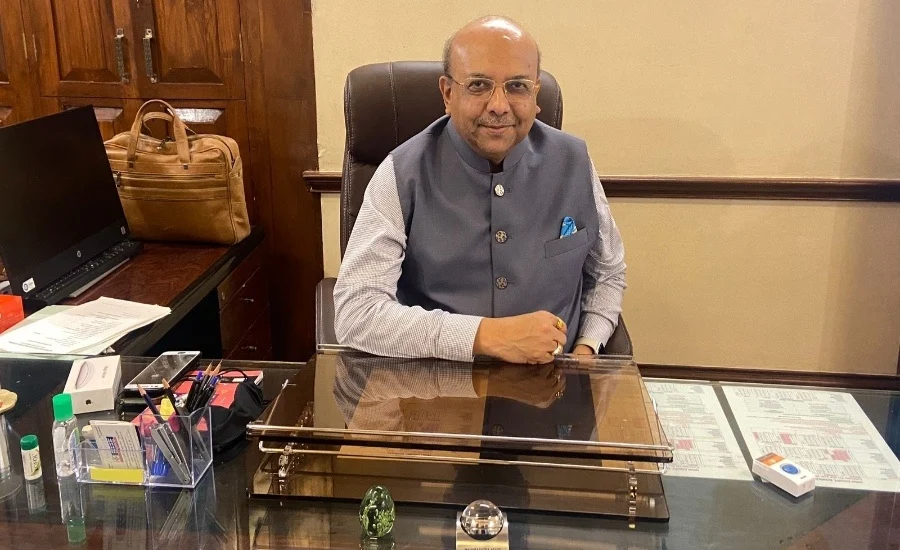
Justice Sunil Balkrishna Shukre has taken charge as the new chairman of the Maharashtra Lokayukta, bringing more than two decades of judicial and administrative experience to the state’s anti-corruption watchdog. His appointment comes under the Maharashtra Lokayukta Act, 2023 and gives the institution new leadership as its expanded legal framework takes effect.
Justice Sunil Shukre takes charge as Maharashtra Lokayukta
Justice Sunil Shukre was sworn in as chairman of the Maharashtra Lokayukta on Tuesday, August 25, at Lok Bhavan in Mumbai. Maharashtra Governor Jishnu Dev Varma administered the oath. His appointment is for five years or until he reaches the age of 70, whichever comes earlier.
The appointment is significant because Justice Shukre is the first person to be appointed as chairman under the Maharashtra Lokayukta Act, 2023. The new legislation provides the statutory framework under which the current Lokayukta institution is being constituted. Four other members were also sworn in earlier this month, including retired Bombay High Court judge Justice Surendra Tavade, retired Chief District Judge Justice Suvarna Keole, retired Additional Chief Secretary Om Prakash Gupta and retired Maharashtra DGP Rashmi Shukla.
The ceremony was attended by Chief Minister Devendra Fadnavis, Deputy Chief Ministers Eknath Shinde and Sunetra Pawar, Assembly Speaker Rahul Narwekar and senior government officials.
Why the Lokayukta matters in Maharashtra
The Lokayukta is the state’s statutory anti-corruption ombudsman. Its purpose is to examine complaints involving corruption, maladministration and grievances connected with actions taken by public servants.
Maharashtra has a particularly long history with the institution. It was the first state in India to introduce the Lokayukta system through the Maharashtra Lokayukta and Upa-Lokayuktas Act, 1971. The institution was created to provide citizens with a mechanism to raise complaints against public authorities and to strengthen accountability in public administration.
Its jurisdiction covers the state and can extend to complaints involving ministers, government secretaries and officials in local government institutions, including municipal corporations, municipal councils, Zilla Parishads and Panchayat Samitis, subject to the applicable provisions. The Upa-Lokayukta also has a role in examining complaints against other categories of public servants.
This makes the institution relevant not only to Mumbai and other major cities but also to residents dealing with government offices and local bodies across Maharashtra.
What changes under the Maharashtra Lokayukta Act 2023
One of the most important aspects of Justice Shukre’s appointment is that it comes under the newer Maharashtra Lokayukta Act, 2023.
The legislation establishes separate chapters dealing with the Lokayukta’s jurisdiction, preliminary inquiries, investigations, complaints, powers and special courts. The Act is now listed in the India Code as the Maharashtra Lokayukta Act, 2023, with its statutory framework covering these different stages of the anti-corruption process.
The law also provides for preliminary inquiries before matters proceed further. Under Section 23, a preliminary inquiry is ordinarily expected to be completed within 90 days, with a possible extension of another 90 days when reasons are recorded in writing.
The Act also contains provisions concerning the protection of records during preliminary inquiries. The Lokayukta can issue directions to public servants responsible for documents or records when necessary to prevent their destruction.
These provisions matter because an anti-corruption institution is effective only when complaints can be examined through a defined legal process and relevant evidence can be preserved.
Justice Shukre brings judicial and administrative experience
Justice Shukre’s professional background is another important part of the appointment.
He began practising law in Amravati before entering the judiciary directly from the Bar as a District Judge in 2000. During his judicial career, he served as Principal District Judge in Kolhapur and Nagpur and also held administrative responsibilities at the Nagpur Bench of the Bombay High Court. He later became Registrar General of the Bombay High Court in 2011 and was elevated as a High Court judge in May 2013.
His previous experience therefore includes both adjudication and court administration. That background could be relevant to an institution that has to examine complaints, conduct inquiries and manage proceedings involving government officials.
After his judicial career, Justice Shukre also headed the Maharashtra State Commission for Backward Classes. His work there included issues connected with the state’s reservation policy and the review of backward-class lists.
His move from the judiciary and a statutory commission to the Lokayukta gives him experience across different forms of public institutional work.
What his appointment means for anti-corruption oversight
The immediate significance of the appointment is continuity and leadership for Maharashtra’s anti-corruption mechanism. The effectiveness of the Lokayukta, however, will depend less on the profile of its chairman alone and more on how complaints are processed, how quickly inquiries move and how effectively findings are acted upon.
The new law gives the institution a more detailed statutory structure. It also provides for benches, with the Act allowing the Lokayukta’s jurisdiction to be exercised through benches constituted by the chairperson and requiring that a bench ordinarily include at least one judicial member.
For ordinary citizens, the practical question is straightforward: can complaints involving government departments and public servants be examined efficiently and transparently?
That question will become especially important at the local-government level. Municipal corporations, councils and rural administrative bodies handle issues that directly affect residents, from civic services and public works to local administration. The Maharashtra Lokayukta’s jurisdiction has historically included several such public authorities.
Why the appointment matters beyond Mumbai
The Lokayukta’s work is not restricted to the state capital. Its jurisdiction extends across Maharashtra, which means its institutional performance can matter to citizens in cities such as Nagpur, Nashik, Pune, Kolhapur, Amravati, Chhatrapati Sambhajinagar and smaller municipalities and rural bodies.
For Tier-2 and Tier-3 communities, the anti-corruption mechanism can be particularly relevant because local government decisions often have a direct impact on everyday services. Complaints about administrative decisions, public works, government schemes or the conduct of officials can become matters of public concern.
Justice Shukre’s appointment therefore represents more than a change at the top of a state institution. It marks the beginning of a new phase for Maharashtra’s Lokayukta under the 2023 legislation.
The real test will be how effectively the institution converts its statutory powers into timely inquiries, credible findings and greater accountability in public administration.
Key Takeaways
- Justice Sunil Shukre took oath as Maharashtra Lokayukta chairman on August 25, 2026.
- His five-year term will end earlier if he reaches the age of 70.
- He is the first chairman appointed under the Maharashtra Lokayukta Act, 2023.
- The institution’s effectiveness will depend on how efficiently complaints, inquiries and investigations are handled.
FAQ
Who is Justice Sunil Shukre?
Justice Sunil Balkrishna Shukre is a former Bombay High Court judge who has also held senior judicial and administrative positions. He previously headed the Maharashtra State Commission for Backward Classes.
When did Justice Sunil Shukre become Maharashtra Lokayukta chairman?
He was sworn in on August 25, 2026, at Lok Bhavan in Mumbai. Maharashtra Governor Jishnu Dev Varma administered the oath.
What does the Maharashtra Lokayukta do?
The Lokayukta examines complaints involving grievances and allegations concerning specified public servants and government actions. Its jurisdiction covers the state and includes several categories of state and local government authorities under the applicable law.
What is significant about the Maharashtra Lokayukta Act, 2023?
The Act provides a newer statutory framework covering the establishment, jurisdiction, preliminary inquiry, investigation, complaints, powers and special courts associated with the Lokayukta institution.
(Internal keyword suggestions: Maharashtra Lokayukta, Justice Sunil Shukre, Maharashtra Lokayukta chairman, Maharashtra Lokayukta Act 2023, Lokayukta powers Maharashtra, anti-corruption Maharashtra, Maharashtra government accountability, Lokayukta appointment 2026)






Leave a comment