

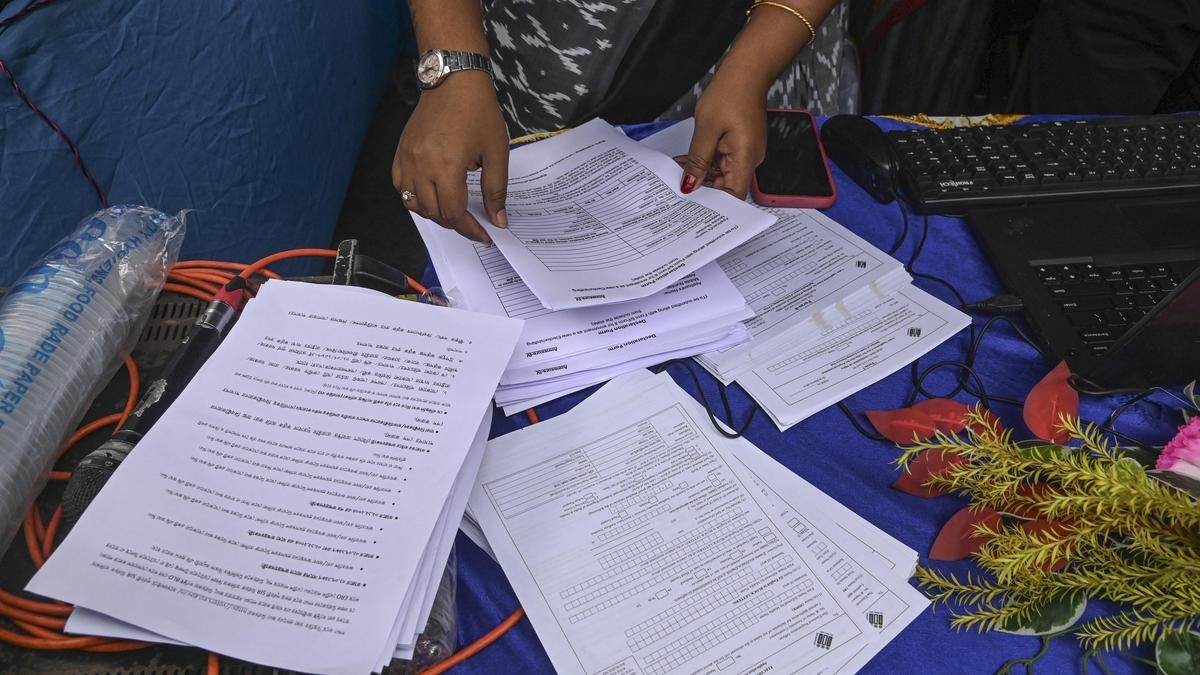
Vidarbha’s 34.96 lakh uncollectable voters have emerged as a key issue in Maharashtra’s ongoing electoral roll revision. The category includes voters whose details could not be verified during the enumeration process, but it does not mean their names have already been deleted from the voter list.
What does the 34.96 lakh figure mean?
Around 34.96 lakh voters across Vidarbha have been placed in the uncollectable category during the Election Commission’s ongoing Summary Intensive Revision, or SIR, of electoral rolls. The figure was reported on August 18, 2026, as officials continued processing the information collected during the door-to-door enumeration exercise.
The term uncollectable is important because it does not automatically indicate that these voters are dead, have permanently shifted from their registered address or hold duplicate voter records. It broadly refers to cases where Booth Level Officers were unable to establish contact with voters or verify their details during the enumeration process.
That distinction matters for voters in Vidarbha, where people frequently move between villages, towns and larger cities for education, employment, business and seasonal work. A voter may be away from home when officials visit and still remain an eligible elector.
The Election Commission’s next steps will determine how these cases are classified after further verification.
Why voters could not be contacted
Door-to-door electoral verification can face practical challenges, particularly in a large and geographically diverse region such as Vidarbha. People may be temporarily away from their registered residence, living elsewhere for work or education, or staying with relatives when Booth Level Officers visit.
Migration within Maharashtra can also make verification more complicated. A person registered as a voter in a village may now be working in Nagpur, Amravati, Akola or another city while retaining the same electoral registration.
There can also be cases involving elderly residents, locked houses, incomplete addresses or households where nobody was available during the verification visit.
For that reason, the uncollectable category should be understood as a verification status rather than a final finding about a voter’s eligibility.
The current figure therefore needs to be read carefully. It does not mean that 34.96 lakh Vidarbha voters have been declared ineligible.
What happens before names can be removed?
The next stage is verification. According to the current reporting on the Vidarbha exercise, officials are expected to examine these cases before potentially classifying voters under categories such as deceased, shifted or duplicate.
This process is significant because the electoral roll is not simply changed on the basis of a voter being unavailable during one visit.
The purpose of an intensive revision is to identify outdated or incorrect entries while also maintaining an accurate list of eligible voters. A person who was not available during the enumeration exercise can therefore still have an opportunity to establish that they continue to reside at the relevant address and remain eligible.
The classification of a voter as uncollectable should consequently not be treated as equivalent to deletion.
This distinction is particularly important when discussing the 34.96 lakh figure publicly because describing all these voters as removed would be inaccurate.
Maharashtra voter list enters an important stage
The Vidarbha figures come as Maharashtra moves towards the next stage of its electoral roll revision. The draft roll and the subsequent claims and objections process will be particularly important for voters whose information could not be verified during enumeration.
The Election Commission’s broader revision exercise is intended to identify entries that may need correction or removal while allowing legitimate voters to establish their eligibility. The claims and objections mechanism is therefore an important safeguard in the process.
Similar electoral roll revision exercises in India have shown why this stage matters. During the Bihar SIR process in 2025, the Election Commission stated that the claims and objections period allowed voters to correct errors in the draft roll and submit documents that had not been provided during enumeration.
The Maharashtra process will likewise need to distinguish between genuine outdated entries and voters who simply could not be contacted.
What should Vidarbha voters do now?
Voters should not wait until an election is announced to check their electoral registration.
People living in Nagpur, Amravati, Akola, Buldhana, Washim, Yavatmal, Wardha, Chandrapur, Bhandara, Gondia, Gadchiroli and other parts of Vidarbha should keep track of the draft electoral roll and check whether their name and details appear correctly.
Those who have moved within the region should pay particular attention to their registered address. Students and workers who spend long periods away from their permanent residence should also make sure that their electoral details remain accurate.
If a voter finds that their name is missing or an entry contains an error, the claims and objections stage provides the mechanism to seek correction or inclusion, subject to the applicable electoral procedures.
The key point is simple: being placed in the uncollectable category is not the same as losing voting rights.
Why the issue matters for Vidarbha
The 34.96 lakh figure is large enough to attract attention because electoral rolls form the foundation of the voting process. Even when a large number of entries are being reviewed for legitimate administrative reasons, the process needs to be transparent and accessible to ordinary voters.
For Vidarbha, the issue also highlights the challenge of maintaining accurate voter records across urban and rural areas.
Nagpur has a large population of people who have moved to the city for employment and education, while many families in rural Vidarbha maintain links with their native villages even after spending substantial periods elsewhere.
Such mobility can create difficulties during door-to-door verification without necessarily indicating that a voter should be removed.
That is why the next phase of verification and the opportunity to file claims and objections will be crucial.
Uncollectable does not mean deleted
The most important fact for voters to understand is that the 34.96 lakh figure represents people whose details could not be collected or verified during the enumeration exercise. It should not be interpreted as a final list of voters who have lost their place on the electoral roll.
Officials still have to examine the cases and determine whether an entry needs correction, further verification or removal under the applicable electoral process.
For voters, the practical response is to check the electoral roll once the relevant draft is available and act promptly if their name or details are missing or incorrect.
The coming claims and objections stage will therefore be more important than the headline figure itself. It is during that process that individual voters can challenge errors and seek restoration or correction where appropriate.
Takeaways
- Around 34.96 lakh Vidarbha voters are currently in the uncollectable category during electoral roll enumeration.
- Uncollectable does not automatically mean dead, shifted, duplicate or deleted.
- Further verification will determine how individual cases are classified.
- Voters should check the draft electoral roll and use the claims and objections process if their details are missing or incorrect.
FAQs
Are 34.96 lakh Vidarbha voters being removed from the voter list?
No. The figure refers to voters whose details could not be collected or verified during the enumeration process. Their inclusion in this category does not by itself mean their names have been finally deleted.
Why were these voters classified as uncollectable?
The reported cases include voters who were unavailable or could not be contacted during door-to-door verification by Booth Level Officers. Further verification is expected before final classifications are made.
What should I do if my name is missing from the draft roll?
Check the draft electoral roll when it is published. If your name is missing or your details are incorrect, use the prescribed claims and objections process to request inclusion or correction.
Does being away from home mean a voter loses eligibility?
No. A voter being unavailable during a verification visit does not by itself establish that the person is ineligible. Individual cases have to be examined under the applicable electoral rules.
(Internal keywords: Vidarbha voter list 2026, 34.96 lakh uncollectable voters, Maharashtra SIR 2026, Maharashtra voter list update, Vidarbha SIR, Nagpur voter list, electoral roll revision Maharashtra, voter verification Maharashtra, Maharashtra voter registration, claims and objections voter list)








Leave a comment