

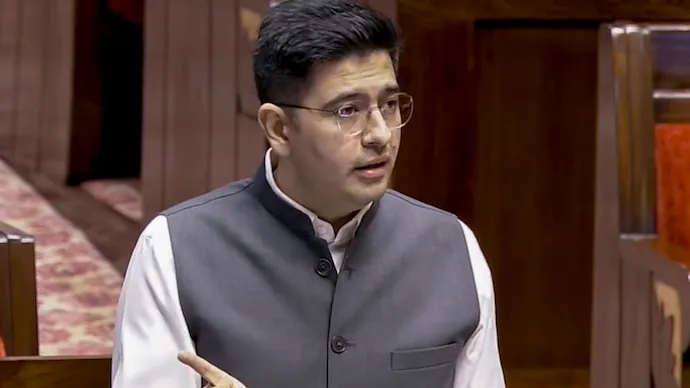
Raghav Chadha’s name being marked “permanently shifted” in Punjab’s draft electoral roll has triggered a political dispute. But the list is not final. Here is what the SIR process means, why names are removed, and how voters can seek inclusion or correction.
Raghav Chadha’s Name Marked ‘Permanently Shifted’ in Draft Roll
Rajya Sabha MP Raghav Chadha has alleged political vendetta after his name was found missing from Punjab’s draft electoral roll prepared under the Election Commission of India’s Special Intensive Revision, or SIR. His entry has reportedly been classified as “permanently shifted.” Chadha said his voter registration is in Mohali and questioned why he was shown as having shifted from the constituency.
Chadha, who was elected to the Rajya Sabha from Punjab as an Aam Aadmi Party nominee in 2022 and subsequently joined the BJP, said the development was not merely a clerical matter. He accused the AAP government in Punjab of political vendetta. The AAP has rejected the allegation and said the SIR is conducted by the Election Commission, not the state government, which therefore has no role in deciding whose name is retained or removed from the electoral roll.
Importantly, Chadha’s name being absent from the draft does not mean that his exclusion is final. The claims and objections stage is specifically designed to allow voters to challenge such omissions before the electoral roll is finalised.
What Is SIR and Why Is It Being Conducted?
Special Intensive Revision is a detailed exercise to verify and update electoral rolls. Unlike routine annual revisions, SIR involves a more extensive verification of existing voter records, including house-to-house enumeration by Booth Level Officers, or BLOs.
The Election Commission provides enumeration forms to existing electors and undertakes verification to identify voters whose records may no longer be valid or whose details require updating. The exercise can identify voters who have died, permanently shifted, have duplicate entries or cannot be traced during the verification process. The Commission’s instructions provide for BLOs to visit households, distribute and collect enumeration forms, and verify voter information.
The purpose is therefore not simply to remove names. The broader objective is to produce an electoral roll that is accurate, current and legally valid. The Supreme Court, while examining the legality of the SIR exercise conducted in Bihar, upheld the Election Commission’s authority to conduct such a revision under Article 324 of the Constitution read with Section 21(3) of the Representation of the People Act.
Punjab SIR Draft Roll and the 20.66 Lakh Exclusions
The controversy involving Chadha comes against the backdrop of a large-scale revision in Punjab. When the draft electoral roll was published on August 13, around 20.66 lakh names were left out of the draft list.
According to reported Election Commission data, Punjab had around 2.14 crore registered voters before the exercise. More than 1.93 crore electors, or about 90.37 per cent of the electorate, submitted enumeration forms during the house-to-house exercise conducted between June 25 and August 3.
The excluded names were placed into different categories. Around 9.44 lakh voters were classified as permanently shifted, about 5.74 lakh as deceased, more than 4.12 lakh as untraceable and approximately 1.19 lakh as duplicate entries.
This classification is significant in understanding the Chadha case. His name has reportedly been placed in the “permanently shifted” category. That does not by itself establish that the voter has been permanently removed from electoral participation. It indicates the reason recorded during the revision for leaving the entry out of the draft roll.
Claims and Objections: What Happens After a Name Is Missing?
The most important part of the SIR process for an affected voter is the claims and objections period.
In Punjab, claims and objections against the draft electoral roll can be submitted from August 13 to September 12, 2026. The disposal of these claims is scheduled to continue until October 8, with the final electoral roll scheduled for publication on October 12.
This means voters whose names are missing should not treat the draft roll as the final decision. A person who believes they have been wrongly excluded can use the prescribed procedure to seek inclusion. Similarly, corrections can be requested where the electoral record contains errors.
Chadha himself acknowledged this distinction. He said the present list is only a draft and that names can be corrected through the ongoing claims and objections process. He also said he was taking steps under the remedies available through the SIR guidelines.
For ordinary voters, the lesson is straightforward: checking the draft electoral roll is important, but finding a missing name does not mean the process has ended.
Why the ‘Shifted’ Category Matters for Voters
Migration is one of the most common reasons electoral records can become outdated. People move between cities and states for employment, education, marriage or other reasons. If an old voter registration remains active after a person has shifted permanently, it can create duplicate or inaccurate electoral records.
However, a genuine voter who has not permanently shifted can also be affected by an incorrect classification. This is why the draft stage and claims process are important safeguards.
The Election Commission’s broader SIR framework provides opportunities for electors who were unable to submit their enumeration forms to seek inclusion during the claims and objections period. Official instructions also provide for Form 6 applications in relevant circumstances.
The process therefore has two sides: removing entries that are no longer valid and giving eligible voters an opportunity to establish that their names should remain on the roll.
AAP Versus Chadha: What Each Side Is Saying
Chadha has connected the deletion of his name to his political break with the AAP and described the development as political retaliation. His argument is that his voter registration remains in Mohali and that he is a sitting Rajya Sabha MP representing Punjab.
The AAP has denied involvement and stressed that electoral-roll revision is an Election Commission exercise. The party has also questioned Chadha’s claim about continuing residence in Punjab, arguing that he has been living in Delhi and that maintaining or shifting his voter registration is the responsibility of the elector.
At this stage, the political allegations remain allegations. The fact that Chadha’s name is absent from the draft roll does not, by itself, establish political interference. The relevant administrative question is whether the entry was correctly classified and whether the claims and objections process results in its restoration.
What the Supreme Court Has Said About SIR
The wider SIR process has already faced significant legal scrutiny. In May 2026, the Supreme Court upheld the Election Commission’s authority to conduct the SIR exercise undertaken in Bihar. The Court held that the Commission’s power could be traced to Article 324 of the Constitution and Section 21(3) of the Representation of the People Act.
At the same time, the judgment emphasised procedural safeguards. The Court recognised the Commission’s ability to conduct a limited inquiry relevant to electoral eligibility but clarified that an electoral authority’s inquiry into citizenship cannot become a final determination of citizenship, which falls within the legal framework of the competent authorities under citizenship law.
That distinction is important because SIR is ultimately about maintaining electoral rolls. A draft exclusion is part of an administrative verification process, not automatically an irreversible finding against the individual.
What Voters Should Do If Their Name Is Missing
Voters in Punjab should first check the latest draft electoral roll and determine whether their name is absent or appears under an exclusion category such as shifted, deceased, untraceable or duplicate.
If an eligible voter has been wrongly excluded, they should use the prescribed claims process within the notified deadline and provide the required information or documents. Voters should also keep the acknowledgement or application details for their records.
The key deadline in Punjab is September 12, 2026, for claims and objections. The authorities are scheduled to dispose of these cases by October 8, after which the final electoral roll is expected to be published on October 12.
For Chadha, as for any other elector, the immediate issue is therefore not simply that his name is absent from the draft list. The next step is whether his claim is accepted and whether his name appears in the final roll.
Takeaways
- Raghav Chadha’s name has been marked “permanently shifted” in Punjab’s draft electoral roll under SIR.
- Punjab’s draft roll excluded around 20.66 lakh names across categories including shifted, deceased, untraceable and duplicate voters.
- The draft list is not final, and affected voters can file claims or objections until September 12, 2026.
- Punjab’s final electoral roll is scheduled to be published on October 12, 2026.
FAQ
What is SIR in the voter list?
SIR stands for Special Intensive Revision. It is an Election Commission exercise involving detailed verification and updating of electoral rolls to identify eligible voters and remove records that are no longer valid.
Why is Raghav Chadha’s name missing from the Punjab voter roll?
His entry has reportedly been classified as “permanently shifted” in the draft electoral roll. Chadha disputes the classification and has alleged political vendetta, while the AAP has denied involvement.
Can a voter get their name back after it is missing from the draft roll?
Yes. The draft stage is followed by a claims and objections process. Eligible voters whose names have been wrongly excluded can use the prescribed procedure to seek inclusion or correction.
When will Punjab’s final voter list be published?
The final electoral roll for Punjab is scheduled to be published on October 12, 2026, after claims and objections are processed.









Leave a comment