

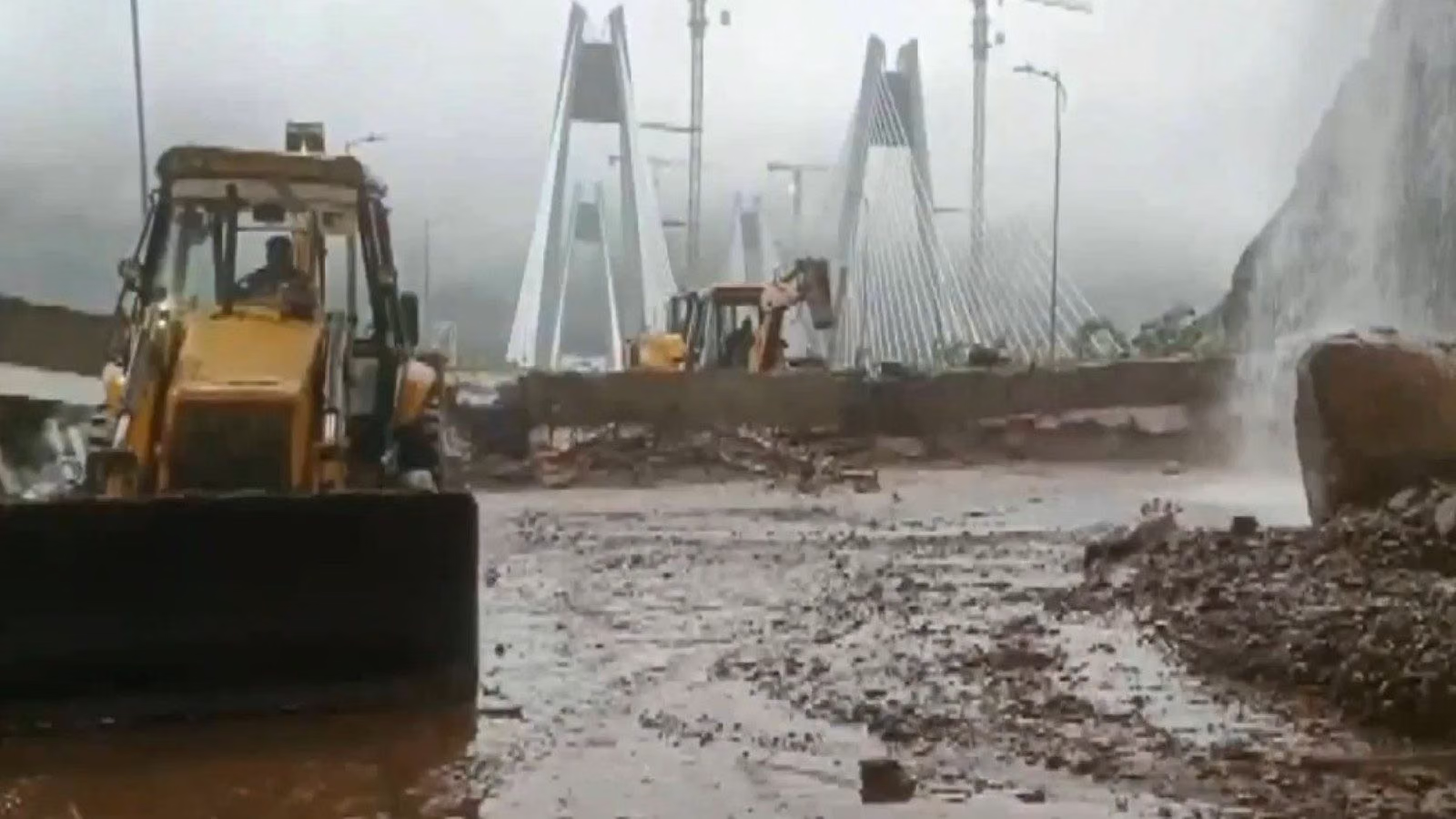
The Mumbai-Pune Expressway landslide in July exposed fresh safety concerns around the newly opened Missing Link. Maharashtra authorities are now carrying out rockfall protection and slope-stabilisation work based on IIT Bombay recommendations, with the latest update indicating that much of the work is underway.
July landslide exposed risks near the Missing Link
The Mumbai-Pune Expressway’s Missing Link faced a major disruption on July 6, when heavy monsoon rain triggered a landslide near the exit of Tunnel 2 on the Mumbai-bound carriageway. Large rocks and debris fell onto the road, forcing authorities to suspend traffic while the area was cleared and inspected.
The incident occurred only weeks after the Connecting Link was opened to traffic. The affected section runs through the Sahyadri hills and was designed to provide a faster alternative to the older Khandala Ghat stretch.
According to reports, the landslide brought down large boulders, with some reported to weigh as much as 20 tonnes. The falling material also damaged the false frame at the tunnel entrance. Newly exposed water channels created additional problems as rainwater flowed towards the road.
Traffic was eventually restored after debris clearance and safety inspections. However, the incident prompted authorities to seek a detailed technical assessment rather than treating debris removal as a permanent solution.
IIT Bombay recommends wider rockfall protection
Following the landslide, the Maharashtra State Road Development Corporation brought in IIT Bombay to examine the affected slope and recommend measures to reduce the risk of further rockfall.
The recommendations go beyond simply strengthening the section where debris fell. They include measures covering the hillside above the expressway and the drainage system responsible for carrying rainwater away from vulnerable areas.
The current work includes removing loose and weathered rock, anchoring unstable rock formations with steel bolts, installing high-tensile steel mesh and putting up permanent barriers designed to stop falling boulders from reaching the carriageway.
Authorities are also working on water diversion because uncontrolled water flow can weaken slopes and increase the possibility of rock movement during periods of intense rainfall.
What is the new rockfall protection work?
The safety plan uses several layers of protection rather than depending on one structure.
One important measure is rock bolting. Steel bolts are used to anchor sections of unstable rock to improve slope stability. Mesh is then being installed across vulnerable surfaces to help contain smaller pieces of falling rock.
Permanent rockfall barriers form another layer of protection. These barriers are intended to intercept larger rocks before they reach the expressway.
Drainage is equally important. IIT Bombay’s recommendations include hydrological work to identify how rainwater moves through the hillside and to redirect water through safer channels.
The approach is significant because the July incident was not simply a case of debris reaching the road. Water movement around the hillside also became a major factor after the landslide. The latest protection plan therefore combines geological, structural and drainage measures.
How much safety work has been completed?
The pace of the work has changed as authorities have dealt with monsoon conditions.
An earlier August update from MSRDC indicated that about 15% of the recommended work had been completed and that the corporation was targeting September-end for the safety upgrades. However, the latest September 8 report gives a different picture.
According to the latest update, approximately 50 to 60% of the rockfall protection work has now been completed. The work is being carried out across roughly 1.38 hectares of hillside, with completion now targeted for the end of October.
The extended timeline reflects the scale of the protection measures and the challenges of working on a steep hillside during the monsoon.
For commuters, this means the safety work is still ongoing even though traffic has resumed following the July incident.
What does this mean for Mumbai-Pune commuters?
For people travelling between Mumbai and Pune, the most important point is that the rockfall protection project does not automatically mean the entire expressway is closed.
The immediate July disruption was resolved after debris was removed and safety inspections were conducted. However, commuters using the Missing Link should remain alert to traffic advisories, especially during periods of intense rainfall.
The affected corridor passes through terrain where heavy monsoon conditions can quickly change road and slope conditions. Temporary traffic restrictions may therefore be imposed if authorities identify a fresh safety risk.
Commuters should also account for possible delays caused by maintenance activity, traffic management and weather-related restrictions while the protection work continues.
The importance of these precautions was underlined by a separate major traffic disruption on the Mumbai-Pune Expressway in early September, when traffic reportedly remained severely affected for several hours. That incident was not the July landslide, but it illustrates how quickly congestion can build on the busy Mumbai-Pune corridor.
Why drainage is as important as rock barriers
One of the clearest lessons from the landslide is that slope safety cannot be addressed only by putting barriers along the road.
The Sahyadri region receives intense monsoon rainfall, and water movement through rock and soil can affect slope stability. If drainage channels become damaged or water is diverted towards an unstable section, pressure on the hillside can increase.
That is why the new safety plan includes changes to drainage channels alongside rock bolting and mesh installation.
For commuters, these measures may not be as visible as a new road surface or barrier. Yet drainage is a critical part of keeping the hillside stable during periods of heavy rain.
The objective is to prevent water from accumulating or flowing unpredictably over vulnerable portions of the slope, while also reducing the possibility of rocks reaching the carriageway.
Why the work matters beyond one landslide
The Missing Link was developed to improve connectivity between Mumbai and Pune and reduce dependence on the older, more difficult Khandala Ghat route.
The July incident therefore raised an important infrastructure question: how should major road projects in mountainous areas be protected against extreme weather after construction?
The answer is unlikely to involve a single engineering measure. Slope stability depends on geology, drainage, rainfall intensity, rock conditions and ongoing maintenance.
The current safety programme is important because it applies recommendations from IIT Bombay to a wider section of hillside instead of limiting repairs to the exact point where the July landslide occurred.
For commuters, the real test will come during future periods of heavy rainfall. A successful protection system should reduce the likelihood of rockfall reaching the road and allow authorities to identify emerging risks before they become major disruptions.
What commuters should watch until October
With the protection project still under construction, commuters should continue checking official traffic advisories before travelling during heavy rain.
The most important issues are possible temporary lane restrictions, traffic diversions and delays around the Connecting Link. Drivers should avoid stopping unnecessarily near tunnel approaches or areas where safety work is taking place.
Heavy rainfall can also affect visibility and road conditions independently of the rockfall protection project. Maintaining a safe speed and following instructions from traffic authorities remains important, particularly on a high-speed expressway passing through hilly terrain.
The latest completion target is the end of October. Until the work is finished, the safety arrangements should be viewed as an ongoing infrastructure project rather than a completed upgrade.
The bigger question is long-term slope safety
The July landslide has shifted attention from simply reopening the expressway to ensuring that the surrounding hillside remains stable over the long term.
The current plan combines rock removal, rock bolting, protective mesh, permanent barriers and drainage improvements. Together, these measures are intended to create multiple layers of protection between unstable hillside material and the road.
The effectiveness of the work will ultimately depend on how well the measures perform through future monsoon seasons and whether inspection and maintenance continue after construction is completed.
For Mumbai-Pune commuters, that is the most important outcome to watch. The goal is not only to reopen a road after a landslide, but to reduce the chances of another major disruption occurring in the first place.
Key Takeaways
- A major landslide struck the Mumbai-Pune Expressway’s Missing Link near Tunnel 2 on July 6 after heavy monsoon rainfall.
- MSRDC is implementing IIT Bombay’s recommendations, including rock bolting, high-tensile mesh, rockfall barriers and improved drainage.
- Around 50 to 60% of the latest protection work has been completed, with the current target set for the end of October.
- Commuters should continue monitoring traffic and weather advisories while slope-stabilisation work remains underway.
FAQ
What caused the Mumbai-Pune Expressway landslide?
Heavy monsoon rainfall triggered a landslide near the exit of Tunnel 2 on the Missing Link section on July 6. Rocks and debris reached the Mumbai-bound carriageway, disrupting traffic.
Is the Mumbai-Pune Expressway Missing Link currently open?
The landslide-hit carriageway was reopened after debris was cleared and safety inspections were conducted. However, safety and slope-protection work is continuing, so commuters should follow official traffic advisories, particularly during heavy rainfall.
What safety measures are being installed?
The protection plan includes removing unstable rock, installing steel rock bolts, high-tensile mesh and permanent rockfall barriers. Authorities are also redesigning or diverting drainage channels to manage rainwater more safely.
When is the rockfall protection work expected to finish?
The latest September 8 update says around 50 to 60% of the work has been completed and the full project is targeted for completion by the end of October 2026.
(Mumbai Pune Expressway landslide, Mumbai Pune Expressway Missing Link, Mumbai Pune Expressway latest news, rockfall protection work, MSRDC safety work, IIT Bombay expressway study, Mumbai Pune Expressway traffic, Khandala Ghat landslide, Mumbai Pune Expressway commuters, Maharashtra infrastructure)









Leave a comment