

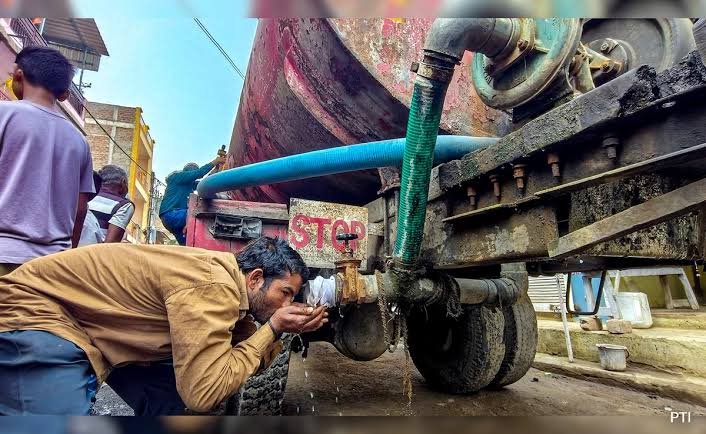
Indore’s water crisis has exposed serious questions about drinking water safety, municipal accountability and urban infrastructure. The Bhagirathpura contamination tragedy, which occurred in December 2025, has highlighted how neglected pipelines, inadequate monitoring and delayed responses can turn an essential public service into a public health emergency.
Indore Water Crisis: What Happened in Bhagirathpura?
Indore, a major commercial centre in Madhya Pradesh and a city frequently recognised for its cleanliness, faced a severe drinking water contamination crisis in December 2025. Residents of Bhagirathpura reportedly consumed water contaminated by sewage, leading to a serious outbreak of waterborne illness and multiple deaths.
Investigations and court proceedings subsequently brought the city’s water supply infrastructure under scrutiny. Reports indicated that leaking drinking water pipelines, their proximity to sewer infrastructure and failures in maintenance contributed to the contamination risk. The incident also raised questions about whether complaints from residents had received an adequate and timely response.
The Madhya Pradesh High Court intervened in the matter, and a judicial commission examined the causes of the tragedy and the responsibilities of public officials. Findings reported in October 2026 pointed to infrastructure and administrative failures that had developed over several decades. <Cite refs={[“turn358881search0″,”turn358881search3″,”turn358881search1”]}/>
The significance of the incident extends beyond one neighbourhood. Drinking water is a basic public service, and residents depend on municipal authorities to ensure that the supply reaching their homes is safe. When that system fails, the consequences can affect entire communities, particularly children, older people and households with limited access to alternative water sources.
Civic Accountability: Who Is Responsible for Safe Drinking Water?
Civic accountability means that public authorities must fulfil their responsibilities, explain their decisions and face appropriate scrutiny when failures occur. In urban water management, this responsibility extends across several departments and levels of administration.
Municipal corporations generally manage local distribution networks and related services, while state agencies may oversee major infrastructure, water resources, technical standards and funding. Public health departments and laboratories also play important roles in identifying contamination and responding to outbreaks.
When a water supply failure occurs, responsibility cannot be assessed solely by examining the final point where contamination was detected. Investigators need to establish whether infrastructure was properly designed, whether pipelines were maintained, whether water quality was tested regularly and whether officials responded to earlier complaints.
Indore’s judicial inquiry has brought these questions into focus. Accountability requires more than suspending officials after a crisis. It involves identifying the sequence of failures, examining administrative decisions and ensuring that corrective measures are implemented.
Where negligence or misconduct is established through the appropriate process, disciplinary or legal action may be warranted. At the same time, investigations should distinguish individual responsibility from wider systemic problems, including inadequate funding, poor coordination and outdated infrastructure.
Ageing Pipelines and Water Contamination in Growing Cities
Water contamination risks increase when drinking water networks deteriorate or are poorly maintained. Cracks, leaks, pressure changes and unsafe connections between drinking water and sewer systems can allow contaminated water to enter distribution pipelines under certain conditions.
In densely populated neighbourhoods, water and sewer networks may run close to one another. If the systems are damaged or inadequately separated, the risk of contamination can rise. Routine inspections, pressure monitoring and prompt repairs are therefore essential parts of urban water management.
Indore’s crisis has drawn attention to the long-term consequences of infrastructure decisions. Reporting on the judicial commission’s findings in October 2026 described problems linked to pipeline design and failures extending over decades. <Cite refs={[“turn358881search0″,”turn358881search3”]}/>
Growing cities need to treat water infrastructure as an ongoing public responsibility rather than a project that ends once construction is completed. Pipelines require regular inspection, maintenance records, planned replacement and emergency repair arrangements.
The challenge is especially relevant to Indian cities experiencing rapid population growth. As residential areas expand, municipal networks must serve more households while maintaining adequate pressure and water quality. If expansion outpaces maintenance and monitoring, vulnerabilities can remain hidden until a serious incident occurs.
Why Water Quality Monitoring and Public Warnings Matter
Safe drinking water cannot be guaranteed through visual inspection alone. Water may appear clear while containing harmful microorganisms. Regular sampling, laboratory testing, disinfection and transparent reporting are essential for identifying risks before they cause widespread illness.
Municipal authorities need clear procedures for collecting samples from treatment facilities, storage reservoirs and distribution points. Testing should be followed by documented action when results indicate contamination. A warning that is issued too late can leave residents exposed even after a problem has been detected.
The National Green Tribunal’s proceedings concerning water contamination in Madhya Pradesh have highlighted the importance of monitoring systems, pipeline maintenance and coordinated public health safeguards. The judicial process has also emphasised the need for preventive measures rather than relying only on emergency responses after an outbreak. <Cite refs={[“turn358881search29″,”turn358881search5”]}/>
Public communication is equally important. Residents need timely information about affected areas, the safety of their water supply, alternative sources and the steps authorities are taking. Unclear or conflicting announcements can create confusion and make it difficult for households to protect themselves.
Cities can improve accountability by publishing water quality reports, maintaining accessible complaint systems and recording how quickly reported problems are resolved. Such measures allow residents to understand whether corrective action has actually taken place.
What Indore’s Water Crisis Means for Other Indian Cities
Indore’s experience offers lessons for other urban centres, including Nagpur, Bhopal, Pune, Jaipur and Lucknow. Each city has its own water sources, infrastructure and administrative arrangements, so the precise risks differ. However, the need for reliable distribution networks, regular testing and responsive civic authorities is common to all.
Population growth increases demand for drinking water, but additional supply alone does not solve the problem. Cities also need to protect existing sources, reduce leakage, maintain treatment facilities and ensure that water remains safe throughout the distribution system.
Municipal authorities should map vulnerable pipeline intersections, identify areas with repeated leakage and prioritise repairs based on public health risks. Digital monitoring systems can help track water quality and complaints, but technology is effective only when officials act on the information it produces.
Citizens also have a role. Reporting unusual changes in water colour, smell or taste can alert authorities to possible problems, although these signs cannot establish whether water is safe. Residents should use official advisories and testing information rather than relying on appearance alone.
The responsibility, however, must not be shifted onto households. Municipal bodies and relevant public agencies remain responsible for providing safe water and responding effectively when the supply is compromised.
Practical Reforms Needed to Prevent Another Water Crisis
Preventing future incidents requires sustained improvements in infrastructure, monitoring and administration. First, cities need updated maps of drinking water and sewer networks so that officials can identify dangerous overlaps and vulnerable sections.
Second, preventive maintenance should be supported by regular inspections, documented repairs and planned pipeline replacement. Waiting until a pipe fails can be more expensive and dangerous than addressing deterioration early.
Third, water quality testing should follow established standards, with clear procedures for escalating abnormal results. Municipalities should be able to identify affected zones quickly, isolate unsafe sections where feasible and arrange alternative drinking water supplies.
Fourth, complaints must be recorded and tracked. Residents should receive acknowledgement, a reference number where available and information about the action taken. Repeated complaints about the same location should trigger further inspection rather than being treated as unrelated incidents.
Finally, independent reviews and public reporting can help establish whether reforms are working. Budgets, repair schedules, testing results and emergency response performance should be assessed against measurable outcomes.
Indore’s water crisis demonstrates that civic accountability must operate before, during and after an emergency. The strongest public service system is one that identifies risks early, responds quickly and makes it possible to determine whether officials have fulfilled their responsibilities.
Key Takeaways
- Indore’s Bhagirathpura water contamination tragedy exposed serious concerns about drinking water safety, pipeline maintenance and administrative accountability.
- A judicial inquiry examined infrastructure and governance failures, with findings reported in October 2026.
- Regular water testing, preventive maintenance, transparent complaint handling and timely public warnings are essential to protect urban residents.
- Other Indian cities can reduce similar risks by maintaining accurate pipeline maps, upgrading vulnerable networks and ensuring that corrective action is documented and independently reviewed.
Frequently Asked Questions
1. What caused the Indore water crisis?
Investigations and judicial proceedings have examined sewage contamination, pipeline vulnerabilities, maintenance failures and administrative lapses associated with the Bhagirathpura incident. The judicial commission’s findings, reported in October 2026, highlighted problems that had developed over several decades.
2. Why is civic accountability important in water management?
Civic accountability helps ensure that public agencies maintain infrastructure, monitor water quality, respond to complaints and explain their decisions. It also supports appropriate action when negligence or failures are established.
3. How can cities prevent drinking water contamination?
Cities can improve pipeline maintenance, separate drinking water and sewer networks appropriately, conduct regular laboratory testing, monitor vulnerable locations and respond promptly to abnormal results. Public warnings and alternative water supplies are important during emergencies.
4. What should residents do if they suspect contaminated tap water?
Residents should report the issue to their municipal water department or local authorities and follow official public health advisories. If contamination is suspected, they should use a verified safe drinking water source until authorities provide reliable guidance. Boiling can address many disease-causing microorganisms but does not remove every chemical contaminant.











Leave a comment