

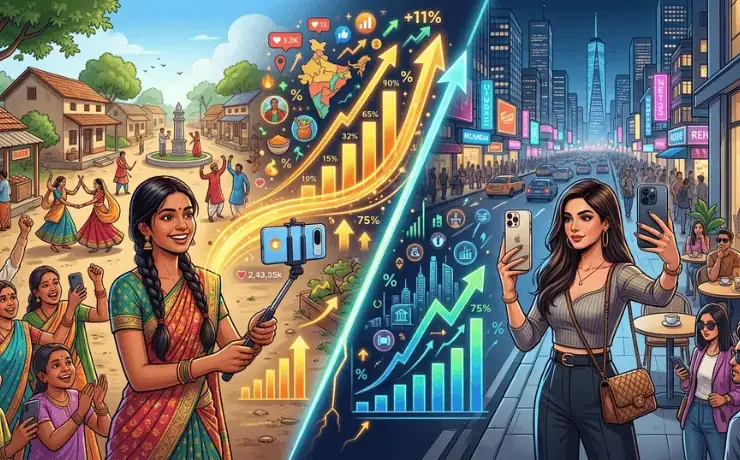
Influencer marketing in smaller Indian cities is creating new opportunities for brands to connect with consumers through regional creators, local languages and relatable content. As businesses look beyond metropolitan audiences, creators in Tier-2 and Tier-3 cities are becoming valuable partners for reaching communities with distinct preferences and purchasing habits.
Why Influencer Marketing in Smaller Cities Is Gaining Attention
For years, influencer marketing in India was closely associated with celebrities, lifestyle personalities and creators based in metropolitan cities such as Mumbai, Delhi and Bengaluru. Brands often prioritised large follower counts and nationwide visibility when selecting influencers for campaigns.
That approach is gradually expanding. Businesses are increasingly exploring creators who understand local languages, cultural references, regional festivals and everyday consumer concerns. These creators can help brands communicate with audiences in ways that feel familiar rather than distant.
Cities such as Nagpur, Indore, Jaipur, Lucknow, Nashik, Coimbatore and Surat have active local business communities and growing digital audiences. Creators based in these markets produce content about food, fashion, travel, education, fitness, technology and everyday life.
For brands, regional influencer marketing offers a way to reach specific audiences without relying exclusively on national advertising campaigns. A creator with a smaller but relevant audience may generate more meaningful engagement than a larger account whose followers have little connection with the advertised product.
The opportunity is not limited to local businesses. National brands can also use regional creators to introduce products, explain services and build familiarity in markets where they want to strengthen their presence.
Regional Creators Build Trust Through Familiarity
One of the biggest advantages of regional influencers is their understanding of the communities they serve. Their content often reflects local experiences, language preferences, humour and consumer priorities.
For example, a food creator in Nagpur may review neighbourhood restaurants, discuss local specialities and recommend places that residents can realistically visit. A beauty creator in Jaipur might explain skincare products in Hindi while addressing questions that matter to local consumers. A finance educator in a smaller city could explain digital payments or budgeting through examples relevant to everyday household spending.
Such content can make product information easier to understand and evaluate. Viewers may also find it easier to ask questions and receive responses when a creator maintains an active relationship with their audience.
However, familiarity should not be confused with guaranteed trust. Followers may appreciate a creator’s personality without accepting every recommendation. Trust depends on consistency, transparency, content quality and whether the creator’s opinions appear independent.
Brands therefore need to assess more than an influencer’s location or language. They should examine audience relevance, past collaborations, comment quality and the creator’s ability to explain products accurately.
Tier-2 and Tier-3 Cities Offer Brands New Audiences
India’s consumer market is diverse, and purchasing behaviour can vary considerably across regions, income groups, age categories and product segments. A campaign that performs well in a metropolitan market may not produce the same results in a smaller city.
Regional creators can help brands understand these differences. Their content may reveal which product features matter to local audiences, what questions consumers ask before purchasing and which communication styles generate interest.
For instance, a two-wheeler brand may collaborate with a local automotive creator to explain mileage, maintenance and service availability. A clothing retailer could work with a regional fashion creator to showcase festive outfits, affordable styling and locally relevant trends.
A business entering a new city can also use creator partnerships to test its messaging before investing in a larger campaign. Audience responses may help the company identify common concerns and improve its communication.
Nevertheless, smaller cities should not be treated as a single market. Consumers in Nagpur may have different preferences from those in Lucknow or Coimbatore. Effective campaigns require city-specific research rather than assumptions based on population size alone.
Why Micro-Influencers Can Deliver Meaningful Engagement
Micro-influencers generally have smaller audiences than major celebrities and large digital creators. Definitions vary across the industry, but these creators are often valued for their focused subject areas and closer relationships with followers.
For businesses operating with limited marketing budgets, micro-influencers can provide a practical starting point. Instead of spending heavily on one large account, a brand might collaborate with several creators whose audiences match different customer groups.
A local restaurant, for example, could work with food reviewers, neighbourhood lifestyle creators and family-oriented accounts. A fitness studio might collaborate with trainers and wellness creators whose followers live within a reasonable distance of the facility.
The benefit depends on campaign objectives. A creator with a modest following may generate useful enquiries or store visits, while a larger influencer may be better suited to building broad awareness.
Brands should evaluate engagement alongside measurable outcomes such as website visits, coupon redemptions, enquiries and sales. Follower counts alone cannot establish whether a campaign was successful.
They should also check for suspicious engagement, including repetitive comments, unusual follower growth and interactions that do not match the creator’s usual content. These signals warrant investigation, although no single metric proves that an account has purchased followers.
Regional Languages Make Brand Communication More Accessible
Language plays an important role in how people discover and evaluate products. While English remains useful in many professional and consumer contexts, regional languages can make digital content more accessible to audiences who prefer information in their first language.
Creators who communicate in Marathi, Hindi, Tamil, Telugu, Bengali, Gujarati, Kannada or other Indian languages can explain products using familiar expressions and examples.
This can be especially useful for products that require explanation, such as financial services, insurance, healthcare technology, educational platforms and digital tools. A clear regional-language video may help viewers understand how a service works before deciding whether to explore it further.
Language localisation involves more than translating a script. Cultural context, tone, humour and local terminology can influence whether a message feels natural. A literal translation may miss these details.
Brands should therefore give creators enough freedom to adapt approved messages to their audiences while ensuring that factual claims remain accurate. This approach combines the brand’s communication objectives with the creator’s understanding of local culture.
How Small Businesses Can Work With Regional Influencers
Regional influencer marketing is not restricted to large companies. Small businesses can use creator partnerships to reach nearby customers and explain what makes their products or services relevant.
A salon could collaborate with a local beauty creator to demonstrate its services. A café might invite a food reviewer to sample a new menu. A coaching institute could work with an education creator to explain courses, teaching methods and admission procedures.
Before approaching creators, businesses should identify a clear objective. The goal might be to increase local awareness, generate enquiries, promote an event or encourage customers to visit a store.
The next step is to shortlist creators whose audiences match the target market. Businesses should review recent posts, comments, previous brand partnerships and the creator’s communication style. They should also ask about deliverables, timelines, usage rights and charges.
Campaign agreements should clearly specify whether the collaboration includes a reel, story, static post, event appearance or other deliverable. Payment terms, approval processes and disclosure requirements should be agreed upon in advance.
Businesses can begin with a small campaign, measure the results and expand collaborations that demonstrate value. This is generally more informative than committing a large budget based only on an influencer’s popularity.
Measuring Influencer Marketing Results Beyond Likes
Likes and views can indicate that content has attracted attention, but they do not necessarily show whether a campaign influenced consumer behaviour.
Brands should select performance indicators according to their objectives. An awareness campaign may focus on reach, video views and audience recall. A campaign designed to generate sales may measure clicks, enquiries, conversions and revenue attributed to the partnership.
Unique tracking links, campaign-specific discount codes and dedicated landing pages can help businesses understand which creators are generating results. For local businesses, tracking enquiries and store visits can also provide useful evidence.
Engagement quality matters as well. Relevant questions, detailed comments and conversations about product features may offer more insight than a large number of generic reactions.
Companies should compare results with campaign costs and establish realistic expectations before launching. Results may differ depending on the product, audience, season, content format and purchasing cycle.
A campaign should also be evaluated for brand safety and accuracy. Misleading claims, undisclosed sponsorships or unsuitable content can damage credibility even when engagement numbers appear strong.
Advertising Disclosure and Ethical Responsibilities
Influencer marketing works best when audiences understand that a creator is being paid or otherwise compensated to promote a product.
In India, the Central Consumer Protection Authority’s 2022 guidelines on misleading advertisements and endorsements set out responsibilities relevant to endorsements. The Advertising Standards Council of India’s influencer advertising guidelines also address disclosure of material connections between advertisers and influencers.
Depending on the nature of the collaboration, creators may need to use clear disclosure labels such as Advertisement, Sponsored or Paid Partnership. Disclosures should be easy to notice and understand rather than hidden among unrelated hashtags.
Creators should also avoid making claims they cannot substantiate, particularly in sensitive categories such as healthcare, financial products and education. Brands should provide accurate information and avoid pressuring influencers to present unverified claims as personal experience.
These responsibilities matter for regional creators as much as for celebrity influencers. A local audience’s familiarity with a creator does not remove the need for transparent advertising.
The Future of Regional Influencer Marketing in India
Regional influencer marketing is likely to remain an important option for brands seeking more specific and locally relevant communication. As digital platforms connect consumers across cities and languages, businesses have more ways to identify creators whose audiences align with their products.
The strongest campaigns will not necessarily be those involving the most popular influencers. They will be the ones that match the right creator with the right audience, communicate useful information and measure results honestly.
For regional creators, professional growth may depend on building a clear niche, producing consistent content, understanding audience needs and maintaining transparent brand partnerships. For businesses, the priority is to evaluate creators through relevance, credibility and measurable performance.
Smaller cities are not simply extensions of metropolitan markets. They have distinct consumer communities, local businesses and cultural identities. Brands that understand these differences can develop more meaningful relationships with audiences across India.
Key Takeaways
- Regional creators help brands connect with audiences through local languages, cultural familiarity and relevant content.
- Micro-influencers can be useful for targeted campaigns, but follower counts alone do not determine performance.
- Businesses should measure campaign results through relevant indicators such as enquiries, conversions, store visits and sales.
- Clear advertising disclosures, accurate product claims and audience trust are essential for sustainable influencer partnerships.
Frequently Asked Questions
1. Why is influencer marketing important in Tier-2 and Tier-3 cities?
It helps brands reach local audiences through creators who understand regional languages, consumer preferences and cultural context. Campaigns can be tailored to specific cities instead of relying only on broad national messaging.
2. Are micro-influencers better than celebrity influencers?
Neither category is automatically better. Micro-influencers may offer focused audiences and local relevance, while celebrities can provide broader visibility. The right choice depends on campaign objectives, budget and audience fit.
3. How can a small business find regional influencers?
Businesses can search social platforms using city names, regional hashtags and relevant content categories. They should assess audience location, engagement quality, previous collaborations and content credibility before agreeing to a partnership.
4. How can brands measure regional influencer campaign success?
Brands can track reach, engagement, website visits, enquiries, coupon redemptions, store visits and sales, depending on their objectives. Tracking links and campaign-specific codes can help connect results to individual creator partnerships.








Leave a comment