

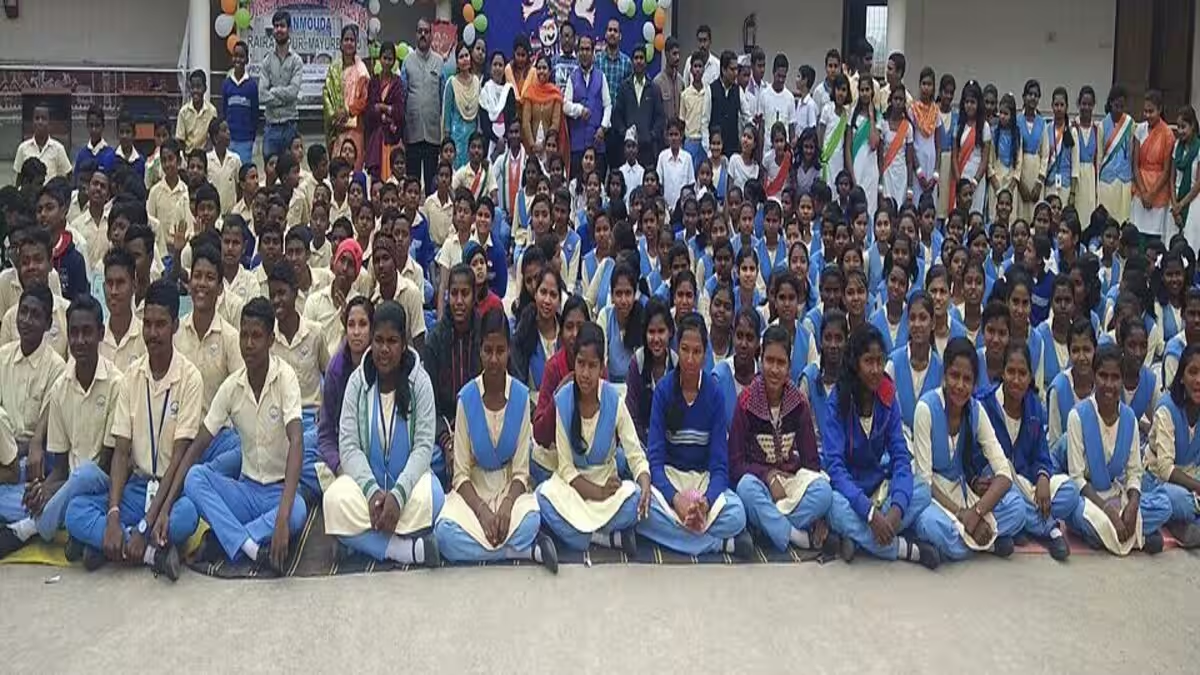
Odisha has approved a five-year free textbook scheme for approximately 28.7 lakh students in Classes 9 and 10, alongside a ₹500 crore urban drainage programme. The decisions aim to ease education costs, improve school access and address waterlogging in urban areas.
Odisha Cabinet Approves Two Major Public Welfare Initiatives
The Odisha government has approved two major initiatives covering school education and urban infrastructure, with a focus on reducing household expenses and improving public services. The decisions were taken at a state Cabinet meeting chaired by Chief Minister Mohan Charan Majhi on October 13, 2026.
The first initiative will provide free textbooks to students in Classes 9 and 10 studying in government and government-aided secondary schools. The scheme has an estimated outlay of ₹284.07 crore and is expected to cover around 28.7 lakh beneficiaries over five years.
The second initiative is a ₹500 crore Urban Storm Water Drainage Management and Improvement Programme. It will focus on improving drainage systems, restoring natural water channels and reducing waterlogging in urban local bodies and selected block headquarters.
Together, the initiatives address two practical concerns for families and communities: the cost of school education and the recurring problems caused by inadequate urban drainage.
Free Textbooks for Classes 9 and 10: Who Will Benefit?
Under the approved Supply of Free Textbooks scheme, students enrolled in Classes 9 and 10 at government and government-aided secondary schools will receive textbooks without having to purchase them at their own expense.
The scheme is intended to extend free textbook coverage to students who are not already covered under the existing provisions for Scheduled Caste and Scheduled Tribe students. These categories were already eligible for free textbooks in Classes 9 and 10, while students in Classes 1 to 8 were covered under the existing arrangement.
The expansion is intended to make access to essential learning materials more equitable, irrespective of students’ social categories. For families managing school fees, uniforms, transport and other educational expenses, the additional support could reduce some of the financial pressure associated with secondary schooling.
The government has estimated that around 28.7 lakh beneficiaries will be covered during the scheme period. This is a projected figure for the five-year programme, rather than a claim that the same number of students will receive books every year.
₹284.07 Crore Education Scheme to Run for Five Years
The free textbook scheme is planned for five years, from the 2025-26 academic year through 2029-30, with a total estimated expenditure of ₹284.07 crore.
The School and Mass Education Department will oversee the procurement, printing, transportation and distribution of textbooks. The process is expected to follow applicable government procurement rules, with an emphasis on transparency, competition and cost efficiency.
The department will also establish a mechanism to collect, verify and validate beneficiary information through field-level checks. Accurate student records will be important to ensure that textbooks reach the intended schools and learners without unnecessary delays.
Officials have stated that textbooks should be printed and supplied before the start of each academic session. This is an important implementation requirement because students need access to their prescribed books from the beginning of classes, not several weeks into the academic year.
The scheme’s impact will therefore depend not only on the approved budget but also on timely procurement, correct beneficiary identification and distribution at the school level.
Odisha’s ₹500 Crore Urban Drainage Plan Explained
Alongside the education initiative, the Cabinet approved the Urban Storm Water Drainage Management and Improvement Programme with an allocation of ₹500 crore from the state’s own resources.
The programme will run for five years, from 2026-27 to 2030-31, and cover urban local bodies and selected block headquarters. Its primary objective is to improve the capacity of drainage networks and reduce localised flooding and waterlogging.
The proposed work includes desilting existing drains, constructing reinforced cement concrete stormwater drains, covering drains where required and restoring natural drainage channels. The programme also envisages connecting suitable drainage channels with water bodies to improve the movement and management of stormwater.
These interventions address common infrastructure challenges in growing towns and cities. When drains become clogged with silt, waste or other obstructions, rainwater may accumulate on roads and in residential areas. Inadequate drainage capacity can make the problem worse during periods of heavy rainfall.
However, the effectiveness of the programme will depend on the quality of construction, regular maintenance and the suitability of drainage designs for local conditions.
How the Drainage Project Could Help Smaller Cities
Waterlogging affects more than road traffic. It can disrupt access to schools, workplaces, hospitals and local markets, while creating difficulties for pedestrians, shopkeepers and public transport services.
For smaller urban centres and block headquarters, improvements to stormwater drainage could help reduce these disruptions. Better-managed drains may also improve road safety and limit the accumulation of stagnant water in vulnerable locations.
The proposed restoration of natural drainage channels is another important component. Urban development can alter the routes through which rainwater naturally flows. If these channels are obstructed or disconnected from suitable outlets, excess water may accumulate in built-up areas.
The programme also identifies groundwater recharge, environmental quality and climate-resilient urban development among its expected benefits. Linking drainage systems with suitable water bodies could support better stormwater management, provided the design accounts for water quality, local geography and environmental safeguards.
It is important to distinguish the scheme’s intended outcomes from results already achieved. The Cabinet has approved the programme, but its impact will become clearer as projects are identified, funds are utilised and completed infrastructure is assessed.
Implementation Will Determine the Success of Both Schemes
Both initiatives require careful execution to deliver their intended benefits.
For education, the main challenges include maintaining accurate student records, procuring textbooks in sufficient quantities and ensuring delivery before classes begin. Delays in printing or transportation could reduce the usefulness of the scheme, even with adequate funding.
For urban drainage, authorities will need to identify locations with recurring waterlogging, assess the condition of existing networks and prioritise works according to local requirements. Desilting and construction alone may not provide lasting results without regular maintenance and effective waste management.
Coordination between state departments and local authorities will also matter. Urban drainage projects often involve roads, land use, water bodies and municipal services, making planning and execution important at every stage.
The two approvals represent separate policy measures, but both depend on the same principle: public spending must translate into services that people can access and use reliably.
For students, that means receiving the right textbooks on time. For urban residents, it means drainage systems that function during rainfall and continue to operate after construction is completed.
Key Takeaways
- Odisha has approved ₹284.07 crore for a five-year free textbook scheme expected to cover around 28.7 lakh students in Classes 9 and 10.
- The textbook scheme extends coverage to eligible students not already covered under existing SC/ST provisions.
- A separate ₹500 crore urban drainage programme will run from 2026-27 to 2030-31, targeting urban local bodies and selected block headquarters.
- The benefits of both initiatives will depend on timely textbook distribution, effective project execution and continued maintenance of public infrastructure.
Frequently Asked Questions
1. How many students will benefit from Odisha’s free textbook scheme?
The scheme is expected to cover approximately 28.7 lakh beneficiaries over five years. It applies to students in Classes 9 and 10 studying in government and government-aided secondary schools who are not already covered under existing SC/ST provisions.
2. What is the budget for Odisha’s free textbook scheme?
The government has approved an estimated outlay of ₹284.07 crore for the five-year programme, covering 2025-26 to 2029-30.
3. What is Odisha’s ₹500 crore urban drainage scheme?
The Urban Storm Water Drainage Management and Improvement Programme is a five-year initiative designed to improve drainage capacity and reduce waterlogging. Its planned work includes desilting, constructing stormwater drains, restoring natural drainage channels and linking suitable channels with water bodies.
4. When will Odisha’s urban drainage programme be implemented?
The programme is planned for 2026-27 to 2030-31. Its actual impact will depend on project selection, construction, maintenance and implementation by the relevant authorities.









Leave a comment