

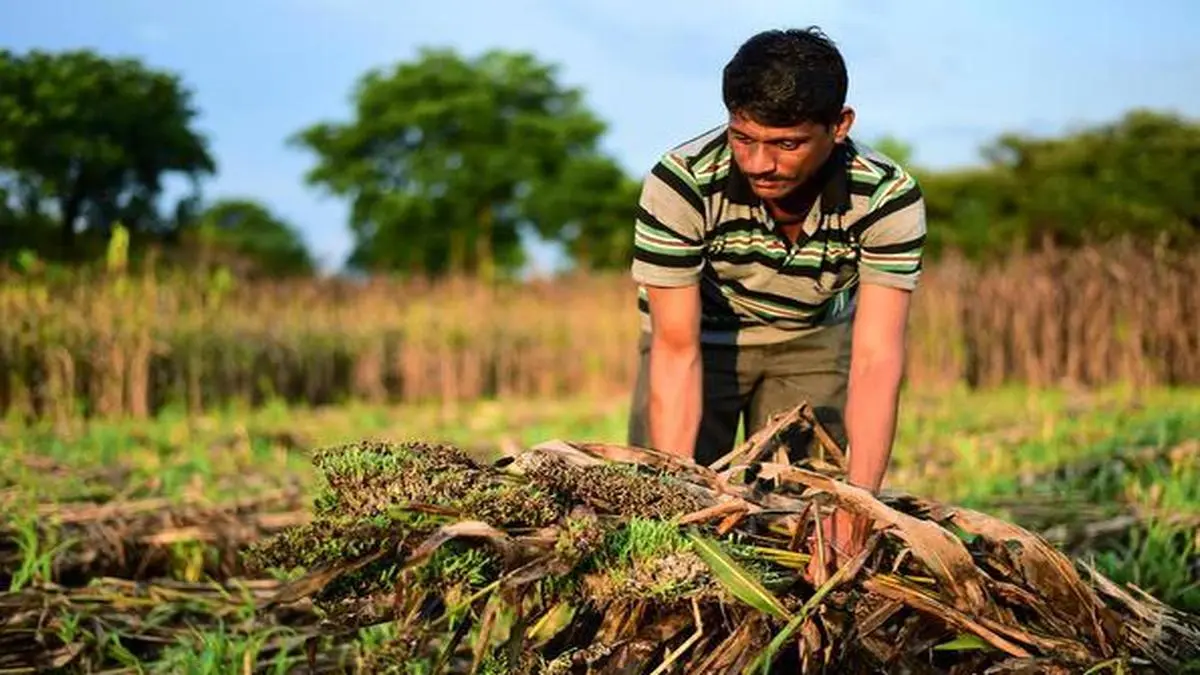
Maharashtra’s kharif crops are facing growing stress as a prolonged dry spell affects parts of the state, with Marathwada among the worst-hit regions. Poor rainfall is affecting soybean, cotton and maize, while farmers are also facing shrinking water availability and rising crop-loss concerns.
Maharashtra’s dry spell puts kharif crops at risk
The prolonged dry spell in Maharashtra has become a growing concern for farmers as the state moves into the later phase of the monsoon season. Agriculture department officials have reported that insufficient rainfall is affecting standing kharif crops in several regions, particularly Marathwada.
The situation is most serious where farming depends heavily on rainfall rather than assured irrigation. Marathwada, which includes Chhatrapati Sambhajinagar, Nanded, Hingoli, Dharashiv, Latur, Parbhani, Beed and Jalna, has recorded substantially below-normal rainfall, raising concerns about crop development and possible losses.
According to officials cited by Hindustan Times, soybean, cotton and maize in several parts of the region are showing signs of stunted growth. Yellowing leaves and insect infestation have added to the pressure on farmers. Officials have warned that the damage could become widespread if adequate rainfall does not return soon.
The India Meteorological Department has also indicated that subdued rainfall activity is likely to continue over peninsular India during the period around early September, making the availability of timely rain particularly important for crops that are already under moisture stress.
Marathwada faces the sharpest rainfall stress
Marathwada’s vulnerability is linked not only to the current dry spell but also to its dependence on rainfall for agriculture.
The region has more than 46 lakh hectares under kharif cultivation, with sowing completed across more than 93% of the area, according to agriculture department officials. Marathwada normally receives around 670 mm of rainfall between June and September. However, officials told Hindustan Times that the region had received only about 57% of its normal rainfall at the time of the report.
That gap matters because kharif crops require adequate moisture during crucial stages of vegetative growth and development. When rainfall remains insufficient for an extended period, plants can struggle to maintain growth, especially in areas where farmers cannot compensate through irrigation.
Beed, Latur, Hingoli and Dharashiv have been particularly affected. Officials said some areas recorded rain on only around three days throughout August.
For farmers who have already invested in seeds, fertilisers, labour and other inputs, a prolonged moisture deficit can create a difficult financial situation. A crop may remain standing in the field but still produce a significantly lower yield if moisture stress continues during critical growth stages.
Soybean, cotton and maize among affected crops
Soybean, cotton and maize are important kharif crops across parts of Maharashtra, including regions of Marathwada and Vidarbha. Their performance is closely linked to the distribution of monsoon rainfall.
Agriculture officials said soybean, cotton and maize have shown visible signs of stress in parts of Marathwada. Yellowing leaves and stunted growth have been reported, while insect infestation is creating another challenge for cultivators.
The timing of rainfall is as important as the total amount received. A region can record rainfall at certain points during the season but still face agricultural stress if there are long dry gaps between rain events.
This is particularly relevant during September, when farmers are looking toward the remaining monsoon rainfall to support crops through later growth stages. The IMD’s September outlook and extended-range information have pointed to subdued rainfall activity over peninsular India, although weather conditions can change and short-term rainfall events may still occur.
Vidarbha is also facing water concerns
The impact of uneven rainfall is not limited to Marathwada. Parts of Vidarbha are also experiencing pressure on water resources and agriculture.
A recent Times of India report said reservoir storage across Vidarbha had fallen to around 63%, while the region had recorded a cumulative rainfall deficit of about 22% between June 1 and August 31. August rainfall was particularly weak, with the report putting the monthly deficit at 58%.
For farmers, lower reservoir levels can become a concern beyond the immediate crop cycle. Reduced water availability affects the ability to provide protective irrigation and can also influence drinking-water availability in rural areas if dry conditions continue.
The Maharashtra agriculture minister has acknowledged that parts of Vidarbha and western Maharashtra have also been affected by poor August rainfall. The government has said agriculture officials are monitoring the situation and that there is a possibility of monsoon revival during September.
Nandurbar and other districts report serious deficits
The rainfall situation also varies significantly within Maharashtra. Nandurbar in northern Maharashtra has emerged as another area of concern.
A Times of India report from September 3 said Nandurbar had recorded around 340.7 mm of rainfall against a normal 728.4 mm since June, representing a deficit of about 53.2%. The tribal tehsils of Akrani and Taloda were reported to have received only around one-third of their seasonal rainfall.
The agricultural impact is significant because crops such as cotton, soybean, paddy, maize and bajra depend on adequate moisture during the growing season.
Such regional variations are important when assessing Maharashtra’s overall agricultural situation. State-level rainfall figures can hide severe shortages in individual districts, particularly in areas where farmers have limited irrigation options.
Water availability is adding to farmers’ concerns
The rainfall deficit is also putting pressure on local water sources.
Agriculture officials told Hindustan Times that Marathwada has fewer assured irrigation facilities compared with some other parts of Maharashtra. In several areas, wells and local ponds have also been affected by the lack of rainfall, making it difficult for farmers to obtain sufficient water even when they attempt protective irrigation.
Officials have advised farmers to use drip irrigation wherever possible. However, such measures cannot completely solve the problem when local water sources themselves are running low.
The broader water situation has also raised concerns in other parts of the state. An earlier report cited a 15% rainfall deficit across Maharashtra during June-August and said at least 14 districts, largely in Marathwada and Vidarbha, had deficits exceeding 25%.
Delayed crops could affect agricultural markets
The consequences of uneven rainfall can extend beyond the farm.
In Nashik, delayed kharif onion cultivation has already become a market concern. A September 8 Times of India report said the kharif onion crop was running more than a month late, while stored summer onion stocks were declining. At Lasalgaon APMC, average wholesale onion prices had risen from Rs 1,740 per quintal on June 22 to Rs 4,550 per quintal on September 5.
This illustrates how weather disruptions can travel through the agricultural supply chain. When sowing or crop development is delayed, arrivals at agricultural markets can also be pushed back. Lower availability can then affect wholesale prices and, eventually, consumers.
For farmers, however, higher market prices do not automatically compensate for crop damage. The outcome depends on whether they have a marketable harvest and how much their production costs have already increased.
What happens if the monsoon does not recover?
The next phase of the monsoon will be crucial for many farmers in rain-stressed districts.
Agriculture officials have warned that continued rainfall deficiency could lead to extensive crop damage in parts of Marathwada. At the same time, the state government has indicated that it is monitoring conditions and expects the possibility of some monsoon revival during September.
It is too early to describe the entire state as facing crop failure. Rainfall conditions differ sharply between districts, and the final agricultural impact will depend on rainfall during the remaining part of the season, crop condition and access to irrigation.
For rural Maharashtra, the immediate concern is more specific: whether enough rain arrives at the right time to prevent existing moisture stress from turning into substantial yield losses.
Key Takeaways
- Marathwada is currently among the worst-affected regions in Maharashtra because of prolonged rainfall deficiency.
- Soybean, cotton and maize have shown signs of moisture stress and stunted growth in several areas.
- Parts of Vidarbha and western Maharashtra are also facing rainfall and water-storage concerns.
- The remaining September rainfall could be critical in determining the final extent of kharif crop damage.
FAQs
Why are Maharashtra’s kharif crops under stress?
A prolonged gap in rainfall has reduced soil moisture in several farming regions. Crops such as soybean, cotton and maize are showing signs of stress in parts of Marathwada.
Which Maharashtra region is worst affected by the dry spell?
Marathwada has emerged as the most affected region in recent reports. Agriculture officials said it had received only about 57% of its normal rainfall at the time of their assessment.
Which crops are being affected?
Soybean, cotton and maize have been specifically reported as showing stunted growth in parts of Marathwada. Other districts and regions have also reported moisture stress affecting crops including paddy, bajra and onions.
Can September rainfall still help Maharashtra farmers?
Yes, additional rainfall can help crops that have not suffered irreversible damage, but its effectiveness will depend on the amount, timing and distribution of rainfall and the crop’s growth stage. The IMD has indicated subdued rainfall activity over peninsular India in the near term, while state officials have said a monsoon revival remains possible during September.











Leave a comment