

India is hosting the first Shanghai Cooperation Organisation (SCO) Civilisational Dialogue Forum in New Delhi from November 20 to 22, 2026. The three-day gathering will bring together international representatives, scholars and cultural experts to explore shared heritage and strengthen regional people-to-people connections.
First SCO Civilisational Dialogue Forum to Begin in New Delhi
The first SCO Civilisational Dialogue Forum is scheduled to begin in New Delhi on November 20, 2026, marking a new initiative in India’s cultural diplomacy. Prime Minister Narendra Modi is scheduled to inaugurate the three-day event at the historic Purana Qila at approximately 5:30 PM. The forum will continue until November 22 and bring together scholars, academics, subject experts and cultural representatives from countries associated with the Shanghai Cooperation Organisation (SCO).
The initiative aims to highlight the historical and cultural connections shared across the Eurasian region. Discussions will focus on traditions, languages, literature, art, architecture and philosophical heritage. Through this platform, India intends to encourage cultural exchanges and strengthen people-to-people relationships among participating countries.
The event also represents an effort to expand engagement within the SCO beyond its conventional focus on regional security, economic cooperation and political discussions. Press Information Bureau+2
Why India Is Hosting the SCO Civilisational Dialogue Forum
The idea of establishing a dedicated civilisational dialogue platform was proposed by Prime Minister Narendra Modi during the SCO Summit in Tianjin, China, in September 2025.
The proposal called for a platform where participating countries could explore their shared cultural heritage, historical connections and intellectual traditions. The initiative subsequently received support through the Bishkek Declaration of the SCO.
India’s decision to host the first edition reflects its interest in using cultural engagement as an additional channel of international cooperation.
The SCO brings together countries with diverse languages, religions, historical experiences and political systems. Despite these differences, several participating societies share connections through ancient trade routes, artistic traditions, philosophical exchanges and historical interactions.
The forum is intended to provide a structured setting for discussing these connections. Rather than limiting engagement to government-level negotiations, it will involve academics, cultural experts and representatives of different knowledge traditions.
This approach places cultural diplomacy alongside India’s existing diplomatic and economic engagement with the region. Press Information Bureau+2
15 Countries Confirm Participation in the Delhi Forum
The first edition has attracted international participation, with 15 of the 25 invited countries confirming their participation ahead of the event, according to reporting by The Indian Express on November 14.
Countries reported among those confirming participation include China, Kazakhstan, Iran, Tajikistan, Uzbekistan, Belarus, Azerbaijan, Armenia, Bahrain, Nepal, Saudi Arabia, Türkiye and Sri Lanka.
The invitation was extended to SCO member states, observer countries and dialogue partners. Pakistan was also invited, with India extending an invitation to its Minister for National Heritage and Culture, Aurangzeb Khan Khichi. However, participation had not been confirmed in the reporting available ahead of the forum.
The participation of countries from different parts of Asia and Eurasia provides an opportunity to discuss cultural connections that developed through centuries of trade, migration, religious exchange and intellectual interaction.
The gathering is expected to encourage conversations about how shared heritage can contribute to mutual understanding despite differences in contemporary international relations. India News – The Indian Express+1
Four Major Themes Will Shape the Cultural Discussions
The forum will organise its academic discussions around four major themes. The sessions are scheduled for November 21 and 22, following the inaugural ceremony.
1. Cultural Expressions
This theme will examine the role of music, performing arts, textiles, cuisine and traditional games in shaping cultural identities. These everyday cultural practices often reveal connections between societies that extend beyond national boundaries.
2. Art and Architecture
The discussions will explore shared artistic traditions, architectural influences and historical exchanges. Participants will examine how different societies influenced one another through construction techniques, visual arts and cultural monuments.
3. Language and Literature
This section will focus on languages, scripts, manuscripts and literary traditions. It will provide an opportunity to examine how ideas, stories and knowledge travelled across different regions over centuries.
4. Religious and Philosophical Traditions
The fourth theme will explore monastic routes, philosophical ideas and religious traditions that influenced societies across Asia and Eurasia.
Together, these sessions are intended to examine the cultural relationships that connect participating countries and identify opportunities for continued academic and cultural cooperation. Press Information Bureau+2
Purana Qila Becomes the Centre of India’s Cultural Showcase
The choice of Purana Qila as the venue adds historical significance to the international gathering. One of Delhi’s important historical monuments, the fort provides a setting that connects the discussions with India’s archaeological and architectural heritage.
The inaugural ceremony will feature a cultural presentation titled Civilisations in Conversation. The programme will combine music, dance, visual storytelling and narration to highlight cultural connections between India and the wider Eurasian region.
The presentation will follow the theme Vasudhaiva Kutumbakam, meaning the world is one family. The theme reflects the idea that different societies can maintain their cultural identities while recognising common human values and historical connections.
The event will also feature exhibitions highlighting India’s artistic, archaeological and literary heritage. These displays are intended to introduce international delegates to different periods of Indian history through historical objects, manuscripts and artistic traditions. Press Information Bureau+1
ASTITVA Exhibition to Highlight India’s Archaeological Heritage
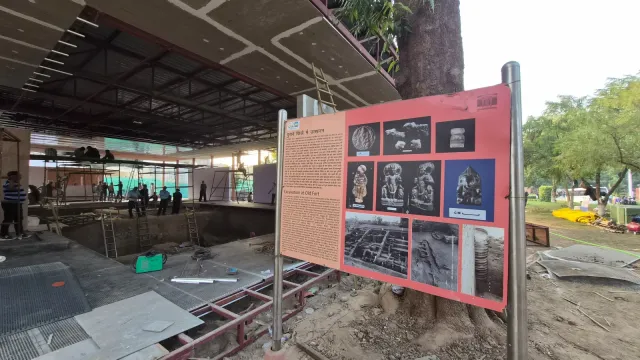
One of the major attractions of the forum will be ASTITVA: The Essence of Our Existence, an exhibition showcasing India’s archaeological and cultural history.
The exhibition will present archaeological evidence covering the period from approximately 1200 BCE to 1200 CE. It will include excavated remains, artefacts, architectural fragments and other historical discoveries connected with Delhi’s development.
The exhibition is intended to offer international visitors an understanding of the different historical periods that shaped the capital and its surrounding region.
Another important attraction will be the Mahabharat Scroll Pavilion, featuring Anant: A Rare 18th Century Mahabharata Scroll. The illustrated scroll will highlight India’s epic literary traditions and the artistic practices associated with historical manuscripts.
These exhibitions give the forum a practical cultural dimension. Instead of relying entirely on academic discussions, participating delegates will have an opportunity to experience historical objects and artistic traditions directly.
For international visitors, such presentations can provide a broader understanding of India’s cultural development and its connections with other Asian societies. Press Information Bureau+1
How the Forum Fits Into India’s Cultural Diplomacy Strategy
Cultural diplomacy involves using art, education, heritage, literature and cultural exchanges to develop relationships between countries.
India has several historical and cultural connections with the wider Asian region. Buddhism, traditional knowledge systems, literature, architecture and ancient trade networks have contributed to exchanges between Indian societies and neighbouring regions over centuries.
The SCO Civilisational Dialogue Forum provides an institutional platform to discuss these connections with participating countries.
For India, the initiative could help expand cultural cooperation through academic exchanges, collaborative heritage projects, research partnerships and joint cultural presentations.
It also creates opportunities to highlight India’s historical links with Central Asia and other parts of Eurasia. These connections have developed through trade routes, religious movements, educational exchanges and artistic interactions.
However, cultural diplomacy does not automatically resolve political or economic disagreements between countries. Its contribution is more gradual, focusing on communication, mutual understanding and long-term relationships.
The effectiveness of the forum will depend on whether the discussions lead to continued cooperation beyond the three-day event. IBEF+1
What the SCO Civilisational Dialogue Forum Means for India
The first edition of the forum could become an important addition to India’s engagement with the SCO.
The organisation traditionally addresses subjects such as regional security, economic cooperation, connectivity and counterterrorism. The introduction of a dedicated civilisational dialogue platform adds another dimension to these discussions.
For India, the gathering offers an opportunity to showcase its cultural heritage while learning about the historical experiences and traditions of other participating countries.
It could also encourage Indian universities, research institutions, museums and cultural organisations to explore collaborative projects with institutions across the Eurasian region.
The discussions around manuscripts, architecture, performing arts and philosophical traditions may provide opportunities for researchers to identify shared influences and preserve cultural knowledge.
Another important outcome could be the development of a continuing framework for academic and cultural exchanges. Officials have indicated that the inaugural edition will help establish a roadmap for future editions of the forum.
The larger significance of the initiative will therefore depend on its continuity and the practical collaborations that emerge from the discussions.
As the three-day gathering begins in Delhi, India is positioning cultural heritage as an additional channel for international engagement, alongside its existing diplomatic and economic relationships.
Key Takeaways
- The first SCO Civilisational Dialogue Forum will take place in New Delhi from November 20 to 22, 2026.
- Prime Minister Narendra Modi is scheduled to inaugurate the event at Purana Qila on November 20.
- The discussions will focus on cultural expressions, art and architecture, language and literature, and religious and philosophical traditions.
- Exhibitions including ASTITVA and the 18th-century Mahabharata scroll will showcase India’s archaeological, artistic and literary heritage.
Frequently Asked Questions (FAQs)
1. What is the SCO Civilisational Dialogue Forum?
It is an international cultural platform under the Shanghai Cooperation Organisation framework. It aims to encourage discussions about shared heritage, historical connections, cultural traditions and people-to-people relationships among participating countries.
2. When and where is the first SCO Civilisational Dialogue Forum taking place?
The first edition is scheduled from November 20 to 22, 2026, at Purana Qila in New Delhi, India.
3. Which countries are participating in the SCO Civilisational Dialogue Forum?
According to reports published before the event, 15 of the 25 invited countries had confirmed participation. These included China, Kazakhstan, Iran, Uzbekistan, Tajikistan, Belarus, Nepal, Saudi Arabia and Sri Lanka, among others.
4. What are the main themes of the SCO Civilisational Dialogue Forum?
The four main themes are cultural expressions, art and architecture, language and literature, and religious and philosophical traditions. The sessions will examine historical connections and shared cultural influences across participating societies.









Leave a comment