

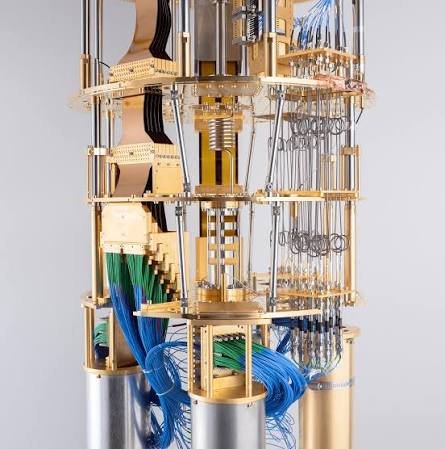
India is investing in quantum computing to strengthen its scientific capabilities, develop advanced technologies and support future industries. Through the National Quantum Mission, the country is building research infrastructure that could eventually contribute to energy innovation, material science, healthcare and complex industrial challenges.
India’s Quantum Computing Ambitions Are Gaining Momentum
Quantum computing is emerging as an important area of scientific research, with countries investing in technologies that could solve certain complex problems beyond the practical capabilities of conventional computers.
India is also developing its capabilities in this field through the National Quantum Mission (NQM), approved by the Union Cabinet in April 2023 with a financial outlay of ₹6,003.65 crore over eight years, covering 2023-24 to 2030-31.
The mission aims to strengthen research, develop indigenous quantum technologies and create an ecosystem involving universities, research institutions, startups and industries.
Unlike traditional computers, which process information using bits represented as either zero or one, quantum computers use quantum bits, commonly called qubits. These systems use quantum mechanical properties such as superposition and entanglement to process information in fundamentally different ways.
India’s ambition is not limited to building quantum computers. The government is also supporting quantum communication, advanced sensing, materials research and the development of skilled professionals.
The broader objective is to establish India as a contributor to the global quantum technology industry rather than remaining dependent on technologies developed elsewhere. psa.gov.in+1
What Is Quantum Computing and How Is It Different?
Conventional computers process information through binary bits. Every operation is performed using combinations of zeroes and ones, allowing computers to handle everything from mobile applications to financial transactions.
Quantum computers work differently. Their basic units, called qubits, follow the principles of quantum mechanics.
One important property is superposition, which allows a qubit to exist in a combination of possible states until it is measured. Another property, entanglement, creates correlations between quantum systems that cannot be explained through classical physics alone.
These properties can help certain quantum algorithms explore complex mathematical problems in ways that may be significantly more efficient than conventional approaches.
However, quantum computers are not replacements for ordinary computers. They are designed for particular classes of problems, and many practical applications remain under development.
Building reliable quantum systems is also difficult. Qubits are highly sensitive to environmental disturbances, and errors can interrupt calculations. Researchers are working on error correction, improved hardware and methods to increase the number of usable qubits.
For India, developing this technology requires long-term investment in physics, engineering, mathematics, computer science and specialised manufacturing.
National Quantum Mission: India’s Major Research Investment
The National Quantum Mission is the central government initiative driving India’s quantum technology development.
The Department of Science and Technology is implementing the mission through four thematic hubs located at leading research institutions.
These hubs focus on different areas of quantum technology:
- Quantum Computing: Led by the Indian Institute of Science (IISc), Bengaluru, this hub focuses on developing quantum processors, computing systems and related technologies.
- Quantum Communication: Led by IIT Madras in association with the Centre for Development of Telematics (C-DOT), this hub works on secure quantum communication systems.
- Quantum Sensing and Metrology: Led by IIT Bombay, this hub focuses on highly sensitive measurement technologies.
- Quantum Materials and Devices: Led by IIT Delhi, this hub supports research into advanced materials and components required for quantum systems.
According to government information published in August 2026, the four hubs comprise 14 technical groups and 17 project teams, bringing together 152 researchers from 43 institutions across 17 states and two Union Territories.
The government is also developing fabrication and central research facilities at IISc Bengaluru, IIT Bombay, IIT Kanpur and IIT Delhi. These facilities are expected to support the indigenous development of quantum processors, sensors and specialised devices.
The mission has an eight-year target of developing intermediate-scale quantum computers with 50 to 1,000 physical qubits across different technology platforms.
This infrastructure is important because quantum computing requires specialised laboratories, advanced fabrication capabilities and collaboration between different scientific disciplines. Press Information Bureau+2
How Quantum Computing Could Transform India’s Energy Sector
One of the most promising areas for quantum computing is energy research. India’s electricity demand is increasing as cities expand, industries grow and more households adopt electric appliances.
At the same time, the country is investing in renewable energy sources such as solar and wind power. Managing these energy systems involves complex calculations related to electricity generation, storage, transmission and consumption.
Quantum computing could eventually help researchers investigate some of these challenges.
For example, energy systems involve large optimisation problems. Electricity providers must balance demand and supply, manage transmission networks and determine how different power sources should contribute to the grid.
Quantum algorithms are being studied for certain optimisation problems that could have applications in energy scheduling and resource management.
However, these applications are still experimental. Existing quantum computers have not demonstrated a general, commercially reliable advantage over conventional systems for large-scale electricity grid management.
The technology should therefore be viewed as a possible future research tool rather than an immediate solution to India’s energy challenges.
Renewable Energy Research and Better Solar Technologies
India has ambitious renewable energy goals, making solar and wind technology important parts of its long-term energy strategy.
Quantum computing could contribute to research into the materials used in solar cells, batteries and other clean energy technologies.
Understanding how electrons interact inside complex materials is difficult because these systems involve many interacting particles. Conventional computers can struggle to simulate certain quantum systems accurately as their complexity increases.
Quantum computers may eventually provide researchers with new ways to model these interactions.
For solar energy, such simulations could help scientists investigate the electronic properties of photovoltaic materials and explore compounds that may improve solar cell performance.
Researchers could also use quantum simulation to study advanced materials for more efficient energy conversion and storage.
This does not mean quantum computers can automatically produce better solar panels. Material discovery involves laboratory experiments, manufacturing processes, cost considerations and long-term performance testing.
Nevertheless, more accurate simulations could help researchers narrow down promising materials and improve the efficiency of experimental research.
For India, this could become relevant as domestic institutions work to strengthen solar manufacturing and reduce dependence on imported technology.
Quantum Computing and the Future of Battery Technology
Energy storage is another area where quantum research could have an impact.
As electric vehicles, renewable energy projects and battery-powered devices become more common, demand for efficient and affordable energy storage continues to grow.
Developing better batteries requires an understanding of chemical reactions, electrode materials, electrolytes and the movement of ions within battery systems.
Quantum computing could eventually help researchers simulate certain chemical and material interactions that are difficult to model using conventional computational methods.
This may support research into:
- New battery electrode materials with improved performance.
- Chemical processes involved in battery charging and discharging.
- More efficient energy storage materials.
- Catalysts that could support cleaner industrial processes.
- Materials that may improve battery life and stability.
India has an opportunity to connect quantum research with its expanding electric vehicle and battery manufacturing ecosystem.
Institutions working in chemistry, physics and materials science could collaborate with technology developers to investigate these applications.
However, commercially useful battery improvements will still depend on physical testing, manufacturing costs, material availability and safety standards. Quantum computing is a potential research tool, not a substitute for these processes.
Quantum Technology Could Improve Scientific Research
The importance of quantum computing extends beyond the energy sector.
Scientific research increasingly involves analysing large datasets, studying complex physical systems and understanding interactions that are difficult to reproduce through conventional calculations.
Quantum technologies could support research in several areas.
Healthcare and drug discovery: Quantum simulation may eventually help researchers understand molecular interactions and chemical behaviour. This could contribute to selected areas of pharmaceutical research, although it is not yet a replacement for conventional drug discovery methods.
Material science: Scientists could investigate the properties of advanced materials that may be useful in electronics, energy storage and industrial manufacturing.
Agriculture: Quantum sensing technologies could potentially support highly precise measurements of environmental conditions and underground resources.
Climate research: Improved scientific simulations and sensing systems could contribute to research involving complex environmental processes.
Telecommunications: Quantum communication research could help develop new methods of securing sensitive information.
These applications are at different stages of research and development. Their practical value will depend on hardware improvements, scientific validation and successful integration into existing industries.
Quantum Communication and Cybersecurity in India
Quantum communication is another important component of India’s National Quantum Mission.
As banking, government services, healthcare and businesses become increasingly dependent on digital networks, protecting sensitive information is a major concern.
Traditional encryption systems rely on mathematical problems that are difficult for conventional computers to solve. However, sufficiently advanced quantum computers could threaten some widely used public-key cryptographic systems.
Quantum key distribution (QKD) is one technology being explored to address future security challenges. It uses quantum properties to establish encryption keys and can help detect certain attempts to intercept communication.
India’s National Quantum Mission includes targets for satellite-based secure quantum communication between ground stations across distances of up to 2,000 kilometres. It also aims to develop long-distance quantum key distribution networks and multi-node quantum communication systems.
These developments could have applications in government communications, defence, banking and critical infrastructure.
In October 2026, the Technology Development Board under the Department of Science and Technology signed an agreement to provide ₹150 crore in support to Bengaluru-based QNu Labs under the Research Development and Innovation Fund. The project aims to strengthen India’s indigenous quantum-secure and sensing technology ecosystem.
This reflects how the country’s quantum ambitions are expanding beyond academic research towards technology development and commercial applications. psa.gov.in+1
Opportunities for Indian Startups and Young Researchers
The growth of quantum technology could create opportunities for India’s startup ecosystem and scientific workforce.
Developing quantum computers requires expertise in several fields, including electronics, physics, software engineering, advanced materials and mathematics.
Startups can contribute by developing specialised hardware, quantum software, algorithms, sensing devices and secure communication solutions.
India’s existing technology ecosystem provides a foundation for this development. However, quantum technology requires specialised infrastructure and significant research investment, making collaboration between startups, universities and established companies important.
The government is also expanding opportunities for students and researchers. According to a July 2026 government update, 86 institutions had been identified across different components of the National Quantum Mission for research, technology development and human resource development.
The initiative also includes undergraduate teaching laboratories and specialised academic programmes.
For students in Tier-2 and Tier-3 cities, this developing ecosystem could create opportunities to enter emerging scientific fields without necessarily depending on overseas education.
Engineering graduates, physics students, mathematics researchers and computer science professionals may find opportunities in quantum algorithms, hardware development, materials research and quantum cybersecurity.
However, building a skilled workforce will require more than introducing new courses. Access to research laboratories, practical training, industry exposure and experienced faculty will also be important.
Challenges India Must Address Before Quantum Technology Becomes Mainstream
Despite growing investment, quantum computing faces several technical and economic challenges.
The first major challenge is hardware reliability. Qubits can lose their quantum states because of environmental disturbances, creating errors during calculations. Developing fault-tolerant quantum computers remains a major scientific challenge.
The second challenge is manufacturing. Quantum processors require specialised materials, precision fabrication and controlled laboratory environments. Building these capabilities domestically will require sustained investment.
Another concern is the availability of skilled professionals. Quantum research combines multiple scientific disciplines, and India will need a larger pool of trained researchers, engineers and technicians.
Commercialisation is also a challenge. Research breakthroughs do not automatically become products that businesses can afford and use. Companies will need to identify practical applications where quantum systems offer measurable benefits.
For the energy sector in particular, conventional computing, engineering improvements and existing renewable technologies will remain essential. Quantum computing must demonstrate real advantages before utilities and energy companies can justify adopting it.
India’s progress will therefore depend on research quality, infrastructure, international collaboration and the ability to convert scientific discoveries into useful technologies.
What India’s Quantum Future Could Mean for Energy and Innovation
India’s investment in quantum computing represents a long-term effort to strengthen its scientific and technological capabilities.
The National Quantum Mission has established an institutional foundation through research hubs, fabrication facilities, academic programmes and startup support. These developments could gradually help India build expertise in advanced computing, quantum communication, sensing and materials research.
The energy sector offers several potential applications, particularly in battery materials, solar technology, chemical simulations and complex optimisation problems. However, most of these possibilities still require further research and practical validation.
For India’s young researchers, universities and technology companies, the growing quantum ecosystem offers an opportunity to participate in an emerging global industry.
The real measure of success will not simply be the number of quantum computers developed. It will be whether Indian research institutions and businesses can turn these technologies into reliable, affordable and useful solutions.
Key Takeaways
- India’s National Quantum Mission has an outlay of ₹6,003.65 crore over eight years, from 2023-24 to 2030-31.
- Quantum computing could support future research into solar materials, battery technology, energy storage and industrial optimisation.
- Four thematic hubs at IISc Bengaluru, IIT Madras, IIT Bombay and IIT Delhi are leading different areas of quantum technology research.
- Hardware reliability, manufacturing infrastructure, skilled professionals and commercialisation remain major challenges for India’s quantum technology ecosystem.
Frequently Asked Questions (FAQs)
1. What is India’s National Quantum Mission?
The National Quantum Mission is a government initiative approved in April 2023 with an investment of ₹6,003.65 crore. It aims to develop quantum computing, communication, sensing and materials technologies in India between 2023-24 and 2030-31.
2. How can quantum computing help India’s energy sector?
Quantum computing could eventually help researchers simulate advanced materials, investigate battery chemistry, explore solar cell improvements and study complex energy optimisation problems. Most of these applications are still under research.
3. Which Indian institutions are leading quantum computing research?
The four major thematic hubs are hosted by IISc Bengaluru for quantum computing, IIT Madras with C-DOT for quantum communication, IIT Bombay for quantum sensing and metrology, and IIT Delhi for quantum materials and devices.
4. Can quantum computers replace traditional computers?
No. Quantum computers are designed for specific categories of complex problems. Conventional computers will continue to handle everyday tasks such as browsing, business software, communication and general computing.










Leave a comment