

India’s space startup ecosystem is attracting fresh investor interest as private companies move from developing satellite technology to building commercial services. SatSure’s latest ₹60 crore investment highlights how government-backed funds, policy reforms and demand for satellite data are creating new opportunities for the sector.
SatSure Funding: What Happened in the Latest Investment?
Bengaluru-based space technology company SatSure announced on November 20, 2026, that it had secured ₹60 crore from the Antariksh Venture Capital Fund. Reuters reported the investment as approximately $7 million.
The investment represents the first close of SatSure’s ongoing ₹200 crore Series B funding round. The Antariksh Venture Capital Fund is anchored by the Indian National Space Promotion and Authorisation Centre (IN-SPACe) and managed by SIDBI Venture Capital Limited.
The company has disclosed a post-money valuation of ₹870 crore, equivalent to approximately $93 million. The broader funding round is expected to close in stages by December 2026.
The announcement is significant because it brings institutional capital into a company working on satellite-based intelligence and artificial intelligence, rather than focusing only on rockets or satellite manufacturing.
How SatSure Plans to Use the Funding
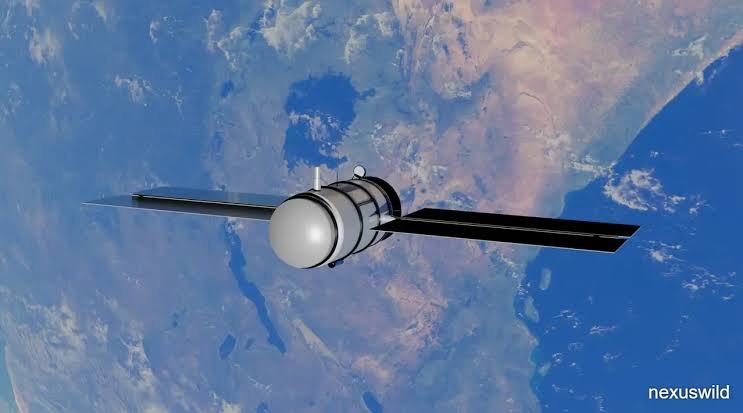
SatSure develops Earth-observation technology that uses satellite imagery, data analytics and artificial intelligence to support business and government decisions.
The latest funding will support several areas of its operations. One priority is developing optical satellite imaging payloads through its subsidiary, KaleidEO. These payloads are intended to strengthen the company’s ability to collect Earth-observation data, with orbital launches planned for 2027.
Another focus is the company’s participation in the Earth Observation Public-Private Partnership programme anchored by IN-SPACe. The initiative involves developing a multi-satellite constellation to strengthen India’s Earth-observation capabilities.
SatSure also plans to expand its data analytics capabilities through Dhaarini, its Large Earth Observation Model. The company has previously received a ₹24.6 crore grant under IN-SPACe’s Technology Adoption Fund for this technology.
International commercial expansion is another stated priority. The company wants to serve more enterprise and government customers using satellite-based intelligence solutions.
What SatSure Does and Why Its Technology Matters
SatSure operates in the downstream segment of the space industry. This part of the sector focuses on turning satellite data into information that businesses, governments and other organisations can use.
Satellite images can help monitor agricultural land, assess infrastructure, track environmental changes and support disaster management. However, raw satellite imagery is not always useful on its own. Organisations need tools that can process large amounts of information and convert it into practical insights.
SatSure combines Earth-observation data with artificial intelligence to support decisions across several industries.
For example, financial institutions can use satellite-based information to assess agricultural activity and understand risks associated with rural lending. Insurance companies can examine changes in land and infrastructure, while government agencies can use Earth-observation data for planning and monitoring.
The company’s disclosed customers include HDFC Bank, ICICI Bank, Axis Bank, ITC, Bayer and the Airports Authority of India. These relationships demonstrate the potential commercial applications of satellite intelligence beyond traditional space research.
India’s Space Startup Funding Is Expanding
SatSure’s investment comes amid a wider increase in private-sector activity in India’s space industry.
According to information presented by the Department of Space in Parliament in July 2026, cumulative private investment in Indian space startups had reached approximately $618.5 million by March 31, 2026. The figure had increased from $100.5 million in 2021-22 and $348.5 million in 2023-24.
The number of active space startups has also grown significantly. Government figures indicate that the ecosystem expanded from just one startup in 2014 to more than 400 by 2026.
These developments suggest that India’s commercial space sector is moving beyond a limited group of companies working on experimental technologies. Startups are increasingly developing products and services for commercial customers.
Funding is also reaching different parts of the ecosystem, including launch vehicles, satellite manufacturing, Earth observation, propulsion systems, space-based communication and data analytics.
Government-Backed Funds Are Supporting Space Technology
One of the important developments behind India’s space startup funding growth is the creation of dedicated financial support for private space companies.
The Antariksh Venture Capital Fund is designed to support businesses operating in India’s space technology ecosystem. It has a ₹1,600 crore corpus and is anchored by IN-SPACe, with SIDBI Venture Capital managing the fund.
Its investment in SatSure is notable because it represents the fund’s first deployment into the downstream data analytics and artificial intelligence segment of the space economy.
Government support is not limited to venture capital. IN-SPACe also facilitates access to technical infrastructure, industry partnerships, technology transfers and authorisations for private space activities.
The IN-SPACe Seed Fund Scheme provides financial assistance to eligible early-stage startups and micro and small enterprises. It offers grants of up to ₹1 crore for qualifying projects, along with mentorship and networking support.
Such initiatives can help startups manage the high initial costs associated with research, engineering, testing and product development.
How India’s Space Policy Reforms Encourage Private Investment
India’s space sector was historically dominated by government institutions, particularly ISRO. Private companies participated in specific areas, but the sector offered limited opportunities for independent commercial operations.
The policy reforms announced in June 2020 changed this structure by creating a framework for greater private-sector participation.
IN-SPACe was established as an independent agency to promote, authorise and supervise private space activities. The reforms also opened opportunities for companies to work across different stages of the space value chain.
The Indian Space Policy 2023 further established a framework for private participation in activities such as satellite operations, launch services, manufacturing and space-based applications.
For investors, these changes provide a clearer regulatory environment than the earlier government-dominated structure. Startups can now build businesses around commercial services, while established companies can participate in larger projects.
However, regulatory approvals, technical standards and national security requirements remain important considerations for private operators.
Other Indian Space Startups Are Also Attracting Capital
SatSure is part of a larger group of Indian companies attracting investor attention.
Pixxel, a Bengaluru-based company working on Earth-imaging satellites, announced a $100 million Series C funding round in September 2026. The company is developing satellite infrastructure designed to provide high-resolution Earth-observation data.
Skyroot Aerospace, which is developing launch vehicles, secured a $60 million funding round in May 2026. Its work reflects the growing interest in India’s private launch industry.
Other companies are developing satellite propulsion, communication systems, space-based manufacturing and specialised technologies.
These businesses operate in different segments, but they share a common challenge: converting technically complex products into services that customers are willing to pay for.
The funding activity suggests that investors are looking beyond the immediate excitement surrounding space exploration and evaluating the long-term commercial potential of India’s space technology companies.
Why Investors Are Looking at India’s Space Economy
Space technology has applications across several sectors of the economy. Satellite data can support agriculture, insurance, banking, infrastructure planning, logistics, environmental monitoring and disaster response.
This creates multiple potential sources of commercial revenue for companies developing space-based products.
India also has an established space research ecosystem, engineering talent and experience in satellite launches. Private startups can build on these capabilities while developing specialised products for domestic and international customers.
Government programmes and public-private partnerships may also create opportunities for companies to participate in projects that require advanced satellite infrastructure.
However, space technology is a capital-intensive business. Companies must invest in research, testing, manufacturing, launch services and regulatory compliance before some products can generate meaningful revenue.
Investors therefore need to assess technical performance, customer demand, contract visibility and the time required to commercialise new technology.
Challenges Facing India’s Space Startup Ecosystem
Despite rising investment, Indian space startups face several challenges.
Developing satellites, propulsion systems and launch vehicles requires significant capital and specialised engineering expertise. A delay in testing or launch schedules can affect business plans and increase operating costs.
Access to reliable launch opportunities is another important factor. Companies developing satellite payloads must coordinate with launch providers, regulatory authorities and technical partners.
Commercial demand also needs to grow alongside technology development. A startup may successfully build a satellite or data platform, but long-term sustainability depends on securing customers and generating recurring revenue.
International competition is another challenge. Indian companies must compete with established global players that have larger satellite networks, longer operating histories and significant financial resources.
Government-backed funding can support early growth, but startups will eventually need a combination of commercial contracts, private investment and international partnerships to scale.
What SatSure’s Funding Means for India’s Space Industry
SatSure’s ₹60 crore investment is more than a single funding announcement. It reflects growing investor interest in the commercial applications of space technology, particularly satellite data and artificial intelligence.
The investment also demonstrates how government-backed capital is beginning to support companies beyond traditional launch and satellite hardware businesses.
For India’s startup ecosystem, the opportunity lies in building companies that can deliver practical services using space infrastructure. Agriculture monitoring, financial risk assessment, infrastructure planning and environmental intelligence are among the areas where these technologies may find commercial demand.
The next stage will depend on execution. SatSure will need to develop its planned payloads, expand its satellite-data capabilities and convert technology investments into sustainable business growth.
For the wider industry, continued funding, predictable regulation and stronger commercial demand will determine whether India’s space startups can become globally competitive businesses.
Key Takeaways
- SatSure secured ₹60 crore, reported as approximately $7 million, from the Antariksh Venture Capital Fund.
- The investment is the first close of its ongoing ₹200 crore Series B round.
- India had recorded approximately $618.5 million in cumulative private space-sector investment by March 31, 2026, according to government figures.
- Policy reforms, dedicated venture funds and demand for satellite-based services are supporting the growth of India’s space startup ecosystem.
Frequently Asked Questions
1. How much funding has SatSure raised in November 2026?
SatSure secured ₹60 crore from the Antariksh Venture Capital Fund. Reuters reported the investment as approximately $7 million. It forms the first close of the company’s ongoing ₹200 crore Series B round.
2. What does SatSure do?
SatSure uses satellite imagery, Earth-observation technology and artificial intelligence to provide information for businesses and government organisations. Its applications include agriculture, banking, insurance and infrastructure monitoring.
3. What is the Antariksh Venture Capital Fund?
It is a ₹1,600 crore fund anchored by IN-SPACe and managed by SIDBI Venture Capital. It is designed to support companies working in India’s space technology ecosystem.
4. Which other Indian space startups have attracted major funding in 2026?
Pixxel, Skyroot Aerospace, EtherealX and Bellatrix Aerospace are among the Indian space technology companies that have reported significant funding activity during 2026.
(Internal keyword suggestions: SatSure funding 2026, SatSure raises $7 million, Indian space startups funding, India space technology sector, Antariksh Venture Capital Fund, IN-SPACe funding, Indian spacetech companies, satellite imaging startups India, Earth observation technology, Pixxel funding, Skyroot Aerospace funding, India’s private space economy)












Leave a comment