

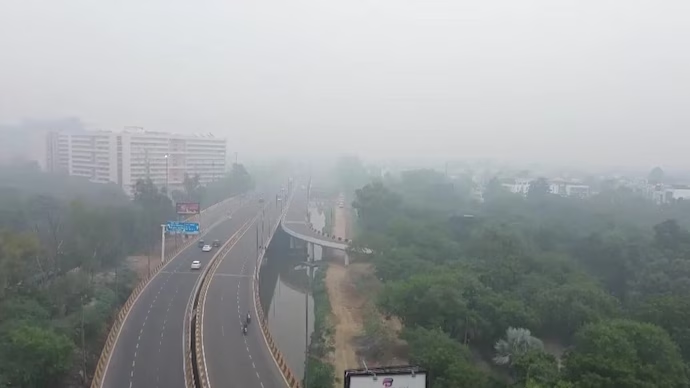
Delhi’s air pollution remains a public health concern as winter conditions contribute to poor air quality across the capital. Children, teenagers and young adults face particular risks from prolonged exposure to polluted air, raising concerns about respiratory health, lung development and everyday activities.
Delhi Air Pollution 2026: What Is the Current Situation?
Delhi’s air pollution continues to raise concerns as winter approaches, with poor air quality affecting residents across several parts of the capital. On November 26, 2026, the Commission for Air Quality Management (CAQM) dashboard recorded Delhi’s average Air Quality Index (AQI) at 218 at 3 AM, placing it in the Poor category.
The Air Quality Early Warning System for Delhi also reported considerable differences between monitoring stations. At 7 AM, several locations recorded AQI readings above 250, while North Campus recorded 302, entering the Very Poor category.
PM2.5 was the main pollutant at several monitoring stations.
The Commission for Air Quality Management has kept Stage II of the Graded Response Action Plan (GRAP) in force since November 2.
Although the situation is different from the severe pollution episodes recorded earlier in November, the continued presence of particulate pollution remains a concern, particularly for children, older adults and people with existing respiratory or cardiovascular conditions.
Why Delhi’s Winter Air Pollution Becomes a Recurring Problem
Delhi experiences a seasonal deterioration in air quality during the winter months. A combination of local emissions, weather conditions and pollution transported from surrounding regions contributes to the problem.
During colder months, lower wind speeds and changes in atmospheric conditions can prevent pollutants from dispersing effectively. This allows particulate matter and other pollutants to accumulate closer to the ground.
Several sources contribute to Delhi-NCR’s pollution levels:
- Vehicle emissions from cars, buses, trucks and two-wheelers.
- Construction activities and road dust.
- Industrial emissions and power generation.
- Open burning of waste and biomass.
- Seasonal agricultural residue burning in neighbouring states.
- Domestic heating and other combustion activities.
The CAQM has highlighted how unfavourable meteorological conditions, including low wind speeds and reduced atmospheric mixing, can worsen pollution episodes.
A November 2026 assessment by the commission also noted that historical AQI data repeatedly showed elevated pollution during the early and middle parts of November.
This makes air pollution a recurring seasonal challenge rather than an issue limited to a single day.
Why Children Are More Vulnerable to Air Pollution
Children face particular health risks from polluted air because their lungs and other body systems are still developing.
According to the World Health Organization (WHO), children breathe more air relative to their body weight than adults. Their developing respiratory systems can also be more vulnerable to harmful environmental exposures.
Fine particulate matter, especially PM2.5, is a major concern because these particles are small enough to travel deep into the respiratory system.
Repeated exposure can contribute to airway inflammation, respiratory infections and problems associated with lung development.
Children also have less control over their surroundings. They may need to travel to school, participate in outdoor activities and spend time near busy roads regardless of the air quality.
This makes reducing exposure a shared responsibility involving parents, schools, local authorities and public health agencies.
The WHO identifies air pollution as one of the major environmental risks to children’s health, with potential effects extending beyond the respiratory system.
PM2.5 and PM10: Understanding the Pollutants Behind Delhi’s Air Quality
Two important pollutants frequently discussed during Delhi’s pollution episodes are PM2.5 and PM10.
What is PM2.5?
PM2.5 refers to fine particulate matter with a diameter of 2.5 micrometres or smaller.
These particles can enter deep into the lungs. Some may also pass into the bloodstream, contributing to health risks affecting different organs.
Sources include vehicle exhaust, industrial emissions, combustion activities and other pollution sources.
What is PM10?
PM10 refers to particulate matter with a diameter of 10 micrometres or smaller.
These particles can enter the respiratory tract and affect the nose, throat and lungs. Road dust, construction activities and industrial processes are common sources.
Both pollutants are important when assessing air quality. However, PM2.5 receives particular attention because of its ability to penetrate deeper into the respiratory system.
Long-term exposure to particulate pollution has been associated with respiratory and cardiovascular diseases.
Delhi’s Younger Generation: What Studies Reveal About Respiratory Health
Concerns about air pollution among younger residents are supported by scientific research conducted in Delhi and other Indian regions.
A study published in the journal Lung India in 2021 examined respiratory symptoms, asthma and lung function among schoolchildren aged 13 to 17 years in Delhi, Kottayam and Mysore.
The research included 3,157 students who completed questionnaires and lung-function assessments.
Researchers reported a higher prevalence of respiratory and allergic symptoms among children living in Delhi compared with participants from the two less polluted cities.
The study reported asthma prevalence of 21.7% among Delhi children based on questionnaire responses. Spirometry assessments also identified airflow obstruction in a substantial proportion of participants.
These findings highlight the importance of understanding how environmental exposure and other health factors can influence respiratory conditions during adolescence.
Another comparative study published in 2024 examined 354 non-smoking participants aged 15 to 29 years from Delhi-NCR and Pauri Garhwal in Uttarakhand.
The researchers found lower average lung-function measurements among participants from Delhi-NCR compared with those from Pauri Garhwal.
However, these were observational studies with specific participant groups. Their findings should not be interpreted as proof that air pollution alone caused every reported health difference.
They nevertheless add to the scientific evidence supporting greater attention to respiratory health among young people living in polluted environments.
How Air Pollution Can Affect Students and Young Professionals
Air pollution is not only an environmental issue. It can also affect education, physical activity and everyday routines.
For schoolchildren, prolonged outdoor exposure during periods of poor air quality may increase the risk of coughing, throat irritation, breathing discomfort and worsening of existing respiratory conditions.
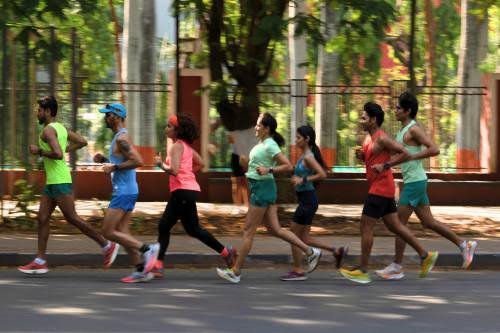
Students who participate in outdoor sports may experience difficulties when pollution levels rise.
Young professionals face similar concerns, particularly those who commute long distances through heavily congested roads.
People who cycle, walk or use two-wheelers may experience regular exposure to traffic-related emissions.
Some residents may also experience eye irritation, headaches, throat discomfort and fatigue during pollution episodes. These symptoms can have several possible causes, so persistent or worsening problems should be medically evaluated.
The issue becomes more complicated for people with asthma or other respiratory conditions, as polluted air can trigger symptoms and increase the need for medical attention.
For younger residents, the concern is not limited to immediate discomfort. Repeated exposure over several years raises questions about long-term respiratory health and quality of life.
GRAP Stage II: What Restrictions Are Currently in Force?
The Graded Response Action Plan is a set of pollution-control measures implemented across Delhi-NCR according to air quality conditions.
On November 2, 2026, CAQM invoked Stage II after Delhi’s average AQI reached 324, placing it in the Very Poor category.
Stage III was subsequently introduced on November 6 when pollution levels deteriorated further. However, CAQM revoked Stage III on November 17 after the average AQI improved to 204.
As of November 26, Stage II remains active.
The measures under Stage II include:
- Increased mechanised road sweeping and water sprinkling to control dust.
- Stronger enforcement of dust-control measures at construction sites.
- Encouraging public transport and reducing unnecessary private vehicle use.
- Proper removal and disposal of municipal and construction waste.
- Regulation of diesel generator operations.
- Restrictions on certain dust-generating construction activities and open burning.
These measures aim to reduce emissions and prevent further deterioration in air quality.
However, their effectiveness depends on implementation, monitoring and coordination between multiple government agencies across Delhi-NCR.
How Parents and Young Residents Can Reduce Exposure
While individual precautions cannot solve the larger pollution problem, they can help reduce exposure during periods of poor air quality.
1. Check the AQI Before Outdoor Activities
Residents should check reliable air-quality updates before planning outdoor exercise, sports or other activities.
The AQI can vary considerably between locations, so checking nearby monitoring stations is useful.
2. Reduce Strenuous Outdoor Exercise
During poor and very poor air-quality conditions, children and people with respiratory conditions should avoid strenuous outdoor activities.
Schools and sports organisations should consider moving physical activities indoors when pollution levels become unsafe.
3. Use Appropriate Masks When Necessary
A well-fitting N95 or equivalent respirator can help reduce exposure to fine particulate matter when spending time outdoors.
Ordinary cloth masks and loose-fitting surgical masks do not provide the same level of protection against fine particles.
4. Improve Indoor Air Quality
Keeping windows closed during periods of high outdoor pollution, maintaining clean indoor spaces and using appropriately sized air purifiers with effective particle filters can help reduce indoor exposure.
However, indoor pollution sources such as tobacco smoke, incense and cooking emissions should also be addressed.
5. Pay Attention to Respiratory Symptoms
Persistent coughing, wheezing, chest tightness or breathing difficulties should not be ignored.
People with asthma or existing heart and lung conditions should follow their prescribed treatment plans and seek medical advice if symptoms worsen.
Delhi Air Pollution: Why Long-Term Solutions Matter More Than Seasonal Restrictions
Delhi’s recurring air pollution problem requires measures that extend beyond temporary restrictions introduced during winter.
The city’s pollution sources are spread across transport, construction, industry, waste management and neighbouring regions. Addressing only one source cannot deliver a lasting improvement.
Cleaner public transport, stricter industrial emission controls, better construction practices and effective waste management are important parts of a long-term strategy.
Regional coordination is equally necessary because pollution does not remain within municipal or state boundaries.
Schools and healthcare institutions can also contribute by improving pollution awareness, monitoring respiratory complaints and providing guidance during high-pollution periods.
For younger residents, long-term exposure deserves particular attention because their lungs and other body systems are still developing.
Delhi’s air pollution crisis is therefore not simply a seasonal inconvenience. It is a continuing public health and urban management challenge that requires scientific monitoring, consistent enforcement and coordinated action.
Key Takeaways
- Delhi recorded an average AQI of 218 in the Poor category at 3 AM on November 26, 2026, according to the CAQM dashboard.
- Children and young adults are vulnerable to particulate pollution because of developing respiratory systems and regular exposure during daily activities.
- Indian studies have identified higher respiratory symptoms and differences in lung-function measurements among younger populations exposed to higher pollution levels.
- GRAP Stage II remains active in Delhi-NCR, while long-term improvements require coordinated action on transport, construction dust, industrial emissions and waste management.
Frequently Asked Questions (FAQs)
1. Why is Delhi’s air pollution particularly harmful to children?
Children’s lungs and other body systems are still developing. They also breathe more air relative to their body weight than adults. Exposure to pollutants such as PM2.5 can contribute to respiratory inflammation, infections and other health problems.
2. What is the current AQI in Delhi on November 26, 2026?
The CAQM dashboard recorded Delhi’s average AQI at 218 at 3 AM on November 26, placing it in the Poor category. Individual monitoring stations reported different readings, with some locations entering the Very Poor category.
3. What is PM2.5 and why is it dangerous?
PM2.5 refers to fine airborne particles measuring 2.5 micrometres or smaller. These particles can travel deep into the lungs and are associated with respiratory and cardiovascular health risks, particularly with prolonged exposure.
4. What precautions should students take during high pollution levels?
Students should monitor local AQI readings, avoid strenuous outdoor exercise during poor air-quality conditions, use appropriate respirators when necessary and maintain cleaner indoor environments. Anyone experiencing persistent breathing difficulties should seek medical advice.
(Internal Keywords: Delhi air pollution 2026, Delhi AQI November 26, Delhi winter pollution, air pollution health effects, air pollution in children, PM2.5 health risks, PM10 pollution, Delhi schoolchildren respiratory health, air pollution and lung development, Delhi GRAP Stage II, air quality India, pollution effects on young adults, Delhi pollution news, respiratory health in India)








Leave a comment