

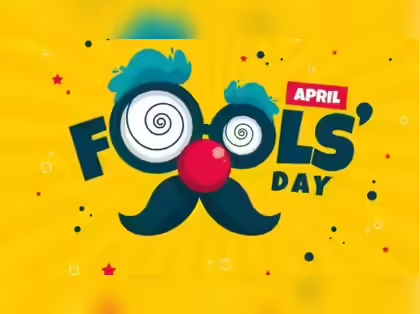
April Fools’ Day 2026 is witnessing a sharp rise in viral pranks across social media platforms, driven by short-form video trends and creator competition. What was once limited to personal jokes has now evolved into large-scale digital content reaching millions within hours.
How April Fools’ Day Content Has Shifted Online
April Fools’ Day 2026 highlights how pranks have moved from offline interactions to social-first content strategies. Platforms like Instagram, YouTube, and Snapchat are now the primary spaces where prank content is created and consumed.
Short-form videos, reels, and stories have made it easier to produce and distribute prank content instantly. Unlike traditional pranks that were limited to a small group, digital pranks now target mass audiences.
Creators plan content in advance, often scripting reactions to maximize engagement. This shift shows how April Fools’ Day has become less about spontaneous humor and more about content performance.
The focus is no longer just on humor but also on reach, shares, and virality.
Why Pranks Are Going Viral Faster in 2026
The speed at which April Fools’ Day pranks go viral in 2026 is largely driven by algorithm-based content distribution. Social media platforms prioritize engaging and surprising content, making prank videos highly shareable.
The rise of trending audio, meme formats, and quick editing tools has reduced the barrier to content creation. A simple prank recorded on a smartphone can reach thousands within minutes if it aligns with current trends.
Influencers and creators also collaborate to amplify reach. Cross-posting across multiple platforms ensures that a single prank can trend simultaneously on different apps.
Another factor is audience behavior. Users actively look for prank content on April 1, increasing engagement rates and boosting algorithm visibility.
Role of Influencers and Content Creators in Viral Trends
Influencers play a central role in shaping April Fools’ Day trends. Many creators design high-production pranks that blur the line between reality and scripted entertainment.
For example, fake product launches, staged celebrity announcements, or exaggerated life updates are common formats used to attract attention. These formats often generate high engagement but also risk misleading audiences.
Brands have also entered the space. Companies use April Fools’ Day to launch humorous campaigns that mimic real announcements, creating buzz around their products.
This commercialization of pranks has transformed April Fools’ Day into a strategic marketing opportunity rather than just a cultural event.
Risks of Misinformation and Fake News Through Pranks
One of the biggest concerns in April Fools’ Day 2026 is the spread of misinformation disguised as pranks. Viral content can sometimes be mistaken for real news, especially when it involves public figures or serious topics.
Social media platforms have taken steps to label misleading content, but the speed of sharing often outpaces moderation. This creates confusion among users who may not verify information before reacting.
In some cases, prank content has led to backlash when audiences feel deceived or misled. The line between humor and misinformation is becoming increasingly thin.
For users, critical thinking and source verification are essential, especially on a day when false information is intentionally circulated.
How Tier-2 Audiences Are Driving Viral Prank Content
Tier-2 and Tier-3 cities are playing a growing role in viral content creation. With increasing smartphone penetration and affordable internet, creators from smaller cities are contributing significantly to trending videos.
Local language content, relatable humor, and culturally relevant pranks are gaining traction. This shift has made viral trends more diverse and less metro-centric.
For example, prank videos based on family dynamics, local dialects, or regional stereotypes often perform well among wider audiences.
This democratization of content creation has expanded the reach of April Fools’ Day beyond urban centers, making it a nationwide digital event.
What This Means for Social Media Users and Brands
For users, April Fools’ Day now requires a balance between entertainment and awareness. Engaging with content is part of the experience, but verifying information is equally important.
For brands, the day presents an opportunity to connect with audiences through humor, but authenticity remains crucial. Poorly executed pranks can damage credibility.
Content creators need to be mindful of ethical boundaries. Pranks that cause distress, spread false information, or exploit sensitive topics can lead to negative reactions.
The trend indicates that while virality is easier to achieve, maintaining trust is becoming more challenging.
Takeaways
- April Fools’ Day 2026 pranks are driven by social media algorithms and short-form content
- Influencers and brands are using pranks as a strategic engagement tool
- Misinformation risks are higher due to realistic and widely shared prank content
- Tier-2 creators are playing a major role in shaping viral trends
FAQs
1. Why are April Fools’ Day pranks more viral now?
Because of social media algorithms, short-form video formats, and higher user engagement on April 1.
2. Are brands actively participating in April Fools’ Day trends?
Yes, many brands use the day for creative marketing campaigns and audience engagement.
3. Can prank content be harmful?
Yes, especially if it spreads misinformation or causes confusion about serious topics.
4. How can users avoid falling for fake prank news?
By verifying sources, checking official announcements, and being cautious about sensational claims.








Leave a comment