

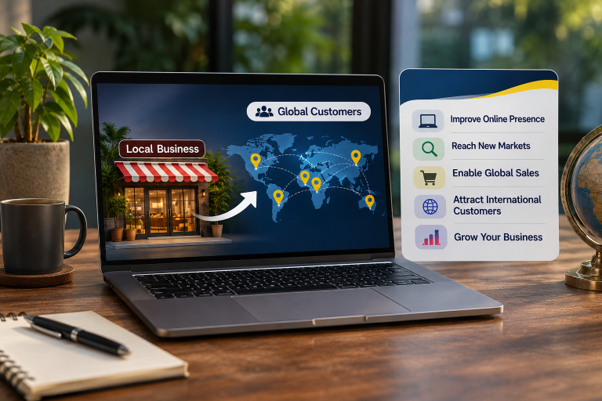
Mumbai, India: Reaching customers in international markets is no longer limited to businesses with overseas offices or large distribution networks. A well-planned digital presence can help companies introduce their products and services to customers across borders. However, attracting international attention is only the first step. Businesses also need websites, content and digital infrastructure that make it easy for overseas customers to understand, trust and engage with them.
For companies considering global expansion, the website often becomes the first point of contact with a new market. It must do more than present the business professionally. It needs to address different customer expectations, communicate relevant information and provide a smooth experience across regions.
International expansion begins with understanding the customer
A business website designed primarily for domestic customers may not automatically work for an international audience. Visitors from different countries can have different expectations around language, pricing, payment methods, delivery information, customer support and even how services are presented.
Website localisation helps bridge this gap. It involves adapting website content and functionality to suit the needs of a particular market, rather than simply translating existing pages. This may include using local currencies, displaying relevant contact details, adjusting date and measurement formats, and providing region-specific product or service information.
For example, an international customer evaluating an Indian service provider may want clarity on project timelines, communication arrangements, payment terms and support across time zones. If these details are difficult to find, interest may not translate into an enquiry.
Businesses therefore need to consider the complete customer experience, from the first website visit to the point of contact and beyond.
International SEO helps businesses reach relevant markets
Expanding across borders requires an SEO strategy tailored to how customers search in different markets. International SEO services helps businesses reach relevant audiences across countries and languages.
Simply adding country names to keywords is not enough. Search terms, customer preferences and competition vary by market. Businesses need to research local search behaviour and adapt their content, landing pages and URL structures accordingly. Technical elements such as hreflang can also help search engines serve the right language or regional page.
Strategies such as **global SEO, multilingual SEO, SEO for international markets** and **international website optimisation** support different aspects of this process. The right approach depends on the countries and audiences a business aims to reach.
The goal is not just to increase international traffic, but to attract visitors who are more likely to become customers.
A reliable website must support customers across borders
International visibility has limited value if a website cannot provide a dependable experience once visitors arrive. Website speed, mobile responsiveness, navigation and technical reliability influence how easily customers can explore a business.
Performance can become more challenging when a website serves visitors across multiple geographical regions. Hosting infrastructure, content delivery networks, image optimisation and efficient website development can help improve loading performance. Security is equally important, particularly for businesses collecting customer information, processing payments or handling enquiries from overseas markets.
E-commerce businesses may also need to consider international payment options, shipping information, taxes, returns and delivery expectations. Service-based companies, meanwhile, should make their enquiry process straightforward and explain how international projects are managed.
These details may appear operational, but they directly affect customer confidence. A visitor who cannot understand delivery terms, find support information or complete a payment is less likely to become a customer.
Local relevance builds international trust
Entering a new market requires businesses to build credibility with unfamiliar audiences. Clear service descriptions, transparent business information, genuine testimonials, relevant client experience and accessible contact details can help establish trust.
Localised content should address each market’s specific customer expectations, regulations and buying preferences rather than simply replacing country names on existing pages.
A separate website for every country is not always necessary. Dedicated regional pages may be sufficient for some businesses, while others may need multilingual websites, localised content and distinct customer journeys, depending on their expansion goals.
Site Invention highlights the digital foundations of global growth
As more businesses explore opportunities beyond their domestic markets, Site Invention, a Mumbai-based web development and digital marketing company, emphasises the importance of preparing digital platforms for international audiences.
With over 12 years of experience and more than 1,166 websites delivered, including 160+ e-commerce projects, the company brings together website development, SEO and digital strategy to support businesses at different stages of growth.
Its approach to international website development and global SEO focuses on building digital experiences that combine technical performance, relevant content, search visibility and usability. These foundations can help businesses present their offerings more effectively to customers in different markets.
Global growth requires more than online visibility
Entering a new market requires businesses to build credibility with unfamiliar audiences. Clear service descriptions, transparent business information, genuine testimonials, relevant client experience and accessible contact details can help establish trust.
Localised content should address each market’s specific customer expectations, regulations and buying preferences rather than simply replacing country names on existing pages.
A separate website for every country is not always necessary. Dedicated regional pages may be sufficient for some businesses, while others may need multilingual websites, localised content and distinct customer journeys, depending on their expansion goals.










Leave a comment