


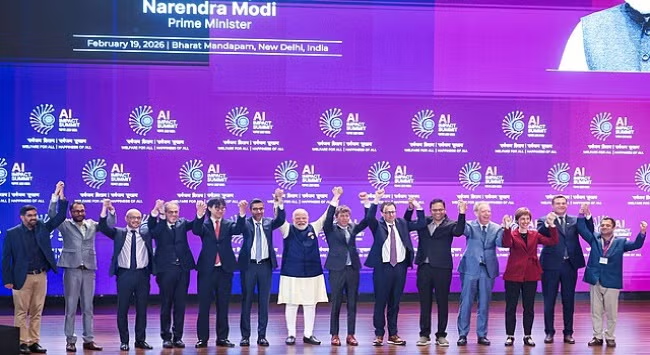
Global CEOs at the AI Summit described India as a critical growth engine for artificial intelligence, highlighting its talent base, digital infrastructure, and expanding startup ecosystem. Their remarks signal growing global confidence in India’s long term position as a technology hub.
Global CEOs at the AI Summit placed India firmly at the center of the global artificial intelligence conversation. In keynote addresses and panel discussions, leaders from multinational technology firms emphasized India’s scale, engineering talent, and digital public infrastructure as major competitive advantages. Their statements were not symbolic endorsements. They reflected strategic investment priorities, research collaborations, and long term market commitments that could reshape India’s tech landscape over the next decade.
India’s Talent Advantage and Engineering Depth
One of the most consistent themes in executive remarks was India’s deep engineering talent pool. CEOs highlighted the country’s large base of software developers, data scientists, and AI researchers as a structural advantage. India graduates hundreds of thousands of engineers annually, and a growing share specialize in machine learning, data analytics, and cloud computing.
Executives noted that global product teams increasingly rely on Indian research centers for core development work rather than back office support. Artificial intelligence models, cloud infrastructure tools, and cybersecurity systems are now being designed and tested in Indian cities.
This talent advantage is amplified by competitive cost structures and strong English language proficiency. For global firms, India offers both scale and skill. Several CEOs emphasized that future AI breakthroughs will not be limited to Silicon Valley. They expect India to produce globally competitive AI products.
Digital Public Infrastructure as a Differentiator
Another key talking point at the summit was India’s digital public infrastructure. Global leaders referenced the country’s unified digital identity systems, real time payment platforms, and large scale data driven governance frameworks as unique foundations for AI deployment.
Executives observed that such infrastructure accelerates innovation cycles. When digital identity and payment rails are widely adopted, startups can build AI powered services more efficiently. This lowers friction for fintech, health tech, and education technology companies.
The discussion also touched on responsible data governance. CEOs acknowledged that regulatory clarity is essential for long term investment. Clear frameworks around privacy and cross border data flows provide predictability. Without regulatory certainty, large scale AI investment becomes risky.
India’s Market Scale and Consumer Adoption
Global CEOs repeatedly pointed to India’s massive consumer base as a defining advantage. With hundreds of millions of internet users and rapid smartphone penetration, India offers an unparalleled testing ground for AI applications at scale.
Executives noted that Indian consumers adopt digital services quickly when value is clear. From digital payments to online commerce, adoption curves have historically been steep. This behavior encourages AI companies to launch pilot programs in India before expanding to other emerging markets.
Voice based AI and multilingual models were specifically mentioned as high potential areas. India’s linguistic diversity presents both a challenge and an opportunity. CEOs highlighted the need for language inclusive AI systems that serve regional markets. Success in India could inform global multilingual strategies.
Investment Commitments and Research Expansion
Several executives used the summit to reiterate investment commitments in India. These include expanding research centers, increasing local hiring, and partnering with academic institutions. Such commitments indicate confidence in India’s long term innovation capacity.
Collaboration between global companies and Indian startups was another recurring theme. CEOs stressed that innovation ecosystems thrive when multinational firms support early stage ventures through funding, mentorship, and infrastructure access.
Some leaders also addressed the importance of semiconductor design and hardware capabilities. While India is still developing large scale chip manufacturing capacity, software driven AI innovation remains strong. Executives suggested that strengthening hardware ecosystems could further elevate India’s position.
Implications for India’s Global Tech Position
The statements made by global CEOs at the AI Summit carry strategic implications. First, they validate India’s shift from service outsourcing to product innovation. When top executives describe India as a core development hub, it changes global perception.
Second, investment signals often influence domestic policy momentum. If global firms expand research and development operations, local governments may accelerate infrastructure upgrades and skill programs to support growth.
Third, competition among states to attract AI investment is likely to intensify. Cities offering strong connectivity, skilled talent pools, and policy incentives will benefit. This could lead to broader regional tech development beyond traditional metros.
Finally, CEO endorsements also bring responsibility. As India deepens its AI footprint, issues such as ethical deployment, bias mitigation, and workforce transition will require sustained attention. The summit conversations suggest that global firms are aware of these responsibilities and expect collaborative governance.
The Road Ahead for India as a Tech Hub
The collective tone of executive remarks was optimistic but pragmatic. India’s opportunity in artificial intelligence is significant, yet execution will determine outcomes. Talent development, regulatory clarity, infrastructure investment, and startup support must move in parallel.
If current momentum continues, India could strengthen its status not only as a technology services powerhouse but as a global AI innovation hub. The voices of global CEOs at the AI Summit indicate that this transition is already underway.
Takeaways
- Global CEOs view India as a strategic AI development hub
- Engineering talent and digital public infrastructure are key advantages
- Multilingual AI and consumer scale present unique growth opportunities
- Continued investment and policy clarity will shape long term outcomes
FAQs
Why are global CEOs bullish on India’s AI potential
They cite India’s large engineering workforce, strong digital infrastructure, and vast consumer market as major strengths.
How does digital public infrastructure help AI growth
It enables faster deployment of AI driven services in areas such as finance, healthcare, and education by providing ready digital rails.
Will global companies expand AI research in India
Many have announced plans to expand research centers and partnerships, indicating sustained long term commitment.
Can India compete with established tech hubs globally
India’s scale, talent pool, and growing startup ecosystem position it as a strong contender in the global AI landscape.











Leave a comment